









Four-Armed Space Robot Poised to Revolutionize Orbital Work
 26
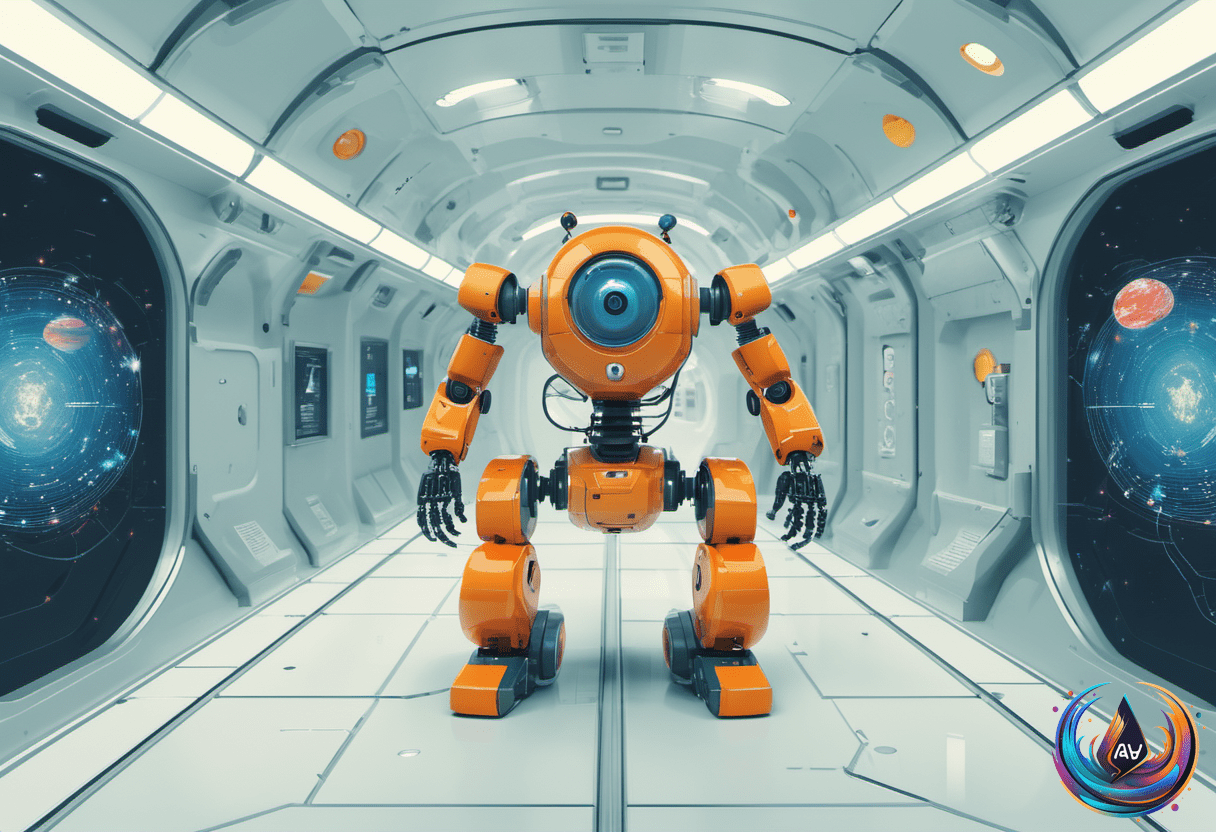
26Space just got a new kind of helper. Meet Helios, a four-armed humanoid robot built for zero gravity. It’s not your typical robot. It doesn’t walk. It doesn’t have legs. Instead, it has four arms designed to grab, anchor, and work in space stations. This design flips traditional robotics on its head.
Why Four Arms Beat Two in Space
Walking means nothing in orbit. Legs add weight and complexity without any real use in microgravity. That’s why Helios ditches them completely. Instead, it sports four arms—double the usual count. Two arms hold on tight to station structures. Two others handle tools, cargo, and repairs at the same time. This lets Helios stabilize itself and work simultaneously, something robots designed for Earth struggle to do.
The arms use a tendon-driven system. This means motors sit near the shoulders, sending force through cables and pulleys to the joints. This keeps the arms light and flexible. Traditional robots pack motors into each joint, which makes them heavy and clunky. Helios’ approach offers smooth, precise movements perfect for delicate space tasks.
The elbow joints use a rolling-contact design. This low-friction mechanism enables controlled, steady arm movement. In zero gravity, jerky motions can send the robot spinning or cause dropped tools. Helios avoids this with careful engineering that mimics the natural flow of human joints.
The Astronaut Time and Cost Problem
Astronauts spend around 35% of their time on maintenance and routine tasks. These include unloading cargo, sorting supplies, and tracking inventory. A single unloading session can take nearly 50 hours. That’s costly time in orbit.
Each hour an astronaut works costs about $140,000. That’s right—one hour of human labor in space equals a small fortune. Offloading these routine chores to a robot saves money and frees astronauts to focus on science and exploration. Helios targets this gap perfectly.
Its design is not about replacing astronauts. It’s about boosting their efficiency. By taking over repetitive tasks, Helios lets humans do what machines can’t: critical thinking, problem solving, and scientific discovery.
Engineering for Space, Not Earth
Most humanoid robots try to mimic human movement on Earth. They walk, balance, and navigate flat surfaces. But none of that works in orbit. Helios was designed backwards—from the physics of microgravity up. This mindset created a robot that looks alien on Earth but feels right at home in space.
- Four arms for gripping and multitasking
- Tendon-driven lightweight limbs for smooth motion
- Rolling elbow joints for precision and control
- Hands with five fingers for delicate manipulation
- Compact, black chassis optimized for weight constraints
Orbit Robotics, the Zurich-based startup behind Helios, is also developing a companion platform called IKARUS. It’s a testbed for teaching the robot new skills through teleoperation and autonomous learning. This platform helps refine Helios’ ability to perform complex tasks before any space deployment.
What’s Next for Helios and Space Robotics
Helios is still in prototype stages. It hasn’t flown to orbit yet. But its potential is undeniable. As launch costs drop and new space stations emerge, the demand for robotic helpers will skyrocket. Cargo handling, maintenance, satellite servicing, and assembly are all missions Helios could tackle.
The race for space-ready humanoids is heating up. Tesla’s Optimus aims for Mars. Foundation Robotics targets lunar bases. Apptronik plans humanoids for orbit and beyond.
But Helios stands out by refusing to copy Earth-bound designs. It embraces space’s unique challenges and turns them into advantages. Four arms instead of two. Gripping instead of walking. Light tendon drives instead of bulky motors. This robot isn’t just a tool—it’s a new class of space worker.
What happens when robots like Helios become common crew members? Astronauts will do more science and less routine labor. Space stations will run smoother. Missions will stretch farther. The future of orbital work just got a lot more exciting.
Based on
- This Zurich startup built a four-armed robot for space stations. Each astronaut hour it saves is worth $140,000. — thenextweb.com
- “The future is here”: Why this humanoid robot needs four arms – Notebookcheck News — notebookcheck.net
- HELIOS Humanoid Robot With Four Arms for Orbital Missions – Hardware Busters — hwbusters.com
- Forget Two Arms: This Wild New Four-Armed “Space Humanoid” is Built for Zero-Gravity | Humanoids Daily — humanoidsdaily.com
- Helios Humanoid Robot: Four-Armed Spacebot Revolutionizing In-Orbit Missions | Orbit Robotics (2026) — homesiber.com
- Humanoider vierarmiger Roboter für die Schwerelosigkeit: 4 Arme sind besser als 2 – Archynewsy — archynewsy.com

















What do you think?
It is nice to know your opinion. Leave a comment.