









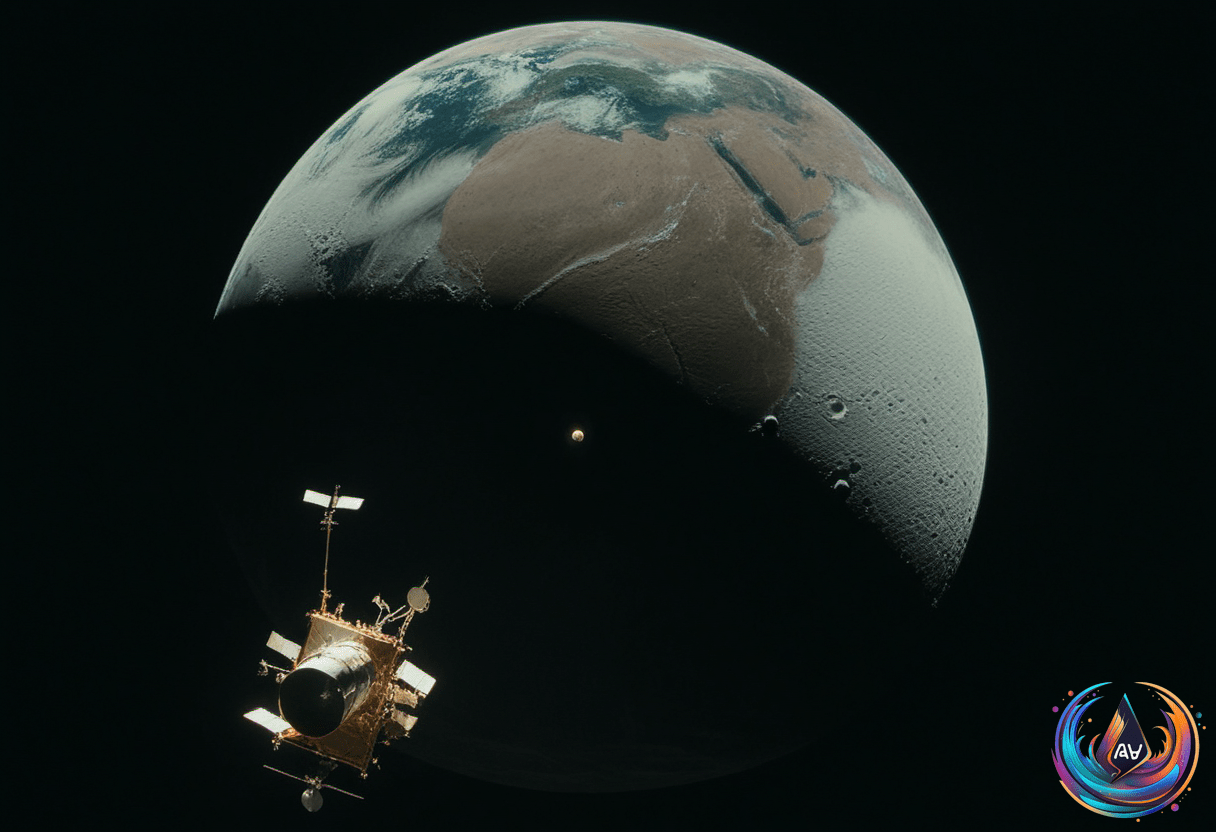
Space Mobility Wars Ignite with $500M Impulse Boost
 20
20Something big just launched in the space industry—not a rocket, but the race to own orbital mobility. Impulse Space just grabbed a whopping $500 million investment. This fresh capital rockets their valuation beyond $4 billion. What’s driving this frenzy? The game is no longer just about getting into space. It’s about moving around once you’re there.
Impulse Space: The New Movers and Shakers
Impulse Space was founded by Tom Mueller, the rocket engine genius who helped build SpaceX’s early success. Now, he’s leading a company focused on in-space propulsion and maneuvering. Their spacecraft don’t just hitch rides to orbit—they dart, reposition, and deliver payloads faster than ever.
Impulse has already flown three missions with its Mira spacecraft. Mira uses a clean, non-toxic propellant combo of nitrous oxide and ethane, a breakthrough in safety and performance. But Mira is just the start.
The real showstopper is Helios. This larger orbital transfer vehicle will debut on a Falcon 9 rocket next year. Helios can deliver satellites or payloads to geostationary orbit in a single day. That slashes the usual months-long wait time to reach high orbits today.
Imagine launching a satellite into low Earth orbit, then having Helios zip it to the perfect spot with surgical precision. Customers are lining up for this capability. Commercial satellite operators want it. The U.S. Space Force wants it.
Moon Missions and Market Moves
Impulse isn’t just orbiting Earth. They’re aiming for the Moon.
Their Helios system can boost a lunar lander payload from a Falcon 9 launch to the Moon’s surface, carrying up to 1 or 2 tons. That’s a tenfold payload boost compared to current commercial landers. This is huge for NASA’s Moon Base initiative, which plans to deliver bigger rovers and infrastructure by 2029.
Impulse’s plan: combine Helios with an optimized lander to cut costs and increase mass delivery. This could reshape lunar logistics and accelerate human presence on the Moon. The company expects to launch Helios on a rideshare mission called Caravan in 2027. It’s already fully booked.
And what about talent? The company is growing fast. With more than 500 employees and 200 job openings, Impulse is hiring engineers and specialists to scale up. They’re expanding beyond California too, tapping into aerospace hubs in Colorado and elsewhere.
Why Space Mobility Matters Now
Getting to orbit is almost routine these days. Launch costs have plunged thanks to reusable rockets. But moving around in space? That’s a different challenge. Satellites often get stuck in suboptimal orbits or take months to reach their final destinations.
That’s where Impulse and its competitors step in. The U.S. Space Force is boosting budgets to maintain space superiority. They need spacecraft that can reposition satellites to counter threats or espionage by rival nations.
Impulse’s maneuvering tech fits this growing defense demand. Plus, commercial satellite constellations, data centers in space, and lunar ambitions all need agile orbital transport. Mobility unlocks new markets beyond just launching rockets.
Meanwhile, the buzz around SpaceX’s upcoming IPO has energized investors. Many startups led by SpaceX alumni, like Impulse, are capitalizing on this momentum. Venture funds poured into Impulse’s latest round include 137 Ventures, Banner VC, Founders Fund, and Lux Capital.
Laser Focus on Space Domain Awareness
Space mobility isn’t the only frontier. Observable Space, another U.S. startup, secured a $94 million contract with the Space Force and raised $90 million in Series A funding. They specialize in laser communications and optical sensing systems.
Observable Space builds deployable telescopes and laser communication payloads to track satellites and relay data. Their tech is crucial for keeping tabs on objects in orbit and ensuring secure, high-speed data links.
They’re launching their first orbital imaging payload this year, a compact multispectral system for satellite tracking. Observable Space operates a global network of over 40 ground observation sites. Their work complements the mobility revolution by improving space situational awareness.
The Big Picture: A New Space Economy Taking Shape
Space is no longer just about rockets blasting off. It’s becoming a complex ecosystem with spacecraft zipping between orbits, lasers beaming data, and infrastructure growing on the Moon.
Companies like Impulse Space and Observable Space are building the tools for this new frontier. The U.S. government is fueling this shift through massive contracts. SpaceX alone recently secured $6.45 billion in Space Force deals, reinforcing the mix of commercial innovation and defense reliance.
Investors smell opportunity. They’re betting billions on startups that solve the puzzles beyond launch: how to get satellites where they need to be, how to talk faster across space, and how to secure national interests in orbit.
What’s next? Expect more orbital transfer vehicles, smarter spacecraft, and faster, cheaper access to the Moon and beyond. The space race is evolving. It’s no longer about just reaching space—it’s about mastering movement in space. And that opens the door to new markets, missions, and mind-blowing possibilities.
Based on
- Impulse Space raises $500 million as orbital maneuvering race heats up — arstechnica.com
- Impulse Space raises $500 million at $4.26 billion valuation as space investing surges – CNA — channelnewsasia.com
- Rocket engine startup Impulse raises $500 million to hire people, not AI | TechCrunch — techcrunch.com
- Observable Space lands US$94m US Space Force deal, raises $90m in Series A – Space Connect — spaceconnectonline.com.au
- SpaceX secures US$6.45bn Space Force contracts as IPO filing highlights growing government dependence – Africa Business Insight — africabusinessinsight.com
- Space Startup Raises Funds for Laser Satellite Links – Bloomberg — bloomberg.com
















What do you think?
It is nice to know your opinion. Leave a comment.