









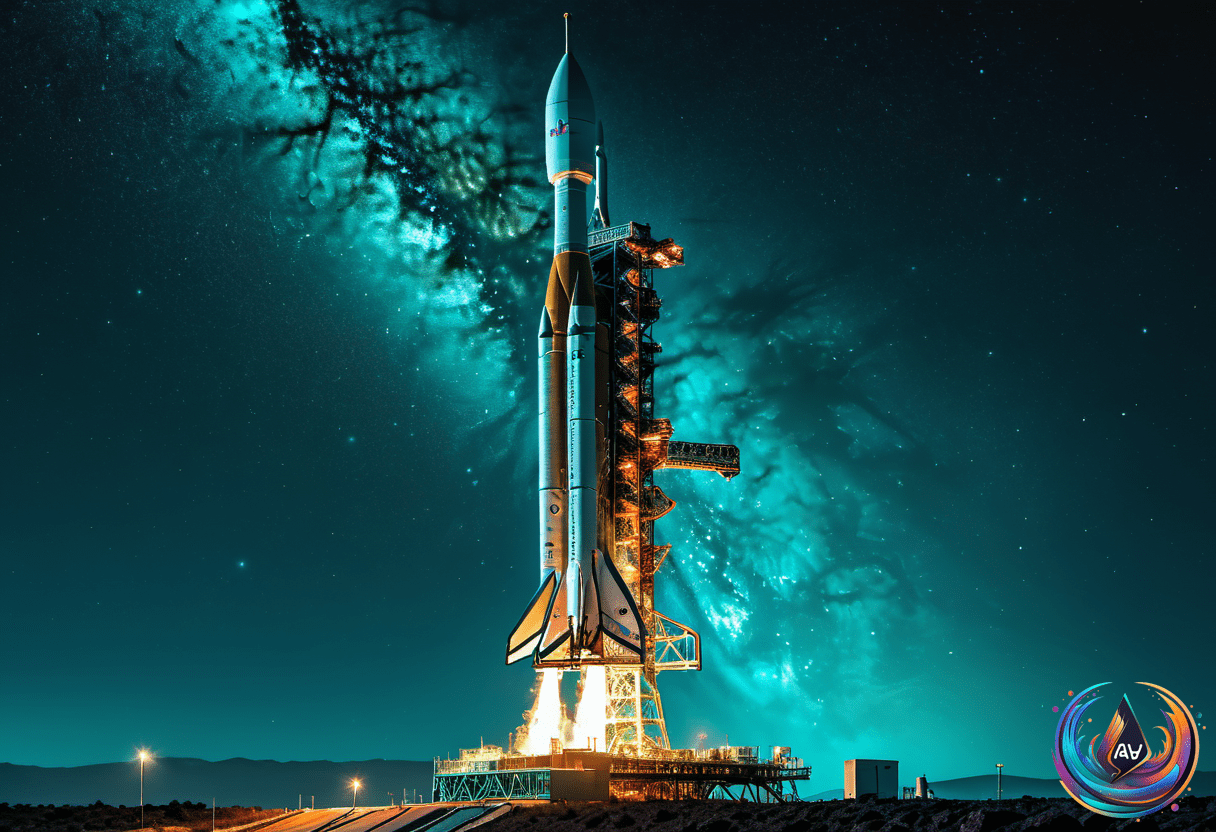
SpaceX’s $75 Billion IPO Redraws Space Industry’s Financial Frontier
 21
21SpaceX just pulled off the largest IPO in history. It raised $75 billion by pricing shares at $135 each, slamming open the doors to public markets on Nasdaq under the ticker SPCX.
The offering values the company at a staggering $1.77 trillion. That tops Saudi Aramco’s $25.6 billion IPO by nearly three times and puts SpaceX among the most valuable firms globally. Elon Musk’s stake now makes him the world’s first trillionaire on paper.
This IPO isn’t your average Wall Street affair. SpaceX set a fixed price rather than the usual price range meant to gauge demand. The move is bold—or reckless, depending on your risk appetite. Retail investors grabbed 30 percent of shares, a far larger slice than typical mega-IPOs. Orders from individuals hit over $70 billion.
Behind the numbers lies a complex business. SpaceX dominates the global launch market with its Falcon 9 rockets, flying more missions than all competitors combined. Its Starlink broadband network serves over 10 million subscribers worldwide, generating steady revenue. Meanwhile, Starship—the company’s heavy-lift rocket—burns billions without yet turning a profit.
SpaceX posted $18.7 billion in revenue for 2025 but lost $4.9 billion, mostly due to AI ventures and Starship development costs. Investors are essentially betting on Musk’s moonshot vision of colonizing Mars, not near-term returns.
Governance remains tightly in Musk’s hands. He controls 82 percent of voting rights via supervoting shares, raising concerns about accountability. Some critics question whether public shareholders will ever truly influence corporate decisions.
The IPO also shakes up the space startup ecosystem. SpaceX’s transparent valuation now benchmarks private peers. This could recalibrate fundraising expectations or expose overvalued rivals. The move marks a turning point where space ventures must answer to quarterly earnings rather than patient venture backers.
Market watchers expect volatile trading in the coming weeks. Analysts warn the $135 share price may not hold, with some valuing the stock near half that figure. Yet the hype and heavy retail demand could fuel a strong opening run.
Nasdaq fast-tracked SpaceX’s inclusion in the Nasdaq-100 index after only 15 trading days, breaking standard waiting periods. This accelerates index fund buying but adds pressure on the stock’s early performance. The S&P 500 did not follow suit.
SpaceX’s IPO signals a new era for space companies. It injects massive capital to accelerate projects like Starship and Starlink. It forces public scrutiny on a company that has long operated in private shadows. And it turns a visionary mission into a numbers game.
Whether the public market embraces SpaceX’s audacious ambitions or punishes its losses remains to be seen. For now, the world watches a space empire take flight on Wall Street, with trillions at stake.
Based on
- SpaceX Launches Largest IPO Of All Time — news.crunchbase.com
- SpaceX Raises $75 Billion in Landmark IPO, Reshaping the Space Economy’s Capital Map | LavX News | LavX News — news.lavx.hu
- SpaceX Prices Record Initial Public Offering at 135 Dollars — world.infonasional.com
- SpaceX IPO Prices at $135, Raising Record $75 Billion on June 12 | Meyka — meyka.com
- SpaceX Lists on Nasdaq Following Historic 75 Billion Dollar IPO — asatunews.co.id
















What do you think?
It is nice to know your opinion. Leave a comment.