









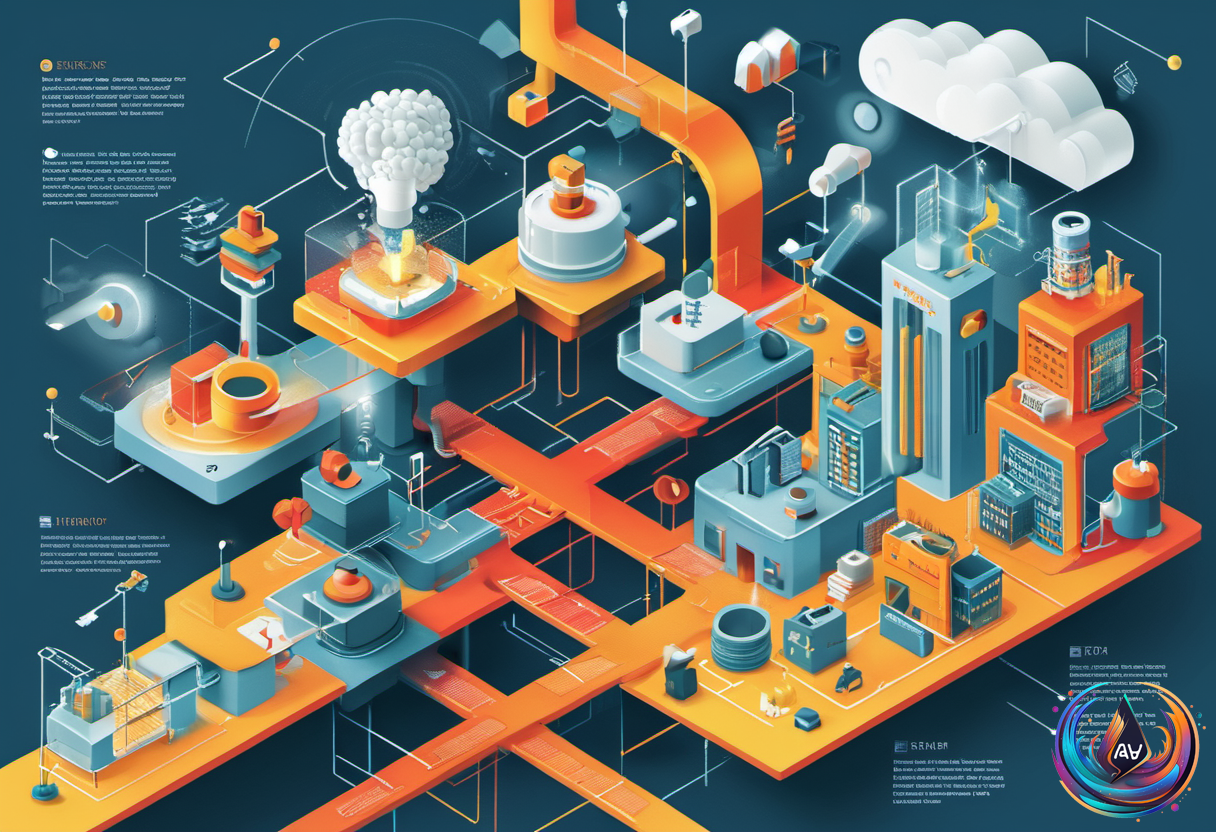
How AI Is Transforming Industrial Surplus Management
 111
111Many U.S. manufacturers are sitting on billions of dollars worth of unused equipment, spare parts, and maintenance inventory each year. Instead of recycling or throwing away these assets, a new approach aims to unlock their value. Amplio, a company founded by Trey Closson and Taha Zinifi, is using artificial intelligence to close the loop on industrial supply chains.
Addressing a Hidden Industry Crisis
Amplio estimates that around $350 billion is wasted annually in the U.S. due to surplus assets that go unused or are improperly managed. For a long time, this problem remained hidden because it develops gradually and doesn’t trigger immediate alarms. Manufacturers focus heavily on keeping production lines running smoothly, which leads to over-ordering safety stock. They tend to replenish inventory even when demand has shifted, because stopping production feels riskier than holding excess parts.
The real challenge is that production systems are constantly evolving, with new equipment replacing old setups. Meanwhile, the spare parts and maintenance supplies bought for previous configurations become obsolete but remain stored across different facilities. No single person is responsible for overseeing all this inventory, so the surplus accumulates unnoticed until it becomes costly. By the time leadership recognizes the problem, the surplus is often years old, and the original buyers have moved on.
How AI Is Changing the Game
When Amplio first started, it offered software to help manufacturers monitor supply chain risks. While useful, it wasn’t enough to justify serious investment. A turning point came when a customer revealed they had a large amount of brand-new inventory still in boxes and asked if Amplio could do better than simply recycling it. That question led the company to pivot towards surplus management using AI.
Today, Amplio’s platform uses artificial intelligence to evaluate surplus assets quickly and accurately. It can appraise tens of thousands of SKUs in minutes, a task that once took analysts several weeks. The platform determines the best course of action for each item—whether to redeploy internally, resell, recycle, or dispose of it in a compliant way. This helps manufacturers recover value from assets that would otherwise sit unused or be discarded.
The AI-driven system provides real-time insights into surplus inventory and helps optimize decision-making across the entire supply chain. It enables companies to reduce waste, cut costs, and improve sustainability. The technology also highlights how much industrial waste has gone unrecovered for decades, simply because there was no efficient way to identify or act on it.
This shift not only benefits individual manufacturers but also contributes to a more sustainable industry, reducing environmental impact by minimizing unnecessary waste. As the platform continues to develop, it promises to make surplus management faster, smarter, and more accessible at scale—changing the way industries handle excess assets forever.














What do you think?
It is nice to know your opinion. Leave a comment.