









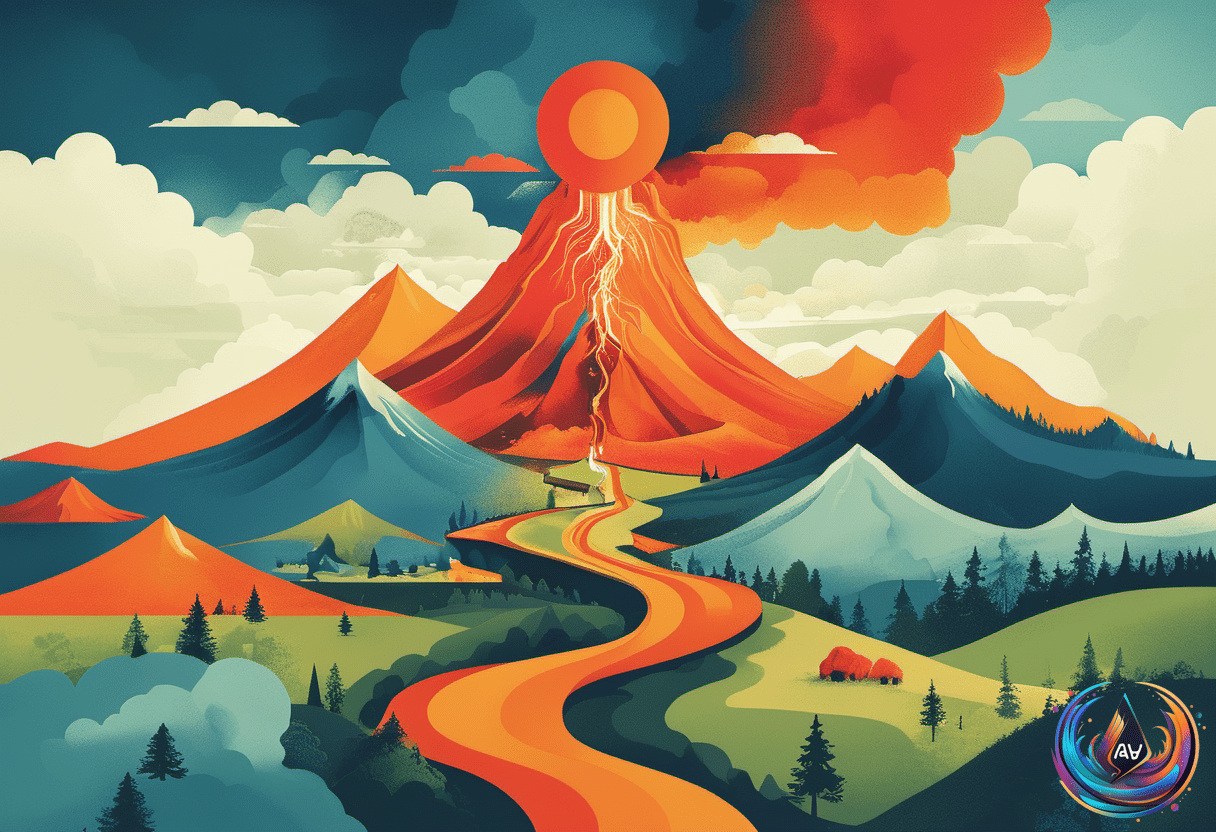
Can We Predict Volcanic Eruptions as Easily as Weather Events
 6
6Forecasting natural disasters has always been a challenge, but recent advances have improved our ability to predict volcanic eruptions. Unlike weather, which is regularly forecasted days in advance, predicting volcanoes is much more complex. Scientists are working toward better understanding subsurface processes to improve eruption forecasts, but there’s still a long way to go.
The Challenges of Forecasting Volcanoes
Volcanoes are unpredictable because their behavior depends on many hidden factors deep underground. When a volcano shows signs of unrest, such as increased seismic activity or gas emissions, scientists can monitor those signals closely. However, these signs don’t always lead to an eruption, making it hard to tell when a volcano will blow.
Historically, forecasts have been based on educated guesses and limited data. For example, during the 1991 eruption of Mount Pinatubo in the Philippines, scientists detected early signs of activity. They managed to evacuate thousands of people just before the eruption, but their predictions couldn’t specify exactly when or how forcefully the volcano would erupt. It was more of an educated estimate than a precise forecast.
Advances in Volcanology and Data Analysis
Since then, technology has advanced significantly. Modern instruments can track tiny earthquakes, measure gas emissions, and monitor ground deformation with incredible precision. Machine learning algorithms now help scientists interpret these complex data sets faster and more accurately than ever before.
Scientists also have a better understanding of magmatic plumbing systems—the underground networks that feed a volcano. This knowledge helps them identify patterns that might indicate an impending eruption. Still, even with these improvements, predicting the exact timing and nature of a volcano’s eruption remains difficult because the processes happen deep underground and are hard to observe directly.
Is a Weather-Like Forecast Possible?
The idea of forecasting volcanoes like weather forecasts is appealing. If scientists could assign a percentage chance of eruption in the coming days or weeks, it would save lives and reduce damage. Some experts believe this is possible someday, especially with continued technological progress and better models.
However, many remain skeptical. Volcano behavior is inherently complex and influenced by numerous variables that are difficult to measure or predict. While we might improve our ability to assess risk, predicting the exact moment and style of an eruption with high certainty is still out of reach. Still, optimism persists—scientists are hopeful that, with ongoing research, we will get closer to reliable volcano forecasts in the future.
In the meantime, monitoring and early warning systems remain vital tools. They help communities prepare and respond more effectively when signs of unrest appear. The goal is to eventually develop forecasts as reliable as weather reports, reducing the threat posed by these powerful natural events.














What do you think?
It is nice to know your opinion. Leave a comment.