Big news is shaking up the AI hardware world. Cerebras Systems, known for its massive AI chips built from a single silicon wafer, just made a stunning debut on the Nasdaq. The company priced its shares at $185, but on the first day, the stock soared, opening near $350 and closing over $310. That’s a 68% jump, and it pushed the company’s valuation past $66 billion—making it one of the most talked-about IPOs this year.
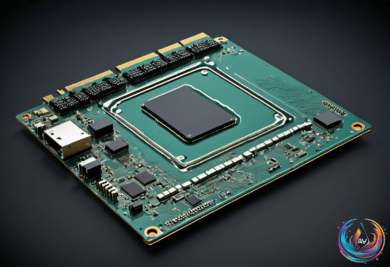
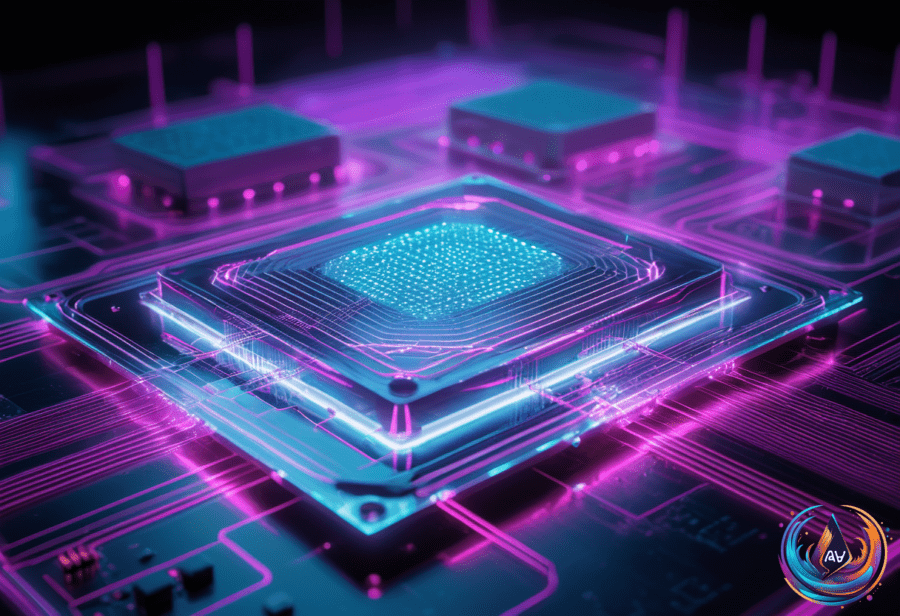
What’s behind this excitement? Cerebras has long been a contrarian in the AI hardware scene. Instead of competing with traditional GPU makers like NVIDIA, it built a radically different approach. Its flagship product, the Wafer-Scale Engine (WSE-3), is a single, 46,225-square-millimeter chip—bigger than an iPad—that packs 4 trillion transistors. This wafer-scale design allows for extraordinary data handling and ultra-fast AI inference, especially for large language models and scientific computations.
The company’s strategy is focused on serving the inference side of AI, not just training. Its chips are designed to keep data inside the chip itself, reducing latency and increasing speed. They claim to serve trillion-parameter models, including internal OpenAI models, and handle models that traditional hardware struggles with. This has made Cerebras a favorite among hyperscalers and research labs that need raw performance for massive AI workloads.
The Road to the IPO and What It Means
The journey to public markets hasn’t been smooth. Cerebras filed for an IPO in late 2024, but regulatory hurdles and internal restructuring slowed things down. Over the past year, the company diversified its customer base, signing deals with giants like Amazon and OpenAI. These partnerships helped build confidence and validated its technology at the highest levels.
Investors seem to believe in Cerebras’ unique approach. The company’s chips are built for a future where AI inference speeds will determine who leads the market. The first-day trading performance—the stock nearly doubling—sends a clear message: the market is hungry for hardware that can power next-generation AI models. The company’s valuation now sits close to $490 billion if you consider its potential, a staggering figure that reflects high hopes for its technology.
Technical Edge and Market Challenges
At the core, Cerebras’ wafer-scale engine is a marvel of engineering. Instead of assembling multiple small chips, it uses one gigantic wafer, which means fewer bottlenecks and faster data flow. This design is especially effective for large models that need to process huge amounts of data quickly.
However, there are limits. The chip’s on-wafer memory—about 44 gigabytes of SRAM—can’t hold trillion-parameter models with extensive context windows without huge over-provisioning. That raises questions about the economics and scalability of their approach, especially as models continue to grow. Some industry analysts see SRAM scaling as a dead end, meaning Cerebras must innovate to stay ahead.
Another challenge is manufacturing. The company relies on in-house assembly lines, which need to scale rapidly to meet demand. And while the early market response has been positive, maintaining that growth requires consistent customer adoption and the ability to justify premium prices for speed and performance. The post-IPO period will be critical to see if Cerebras can turn this excitement into sustained market share.
In the end, Cerebras’ IPO isn’t just about raising money. It’s a statement that alternative, hardware-centric approaches to AI are still very much in play. As AI models grow larger and more complex, the demand for specialized hardware like Cerebras’ wafer-scale chips looks set to increase. But whether it can sustain this momentum remains to be seen. The next few quarters will reveal if this giant chip company can keep its promise and push AI inference into a new era.
Based on
- [AINews] Cerebras’ $60B IPO: Slowly, then All at Once — latent.space
- Cerebras Raised $5.5 Billion and Its Stock Nearly Doubled on Day One | AIntelligenceHub — aintelligencehub.com
- Cerebras Raises $5.5B, Stock Pops 108% in IPO | AI News — aistart.ai
- Cerebras IPO: The $490 Billion Bet That 2× Faster Tokens Are Worth 6× the Price — BigGo Finance — finance.biggo.com
- Cerebras IPO: CBRS now has to prove the $100B pop | TECHi — techi.com