









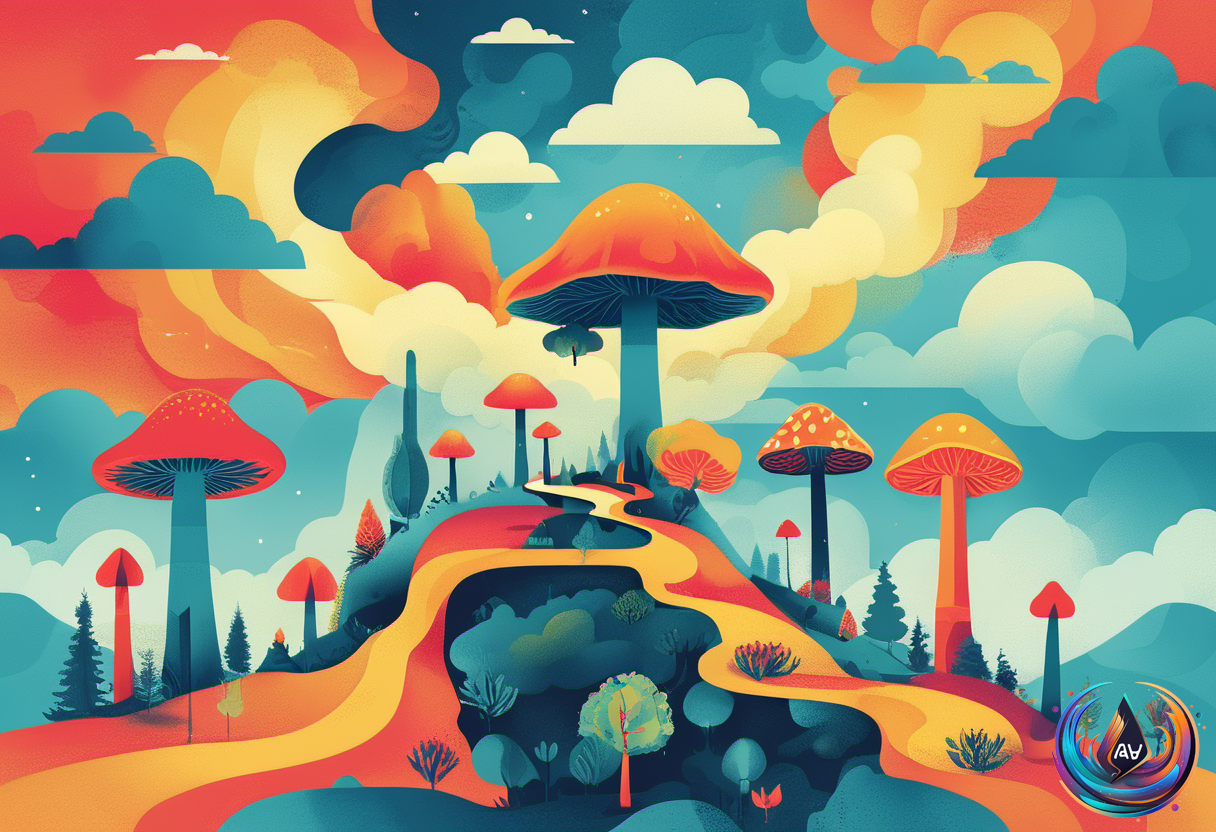
How Different Mushrooms Evolved to Make the Same Psychedelic Compound
 352
352Many people know about magic mushrooms for their psychedelic effects, but new research reveals some surprising facts about how these fungi produce the active ingredient, psilocybin. It turns out that different kinds of mushrooms have developed separate ways to make the same chemical, which could help scientists produce it more sustainably for medical uses.
Magic Mushrooms and Their Psychedelic Power
Magic mushrooms have been used for thousands of years in cultural rituals and for recreational fun. They contain psilocybin, a compound that your body converts into psilocin, which causes the psychedelic experience. Psilocybin gained popularity in the 1960s but was later classified as a drug with no accepted medical use in many countries. This classification slowed down research for decades. Recently, however, studies have shown psilocybin might help treat depression, suicidal thoughts, and anxiety, sparking new interest in its medical potential.
Two Different Ways to Make the Same Thing
A recent study led by scientist Dirk Hoffmeister from Friedrich Schiller University Jena uncovered that mushrooms can produce psilocybin in two different ways. They do this using different enzymes, which are proteins that help chemical reactions happen. This is a big discovery because it shows that unrelated mushrooms evolved separate methods to make the same psychoactive compound. The process is called convergent evolution, where different species develop similar traits independently.
For example, plants like coffee, tea, cacao, and guaraná all produce caffeine, but they did so on their own, not from a common ancestor. Now, scientists have found that fungi can do the same with psilocybin, which is the first time this has been seen in the fungal kingdom. The two mushrooms involved are quite different: Inocybe corydalina, which grows near tree roots, and Psilocybe, the classic “magic mushroom,” which feeds on decaying organic matter like dead wood or dung.
This raises questions about why these different fungi make psilocybin at all. One idea is that it acts as a natural defense. The compound might deter predators like insects from eating the mushrooms. Similar to caffeine in plants, psilocybin could serve as a natural pesticide, protecting the fungi from being consumed.
Using Nature’s Secrets to Make Psilocybin More Easily
This discovery could be a game-changer for producing psilocybin in labs. Right now, growing magic mushrooms takes time—about two months from spores to mature fruiting bodies. To meet the demand for medical research and potential treatments, scientists need faster, more sustainable ways to produce the compound.
Currently, most production relies on synthetic methods that are fast but have drawbacks. These methods often generate hazardous waste and involve complex steps that can only be done on a small scale. To improve this, Hoffmeister’s team took a different approach. They used enzymes—biological molecules that speed up reactions—taken from fungi to produce psilocybin. This process can be scaled up more easily and is more environmentally friendly because enzymes work under mild conditions, produce less waste, and can be reused.
In a study published earlier this year, Hoffmeister’s team demonstrated that using these enzymes makes the process more sustainable and efficient. Since enzymes are biodegradable and operate at low temperatures, they are a better choice for large-scale production than traditional chemical methods. This could make it easier and cheaper to produce psilocybin for medical trials and future therapies.
The Future of Psychedelic Medicine and Fungal Evolution
Understanding how different fungi produce psilocybin opens exciting possibilities. If scientists can harness these natural processes, they might develop new ways to produce the compound on a large scale without harming the environment. This is especially important since psilocybin shows promise as a treatment for mental health issues, and demand for the drug could grow.
Additionally, discovering that unrelated fungi evolved to make the same chemical independently suggests that psilocybin might have an important ecological role. It could be that the compound helps fungi survive by deterring pests or predators. Exploring these ecological functions could lead to a better understanding of the natural world and how fungi interact with their environment.
Overall, this research highlights the incredible ways nature evolves solutions to common problems. It also offers hope that we can learn from fungi to develop better, greener methods of producing promising medicines. As science uncovers more about fungi and their secrets, the potential for new treatments and sustainable production methods continues to grow.
















What do you think?
It is nice to know your opinion. Leave a comment.