Manufacturers have never lacked intelligence. They have accumulated it through operating practices, production data, business decisions, and the experience of workers who understand how a plant really behaves. The challenge is making that knowledge available when and where decisions happen.
That challenge sits at the center of industrial intelligence, an idea described by Michael MacKenzie as the combination of a manufacturer’s accumulated know-how, operating practices, production data, and understanding of its own business. Some of that intelligence lives in documents and systems. Some remains with experienced workers, which limits its reach when it stays with one person, inside one system, or within one plant.
From Business Intelligence to Physical Action
The next opportunity is to connect that knowledge to the physical world of manufacturing. “Physical AI brings business intelligence to physical processes, turning knowledge into decisions and decisions into action,” MacKenzie writes. Physical AI describes systems that can perceive conditions, reason about them, and take action within the physical world.
That connection matters because manufacturing depends on materials, machines, and products. By connecting machines and processes, manufacturers can get a clearer view of what is happening on the factory floor. Agents can then reason over that information to identify patterns, predict problems, and determine a course of action.
Data can reveal what is happening, but industrial intelligence adds the context needed to decide what should happen next. It can show which constraints cannot be breached and when uncertainty requires human judgment. The value is not only seeing variation in a process. The value is responding to that variation in the right way.
Toyota Industries offers one example through connected paint shop data. The examples include a result in which a measure fell from five days to under four hours, while relevant paint defects fell by about 25%. Those results point to the practical value of connecting production information with the knowledge needed to act on it.
The same principle can reach beyond one process. When individual knowledge becomes accessible across an organization, innovation can spread to the maintenance workshop, planning office, engineering team, and production floor. More people can contribute because more people can work with what the organization knows.
Why Responsible Deployment Starts With Discipline
Physical AI does not remove the need for operational discipline. Before systems act on equipment, leaders need to establish clear authority over what those systems may change, reliable connections to equipment, defined safety boundaries, and a record of decisions and actions.
People must also be able to recognize uncertainty, intervene, and bring equipment to a safe state. Trust rests on these practical arrangements, not on confidence in a model alone. Simulation can help by allowing manufacturers to examine proposed actions before applying them to equipment and explore how a change might affect a process in a digital environment.
Simulation does not remove the need for physical validation. It does create room to learn without treating the production line as the first experiment. That distinction matters when a system moves from describing an action to performing it.
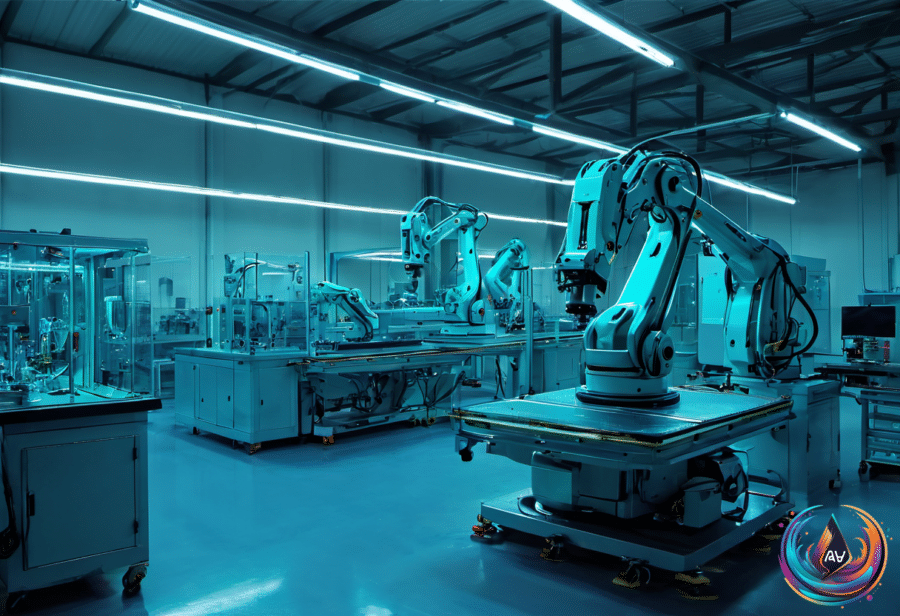
Physical AI can connect to cameras, sensors, robotic arms, or robotic legs. These systems do not only describe an action, as AI is often used to do; they perform it. Intelligent equipment can take on suitable repetitive or physically demanding tasks, while agent-assisted operations can help people navigate information-heavy decisions and changing conditions.
Rockwell Automation and Toyota Industries are among the company examples connected with this manufacturing discussion. Nvidia also signaled a potential turning point for robotics at its CES 2026 keynote by unveiling new open AI models designed to help machines perceive, understand, and act.
The Question Manufacturers Need to Ask First
Prashanthi Kolluru described a question that stayed with her after an audience discussion: “When should we start with AI, and how should we start?” Her answer points manufacturers toward a different starting point. They should begin by asking a more important question than when or how to introduce AI.
That question is rooted in the organization’s own intelligence: what knowledge already exists, where it is held, and how far its reach can extend without stripping away the context that makes it useful. The strategic destination is not more agents for their own sake. It is turning existing business intelligence into an engine for profitable growth.
Continuous improvement has always been the goal in process manufacturing, but it has rarely been continuous in practice. Most plants have become good at troubleshooting and stabilizing a process fast enough to keep it running. Far fewer have become equally good at understanding why something went wrong and making changes that prevent the problem from returning.
True continuous improvement requires a move away from firefighting and temporary fixes. It depends on permanent, sustainable change grounded in root causes and real-world conditions. Physical AI can support that work when it combines connected process data with industrial knowledge, clear boundaries, and human judgment.
Michael MacKenzie, Harsh Verma, Prashanthi Kolluru, and Andreas Eschbach each frame the opportunity from a different angle, but the direction is clear: knowledge must travel, systems must act within defined limits, and people must remain able to guide the process. The aim is not to make machines smarter as an end in itself. It is to see what people can build when intelligence can move from one part of a manufacturer to another and become action on the factory floor.
Based on