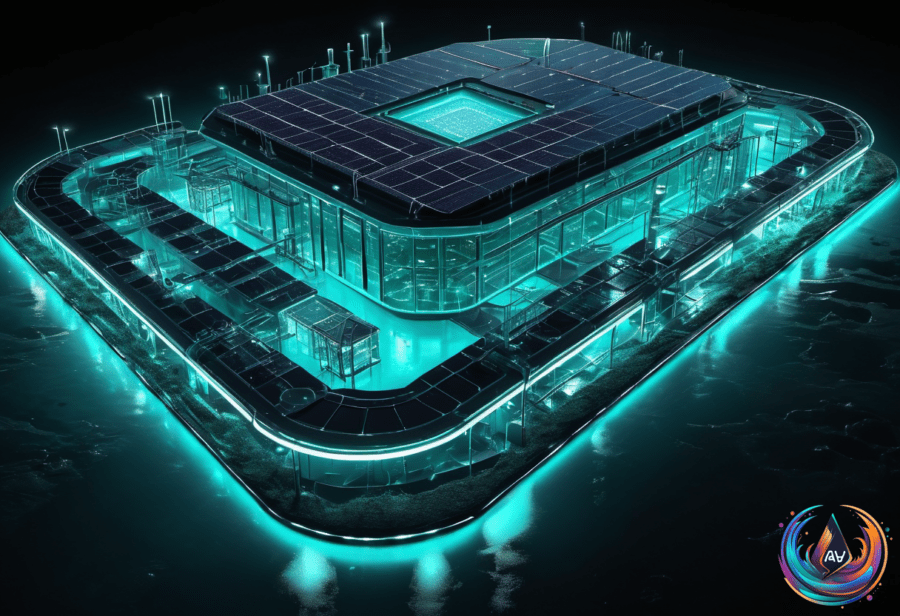
The Philippines is stepping into the future with a bold bet on artificial intelligence and advanced manufacturing. A sprawling 4,000-acre AI hub is rising in New Clark City, transforming the region into a cutting-edge tech hotspot. This isn’t just another industrial park. It’s a game-changer for Asia’s AI and semiconductor landscape.
Why is this so exciting? Because this hub is the first physical project under the US-led Pax Silica initiative, a strategic alliance aiming to build resilient AI and semiconductor supply chains outside China’s dominance. The stakes are high. The hub will anchor a powerhouse ecosystem of AI innovation, semiconductor production, and critical mineral processing.
A New Epicenter for AI and Tech Manufacturing
At the heart of this project lies a massive 1,618-hectare site managed by the Philippines’ Bases Conversion and Development Authority. The location is strategic—nestled in the Luzon Economic Corridor, close to Manila, with excellent infrastructure and access to minerals like nickel, cobalt, and copper.
This hub is designed to be AI-native. That means state-of-the-art smart factories, machine learning systems embedded in production lines, automated logistics, and predictive maintenance. It’s a leap beyond traditional manufacturing zones focused only on assembly.
Already, major semiconductor firms like Texas Instruments and Inari Amertron operate in Clark. The new AI hub will build on their foundation, drawing in electric vehicle manufacturers, hyperscale data centers, and robotics companies. Over 20 firms have expressed interest, including players from the US, Israel, and the UAE. The zone will welcome non-US companies too, governed fully by Philippine law.
- AI computing infrastructure
- Semiconductor packaging and testing
- Critical mineral processing
- Advanced manufacturing with AI automation
- AI-driven production and smart logistics
Legal Boundaries and Sovereignty Debates
The project’s scale and ambition have sparked intense debate about sovereignty and legal jurisdiction. The US requested diplomatic immunity for its personnel on site, a move the Philippines firmly rejected. The hub will operate under Philippine law, not US common law. This is a critical distinction.
Why does this matter? The Philippines fought for decades to reclaim control over former US military bases in Clark and Subic Bay. Granting immunity in a commercial zone would be unprecedented. The government insists this will be a normal commercial lease arrangement, similar to other foreign investments in special economic zones.
Still, investors want stability. US officials stress that billions in capital expenditure must have “durability and certainty” beyond political terms. The Philippines’ six-year presidential limits have made investment frameworks vulnerable to sudden changes. The two-year grace period on lease payments and clear governance under Philippine jurisdiction aim to reassure investors.
Global Strategy and Regional Impact
This AI hub is part of a bigger picture. It’s a key node in the US’s strategy to diversify tech supply chains and reduce dependence on China, which currently controls roughly 90% of rare earth refining capacity and dominates semiconductor production.
The Philippines’ role is crucial. Semiconductor exports already make up about 60% of the country’s merchandise exports, though mostly in assembly, testing, and packaging. This hub aims to upgrade that into higher-value sectors, including fabrication and AI-native manufacturing.
Partnerships are expanding too. The Philippines and Israel are exploring cooperation on semiconductors, AI, and critical minerals under Pax Silica. Meanwhile, the Luzon Economic Corridor, a trilateral effort with the US and Japan, plans an investors forum this year, highlighting the region’s emerging importance.
With solid infrastructure, rich mineral resources, and a growing cluster of high-tech companies, the area is poised to become a regional AI capital. The question now: How fast will this vision turn into reality? The first buildings are still in the planning stage, but momentum is building. Investors are lining up. The future is clear—New Clark City will be a beacon of AI innovation in Asia.
Get ready to watch this space. The Philippines is not just joining the AI race. It’s aiming to lead a new chapter in global tech supply chains and industrial transformation. The next wave of AI-powered manufacturing is taking shape right now.
Based on
- The US is building a 4,000-acre AI hub in the Philippines, and the sovereignty questions are already piling up — thenextweb.com
- PH: Rising global AI capital — negrosnowdaily.com
- Over 20 firms interested in AI hub under Pax Silica | Philstar.com — qa.philstar.com
- ChinaPulse.com – Legal and sovereignty questions — chinapulse.com
- PH, Israel eye semiconductor, AI tie-ups under Pax Silica – PortCalls Asia — portcalls.com