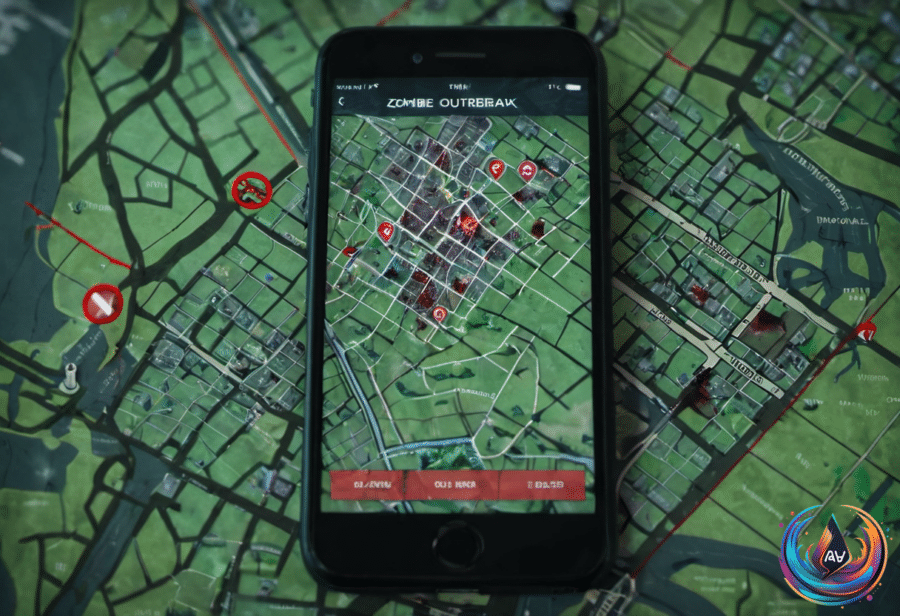
Mansa has made a zombie show with no human roles. They Left Us to Die is a 30-episode microdrama from the media company, made entirely with AI and set in South Los Angeles after a zombie virus overtakes the neighborhood.
Authorities barricade the area, leaving residents to survive on their own. Imani Cross, an emergency room nurse, searches for a cure to help her infected brother DJ, declaring, “The plague was made here, made on us, on purpose.”
The trailer drew mostly favorable reactions on Instagram after its release on October 29, with fire emoji filling the comments as viewers waited for the first episode. But as the midnight launch approached, another reaction began spreading across social media: why was a company created to support Black talent using AI instead of people?
AI as a Market Test
Mansa’s strategy is not to present AI as a replacement for human-centered content. The company, founded by David Oyelowo and Nate Parker, says it is using AI as a chess piece—one that can test whether audiences want stories before a studio commits to a live production.
Parker says studio heads are even more reluctant in the current climate, making the cost and risk of traditional development harder to absorb. “When we hear the words AI, it immediately drives us to the realities of what we are facing and the real lives it’s impacting,” Parker says.
He describes the approach as “holding the line on our very existence” in an industry that is consolidating, while using available tools to staff shows that win approval. “But with microdramas, you get to test a piece of content, not just test it in a way of proof of concept like a short film, but you get to monetize it,” he says. “You get to track data around engagement and see if this is something the audience wants.”
That argument is aimed at studios as much as viewers. Parker believes audience data from AI shows can demonstrate demand for Black stories before a live production receives a green light—a practical pitch in an industry that has never needed much encouragement to say no.
The backlash remains direct. “Mansa was one of the first vertical apps that was supposed to support and cultivate black talent, but here they are … another AI sellout,” one user wrote on Threads. Another asked, “Why would any self-respecting casting director, producer, or director ever consider hiring Oleyowo again after this?” Yvette Nicole Brown responded with “*sigh* Mmkay,” alongside a gif of Viola Davis expressing irritation.
Microdramas Are Already Reshaping Viewing
Microdramas are vertically shot, minute-long soaps produced at a fraction of the cost of a television show. Their form matches the frantic consumption habits of modern entertainment, where viewers can move from one cliffhanger to the next before a conventional episode has finished explaining itself.
ReelShort and DramaBox have helped drive the boom with romances, billionaire fantasies, revenge plots, and supernatural sagas. Women viewers fuel much of that growth, and the audience is not small: an Omdia analysis of mobile usage in the fourth quarter of 2025 found that users spent an average of 36 minutes per day on ReelShort, compared with 26 minutes on Prime Video and 20 minutes on Netflix.
Omdia predicts the microdrama market will reach $14 billion in 2027. Maria Rua Aguete, Omdia’s global head of media and entertainment, says, “Ultimately, audiences will decide what succeeds,” adding that there is a “significant oppo”—a quote that ends abruptly, but whose point needs no elaborate decoding.
Hoorae Media, Issa Rae’s production company, entered the sector this year with two microdramas, including Screen Time. By October, that series had passed 580 million views across TikTok and Hoorae’s in-house microdrama app, PineDrama. Upstarts Juccee Shorts and Urban Operas are also entering the market, with Urban Operas launching six series later this month.
The format has moved beyond specialist apps. Among Gen Z, short-form video is now more common than watching movies, and viewers aged 18 to 24 spend 26 percent of their weekly media time on short-form video, according to Luminate. Between April and August, Peacock, HBO Max, Prime Video, Paramount+, Netflix, and Disney+ each launched a short-form vertical feed in their mobile apps.
Mansa is therefore testing its idea inside a market that already rewards speed, repetition, and measurable engagement. The harder question is whether AI can prove demand for Black stories without weakening the human creative ecosystem those stories are supposed to expand.
Based on
- This Startup Is Betting on AI Microdramas to Get More Black Stories in Hollywood — wired.com
- Can AI help aspiring screenwriters break into Hollywood? – Los Angeles Times — latimes.com
- 4DX Movies Are Entering Their Thirsty Romance Era | WIRED — wired.com
- A brand new musical, “Maybe Happy Ending” is coming to Denver – CBS Colorado — cbsnews.com
- Women are losing ground in tech. What can we do about it? | WIRED — wired.com