









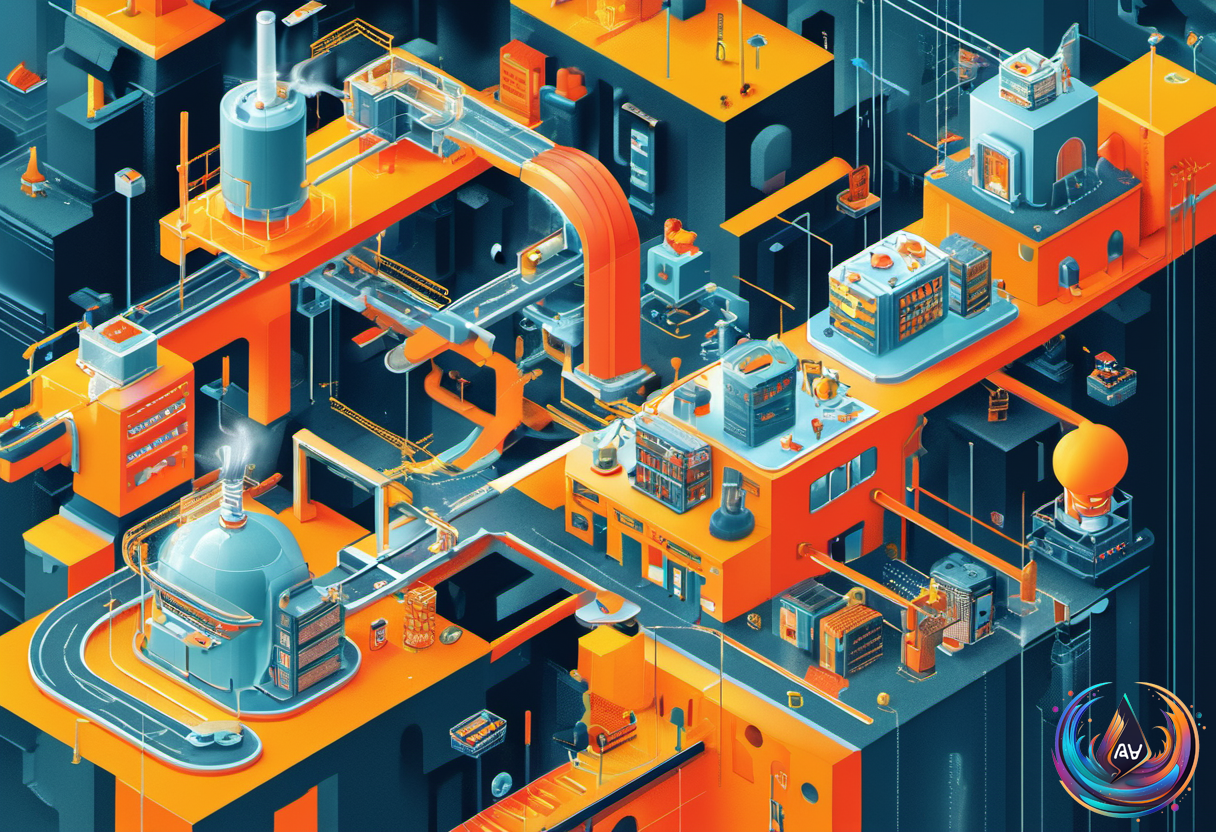
How AI Digital Twins Are Changing Warehouse Management
 343
343A startup from Taiwan called MetAI is making big waves in the industrial AI world. They have created a platform that builds incredibly realistic digital replicas of warehouses and other physical spaces. These digital twins are more than just visual models—they are fully functional simulations used for training robots, testing automation, and generating synthetic data. This technology aims to improve efficiency and speed up industrial processes across various sectors.
Meet MetGen: The Core of MetAI’s Digital Twin Technology
At the heart of MetAI’s platform is a powerful engine called MetGen. Developed by co-founder and CEO Daniel Yu, MetGen uses NVIDIA Omniverse technology to turn simple 2D CAD files into detailed, high-quality digital twins. These twins can be used for a wide range of applications, from managing warehouse logistics to testing robotics systems.
One of the key features of MetGen is its ability to quickly find and retrieve standardized assets from connected libraries. Thanks to integration with NVIDIA USD Search microservices, users can instantly locate 3D models or generate missing ones within seconds. This significantly cuts down on build time and makes it easier to scale up projects. The process starts with converting 2D layout plans into searchable data, which then allows MetGen to automatically fetch matching 3D assets or create new ones when needed. The result is a highly realistic digital twin ready for training, testing, or simulation.
The Power of Real-to-Sim Workflows for Industry
Integrating MetGen with NVIDIA Omniverse marks a big step forward in creating realistic simulation workflows, known as Real-to-Sim and Sim-to-Real. These workflows help industries develop highly accurate virtual environments that mirror real-world scenarios. This is especially useful in warehouse automation, robotics training, and testing new automation strategies without disrupting actual operations.
MetAI is also exploring other areas where its technology can make a difference. These include building data centers, designing advanced manufacturing lines, and training robots for complex tasks. The company plans to release a beta version of their platform in August, aiming to build a flexible ecosystem of digital twins tailored for various industrial needs. This approach could help industries reduce costs, improve safety, and speed up deployment of new systems.
Overall, the potential of MetGen’s technology is vast. By enabling industries to create highly detailed and functional virtual models, it opens the door to smarter, faster, and more reliable automation solutions. This could lead to major improvements in warehouse efficiency and beyond.
As Daniel Yu emphasizes, the goal is to build the infrastructure needed to train the next generation of industrial AI. With a focus on collaboration and innovation, MetAI’s platform has the potential to become a leading tool in the industrial AI space. Its ability to generate realistic simulations quickly and accurately promises to transform how industries approach complex problems and operational challenges.
















What do you think?
It is nice to know your opinion. Leave a comment.