









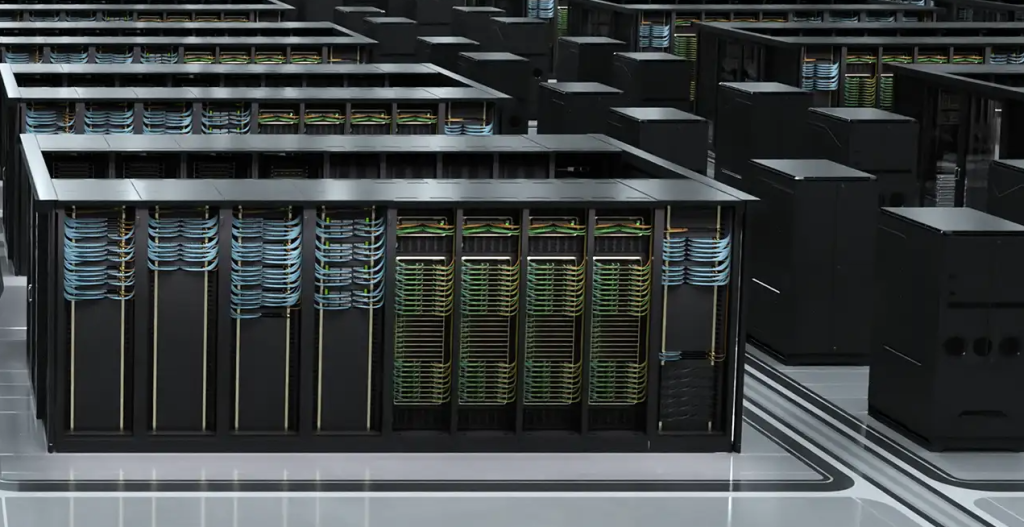
NTT DATA and NVIDIA bring enterprise AI factories to production scale
 119
119NTT DATA has announced an initiative to deliver NVIDIA-powered platforms designed to give organisations a repeatable, production-ready model for scaling AI.
The offering integrates NVIDIA’s GPU-accelerated computing and high-performance networking with NVIDIA AI Enterprise software, including NeMo and NIM Microservices, into a full-stack agentic AI platform that can be deployed in cloud and edge environments. The architecture covers the full AI lifecycle of model training and enterprise application development inside a governed framework.
Abhijit Dubey, CEO of NTT DATA said there is a change in how enterprises approach AI deployment. “By integrating NVIDIA technologies into our enterprise AI factories, we’re giving clients a powerful and secure environment to adopt agentic AI with measurable returns from the start.”
NTT DATA says the enterprise AI factory model addresses a gap that has stalled many AI programmes: the distance between a successful pilot and a production system that runs. The platform is designed to standardise output and reduce the time and cost of moving from proof-of-concept to operational deployment.
Real-world deployments
Three early-adopter cases give a clearer picture of enterprise AI factories. A leading cancer-research hospital is using NVIDIA HGX platforms, with NTT DATA and Dell, for advanced radiology analysis and rapid model evaluation to support clinical research workflows.
In automotive manufacturing, a global supplier has reduced production setup time by validating workloads on bare metal before scaling through an AI factory architecture on NVIDIA infrastructure. A third deployment, in technology manufacturing, involves a US-based company using NVIDIA-accelerated simulation and 3D visualisation to validate a next-generation battery production line before physical deployment.
NTT DATA is positioning enterprise AI factories as a domain-specific delivery model, with the NVIDIA stack serving as the common infrastructure underneath sector-by-sector customisation.
NeMo and NIM in an AI factory stack
The technical integration comprises of two NVIDIA components. NVIDIA NeMo is a suite for building agentic AI systems on GPU-accelerated infrastructure. NVIDIA NIM Microservices provide pre-built, GPU-optimised containers with APIs for deploying AI applications. Together, they form what NTT DATA describes as a full-stack, production-ready AI agent platform.
NTT DATA also offers pre-qualified GenAI prototypes built on this stack, which it says reduces complexity and accelerates time to value for clients building sector-specific applications.
John Fanelli, Vice President of Enterprise Software at NVIDIA, said: “Enterprises are now seeking robust, scalable platforms that can successfully transition their AI initiatives from pilot projects to full-scale production.” He said NTT DATA’s AI factory offerings provide clients with domain-specific solutions needed to achieve production-grade enterprise AI.
NTT DATA describes itself as the only global IT services provider active in all three of NVIDIA’s partner tracks: Solution Provider, Cloud Partner, and Global System Integrator Partner Network.
The recent announcement comes as enterprises face rising pressure to show financial returns on AI spending. Governance and domain-specific performance are now the criteria by which enterprise AI investments are judged, and the AI factory model is an attempt to make all three more systematic.
See also: Physical AI is having its moment – and everyone wants a piece of it
Want to learn more about AI and big data from industry leaders? Check out AI & Big Data Expo taking place in Amsterdam, California, and London. The comprehensive event is part of TechEx and is co-located with other leading technology events, click here for more information.
AI News is powered by TechForge Media. Explore other upcoming enterprise technology events and webinars here.
The post NTT DATA and NVIDIA bring enterprise AI factories to production scale appeared first on AI News.
Origianl Creator: Dashveenjit Kaur
Original Link: https://www.artificialintelligence-news.com/news/ntt-data-nvidia-enterprise-ai-factories-production/
Originally Posted: Mon, 16 Mar 2026 12:00:00 +0000














What do you think?
It is nice to know your opinion. Leave a comment.