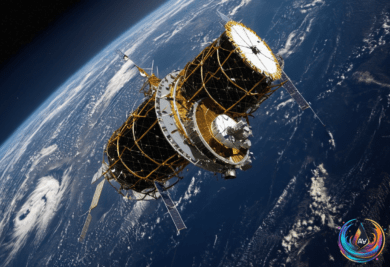
NASA’s Psyche spacecraft pulled off a neat trick—snapping rare, detailed images of Mars during a gravity assist flyby on May 15, 2026. This wasn’t just a photo op. It was a fuel-saving speed boost, pushing Psyche closer to its true target: the metallic asteroid 16 Psyche.
The spacecraft sailed within 2,864 miles of Mars’ surface, closer than its moons. Psyche used the planet’s gravity to gain about 1,000 miles per hour without burning any fuel. This maneuver also tweaked its orbital path, setting it on course for the asteroid belt where 16 Psyche orbits.
Psyche’s cameras caught Mars in a crescent phase—a view impossible from Earth. The thin, glowing arc of the Red Planet showed sunlight scattering through dusty atmospheric layers. The spacecraft also captured high-resolution images of the southern ice cap, a bright patch over 400 miles wide that remains frozen year-round.
One standout photo focused on the double-ringed Huygens crater, a 290-mile-wide scar that tells stories of Mars’ violent past. The colors in these images are enhanced to highlight differences in surface composition—dust, sand, and bedrock—offering clues about the planet’s geological history.
This flyby served double duty. Besides the gravity boost, it tested Psyche’s instruments under real conditions. Thousands of images helped calibrate its cameras and sensors before the spacecraft reaches its destination. Mars rovers and orbiters also coordinated to compare data, ensuring Psyche’s instruments deliver accurate readings.
After the flyby, Psyche resumed its solar-electric propulsion flight, pushing ahead toward the asteroid belt. The mission launched in October 2023 and aims to arrive at 16 Psyche by summer 2029. Once there, it will orbit the asteroid for two years, mapping its surface and analyzing its composition.
Scientists are especially interested because 16 Psyche might be the exposed metallic core of an ancient planetesimal—the building block of rocky planets. If so, studying it could reveal secrets about Earth’s core and how planetary interiors form. This asteroid is a time capsule from the early solar system, offering a rare chance to study planetary cores up close.
The mission’s success hinges on clever use of celestial mechanics—using Mars’ gravity to avoid wasting fuel. This slingshot effect trimmed years off the journey and preserved resources for detailed study at the asteroid. The flyby also let Psyche practice its imaging and scanning techniques on a known target, a rehearsal before tackling the unfamiliar asteroid.
By capturing Mars in an unusual light and angle, Psyche’s cameras revealed atmospheric dust and surface features in ways no other mission has. These images will help scientists fine-tune their understanding of Mars’ environment, even if the spacecraft’s main interest lies elsewhere.
In the grand scheme, Psyche’s Mars flyby underscores how interplanetary missions can multitask. Gravity assists, instrument calibration, and planetary science all happen simultaneously. It’s a reminder that space exploration often demands efficiency and ingenuity to get the most out of every moment.
Based on
- NASA shares Psyche spacecraft’s photos of Mars — engadget.com
- See NASA’s Stunning New Images of Mars Captured During an Asteroid-Bound Spacecraft’s Strategic Flyby — smithsonianmag.com
- NASA’s Psyche Captures Stunning Mars Images During Gravity Assist Flyby (2026) — atu1384.org
- NASA’s Psyche Mission Captures Stunning Crescent View of Mars During Historic Flyby (2026) — viajono.com
- Psyche spacecraft captures rare crescent Mars views durin… — headlinesbriefing.com
- NASA’s Psyche Spacecraft Successfully Completes Mars Flyby; Now Headed Toward Asteroid Psyche for 2029 Arrival – The Tech Outlook — thetechoutlook.com