Quantum computing is moving beyond lab breakthroughs and into the harder work of building systems that can be manufactured, supported, and used at scale. That shift is showing up in new partnerships, specialized equipment, and large infrastructure projects across North America and beyond.
IBM is building a better fridge for its quantum computers, while Quanta Computer and Quantinuum are joining forces on the infrastructure behind future machines. At the same time, IonQ is bringing its systems into a Canadian testing program, and Illinois is backing a 128-acre research campus in South Chicago.
Building the hardware behind quantum systems
Quanta Computer and Quantinuum announced their partnership on August 13, 2026. The companies plan to co-develop infrastructure, systems engineering, and manufacturing capabilities for future quantum computers, with the goal of helping Quantinuum support its technology roadmap toward large-scale, fault-tolerant quantum systems.
Quantinuum has already commercially deployed multiple generations of trapped-ion quantum systems built on the QCCD architecture. Its global workforce includes approximately 700 employees, and more than 70% of its technology team holds PhDs or Master’s degrees. The company is headquartered in Broomfield, Colorado, with additional facilities across the United States, United Kingdom, Germany, Japan, Qatar, and Singapore.
Dr. Rajeeb Hazra, President and CEO of Quantinuum, described the partnership as a move from scientific achievement toward industrial production.
“It is time for quantum computing to transition from breakthroughs in physics achieved in the lab to breakthroughs in system manufacturing that can be deployed and operated at scale.”
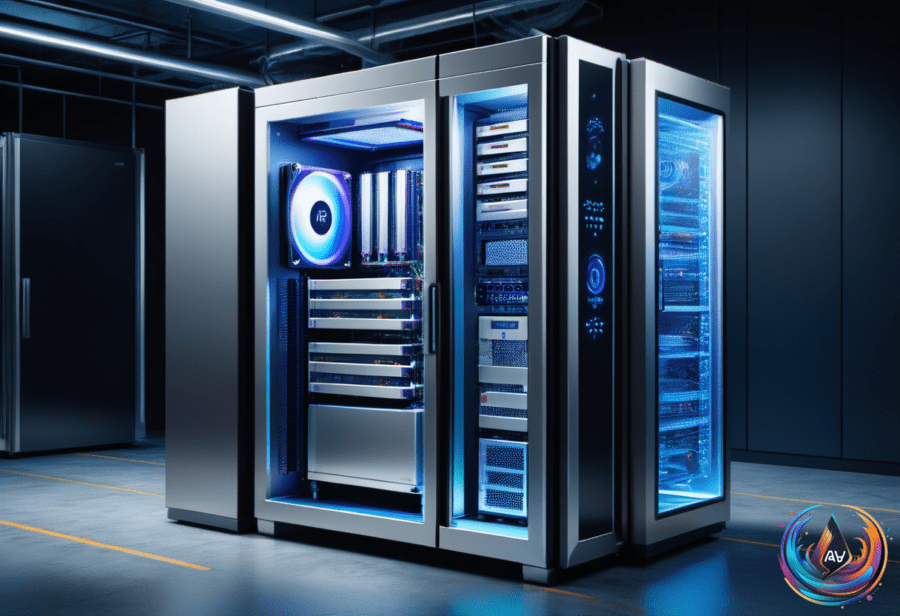
Hazra also pointed to Quanta Computer’s experience building advanced computing technology, saying the partnership can help manufacturing, engineering expertise, and supply chains develop alongside quantum systems. IBM’s work on a better refrigerator for its quantum computers fits the same broad challenge: quantum machines need specialized infrastructure, not just new processors.
IonQ brings a system to Canada’s quantum sandbox
IonQ announced a collaboration with CMC Microsystems to integrate IonQ’s quantum systems into Canada’s FABrIC Quantum Computing Sandbox. The Government of Canada’s Strategic Response Fund backs the FABrIC initiative with $217 million in support, while CMC Microsystems has enabled advanced technology innovation in Canada for more than 40 years.
IonQ’s newest quantum computer is the IonQ Tempo, the latest system in its line of quantum machines. In 2025, IonQ achieved 99.99% two-qubit gate fidelity, a measure tied to the accuracy of operations between two quantum bits. IonQ has operations in California, Colorado, Massachusetts, Tennessee, Washington, Italy, South Korea, Sweden, Switzerland, Canada, and the United Kingdom.
Its quantum computing services are also available through all major cloud providers, giving users access without requiring every organization to own a quantum system. Lisa Lambert, Vice President, Global Strategy & Managing Director, Canada at IonQ, and Gordon Harling, CEO of CMC Microsystems, are connected with the collaboration.
The sandbox gives the Canadian initiative a place to connect quantum systems with infrastructure and technical work. That matters because the field needs more than isolated machines; it needs engineering, manufacturing, testing, and access to computing services that can support wider use.
Illinois plans a research campus, not a data center
Illinois is taking a different approach with the Illinois Quantum and Microelectronics Park. The campus will sit on the site of the former U.S. Steel South Works Plant in South Chicago and cover 128 acres. The project has a $500 million commitment from the State of Illinois and aims to create 1,000 permanent jobs.
On August 18, 2026, the new quantum facility was described as a research and development project rather than a data center. It will include an apprentice program for community-college graduates in Chicago, creating a path into the industry for workers who may not follow traditional university routes.
Harley Johnson, a spokesperson for the Illinois project, stressed the difference between this facility and large hyperscaler data centers.
“This is not a data center. It’s a very different technology. This is quantum computing center and this is all about research and development. This will use much less power than the big hyperscaler data centers that we’re seeing. It will use much less water than the data centers we’re seeing. And one of the things we’re most excited about is it’ll create many more jobs and accessible jobs that you’re not seeing in that industry around AI.”
The Illinois development will also use native landscaping and bird-safe technology to address environmental concerns. Its focus on research and development, along with lower power and water use than hyperscaler data centers, gives the project a different footprint from the facilities that support many conventional computing workloads.
Christy George, CEO of the Illinois Economic Development Corporation, said the goal is to make the campus a central location for the industry and to bring economic activity to Illinois suppliers.
“We’re looking to make this really the center of gravity. And to have that happen in Illinois, it’s just an incredible opportunity to have this economy here and to build an industry here and to also impact suppliers.”
Johnson also described the long-term opportunity for Chicago, pointing to the next 20 or 30 years and the discoveries quantum computers may enable. Together, the projects in Illinois, Canada, and the Quanta Computer–Quantinuum partnership show a field preparing for the practical demands of quantum computing: better equipment, stronger supply chains, skilled workers, research facilities, and wider access to working systems.
Based on
- IBM builds a better fridge for its quantum computers — thenewstack.io
- Quanta Computer and Quantinuum Partner to Build an Industrial Foundation for Large-Scale Quantum Computing | National Post — nationalpost.com
- IonQ and CMC Microsystems Announce Collaboration to Expand Cloud Quantum Computing Access in Canada | National Post — nationalpost.com
- New quantum computing facility in South Chicago expected to have economic impact in Illinois – CBS Chicago — cbsnews.com