









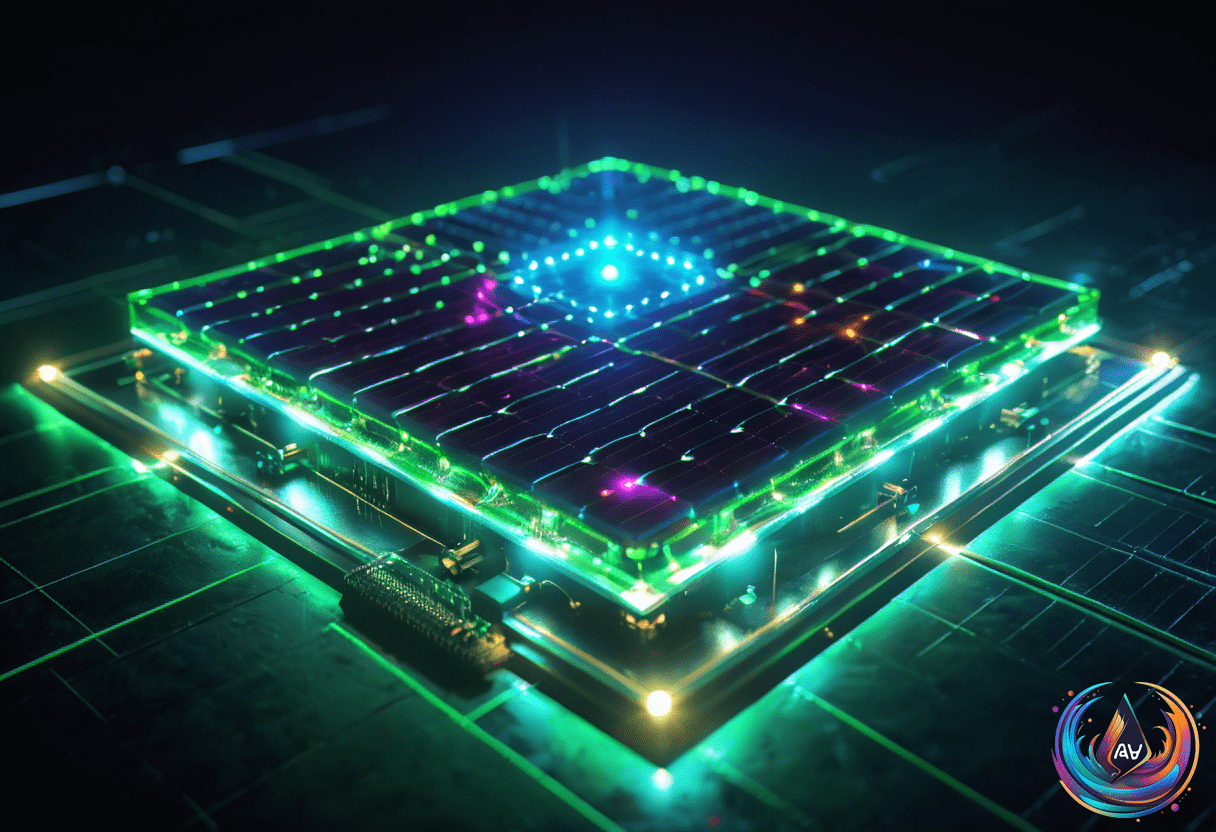
Startup Plans Satellite Data Centers Powered by Solar Energy
 5
5A new company is aiming to change how we handle AI processing by moving data centers into space. Instead of relying on Earth-based energy, they want to use solar power from satellites orbiting above. This approach could help solve the energy and cooling issues faced by traditional data centers on the ground.
A Bold Vision for Space-Based AI Infrastructure
Orbital Inc., a Los Angeles startup, recently announced its plans to build a constellation of small satellites in low Earth orbit that will serve as tiny data centers. These satellites will be equipped with GPU servers and large solar panels to generate power. The idea is to harness the sun’s free and abundant energy to run AI workloads like chatbots and virtual assistants.
The company’s goal is to deploy up to 10,000 small satellites, each about the size of a fridge and capable of producing 100 kilowatts of power. These would form a distributed cloud network in space, similar to concepts proposed by other companies. The first test satellite is scheduled for launch in 2027 aboard a SpaceX Falcon 9 rocket, which will help validate the technology and its ability to handle commercial AI inference tasks.
The Challenges of Space-Based Data Centers
Moving data centers into space is not without difficulties. One major challenge is managing heat. Even though the satellites will use solar energy, each one will generate heat that must be dissipated using radiative cooling panels. This is tricky in space, where traditional cooling methods don’t work well.
Radiation is another concern. High-energy particles in low Earth orbit can damage the hardware over time, which means the equipment needs to be built to withstand harsh conditions. Regular maintenance is also difficult and costly once the satellites are in orbit, making durability a key factor. Despite these hurdles, Orbital believes that smaller, dedicated inference satellites can be more feasible and cost-effective than large, centralized data centers on Earth.
Orbital’s approach focuses on creating a network of small, independent GPU nodes that can work together. This distributed setup could make managing and scaling the system easier, as each satellite operates semi-autonomously. The company sees this as a way to provide more sustainable and scalable AI infrastructure, taking advantage of the sun’s endless energy and reducing reliance on terrestrial power grids.














What do you think?
It is nice to know your opinion. Leave a comment.