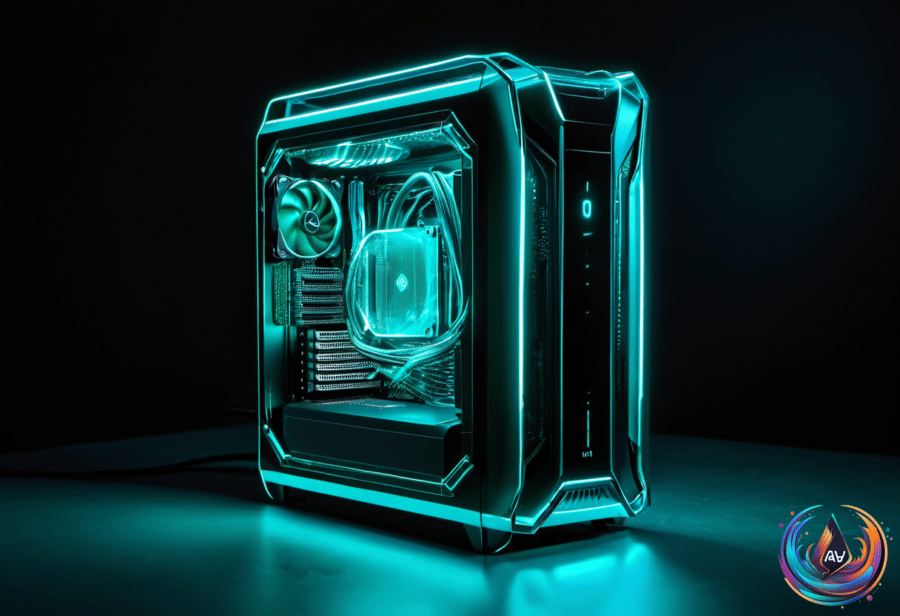
Imagine fitting a high-end gaming powerhouse into a box smaller than a PlayStation 5. That’s what ASUS has achieved with its latest ROG NUC 16 mini PC. This tiny device packs enough punch to run demanding games and AI workloads, all from a chassis just 3 liters in size. It’s not just a compact PC—it’s a statement about how small and powerful our future tech might be.
The ROG NUC 16 features a top-tier Intel Core Ultra 9 290HX Plus processor with 24 cores. Paired with an Nvidia RTX 5080 laptop GPU, it promises performance that rivals larger desktops. Despite its size, ASUS has managed to include advanced cooling with a triple-fan system and dual vapor chambers. This setup boosts thermal capacity by 12% while keeping noise levels below 38 decibels, even under heavy load.
What makes this mini PC stand out isn’t just raw power. It also boasts extensive connectivity options like Wi-Fi 7, Bluetooth 5.4, multiple HDMI and DisplayPort outputs, and fast USB ports. Storage and memory are equally impressive, supporting up to 128GB of DDR5 RAM and PCIe 5.0 SSDs with capacities up to 9TB. All of this fits into a chassis smaller than a game console, with a tool-less design for easy upgrades.
Is It Worth the Price?
Here’s the catch. The price tag is steep—around $4,400 in China, with US prices expected to hover near $4,000. For that, you get a mini PC that’s more than just a gaming device. ASUS promotes it as an AI-capable workstation, suitable for content creators and even local AI inference tasks. But with only about a 2.3% performance increase over last year’s model, many might wonder if it’s worth the premium.
Comparisons are unavoidable. Other mini PCs with similar size and features come at a lower cost, sometimes offering better value for gaming or professional use. The ROG NUC’s main selling point is its compact size combined with high-end specs, but it faces stiff competition from larger gaming desktops and portable laptops. Its niche is clear: those who want the most power in the smallest space and are willing to pay for it.
The Broader Context
This launch comes amid a challenging market landscape. The high price is partly driven by rising RAM costs and premium components. Still, ASUS’s focus on AI capabilities indicates a shift. More gamers and creators are looking for portable, versatile machines that can handle both gaming and AI tasks on the fly. The ROG NUC 16 aims to meet that demand, blurring the lines between gaming hardware and professional workstations.
China remains the first market to see these devices, often used as testing grounds before wider releases. The Black edition is expected to ship by the end of May, with a white version following shortly after. Global availability is still uncertain, but the message is clear: ultra-compact gaming PCs are here to stay, and they’re getting more powerful, more capable—and more expensive.
Whether this tiny beast is worth the cost depends on how much you value portability and cutting-edge hardware. For hardcore enthusiasts who need a mini PC that can do it all, the ROG NUC 16 offers a glimpse into what the future might hold: small size, big power, and a hefty price tag to match.
Based on
- Asus crammed an RTX 5080 into a 3-litre box. It costs $4,400 and the performance gain is 2.3%. — thenextweb.com
- ASUS ROG NUC 16: Redefining Compact Computing with AI and Power — techolam.com
- Asus launches refreshed ROG NUC gaming mini PC at eye-watering price – Notebookcheck News — notebookcheck.net
- ASUS unveils its powerful and compact ROG NUC 16 – OC3D — overclock3d.net
- ASUS ROG NUC 16: Neuer Mini-PC mit Top-Hardware vorgestellt — boerse-express.com