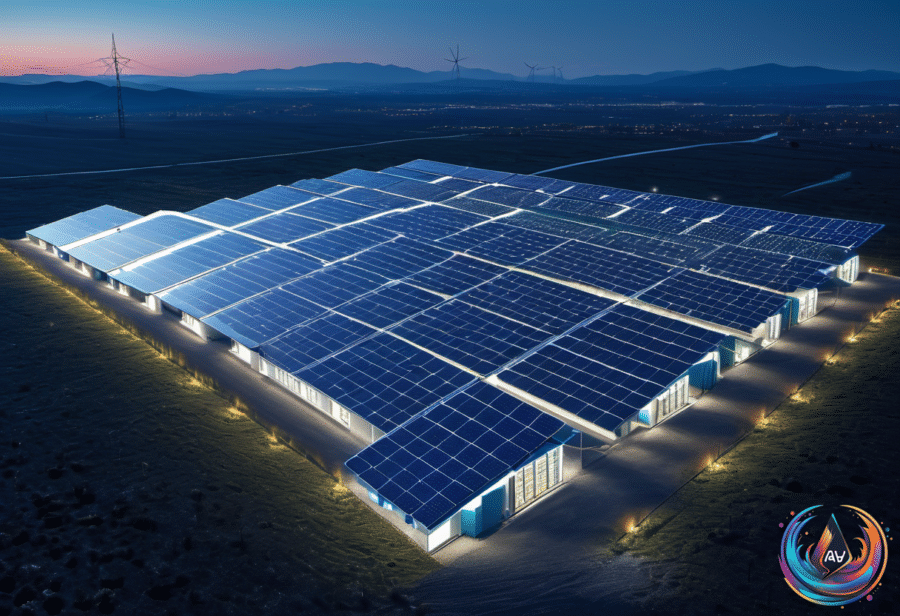
Powering AI data centers has become one of the central debates of the AI era. The technology industry wants to build at a speed the electric grid cannot match, creating a race for new power that reaches far beyond server rooms and software companies.
Since 2000, power use at data centers has risen an average of 19% a year, while U.S. grid capacity has expanded just 2% annually, according to an analysis by insurance broker Howden. That means data center power demand is growing 10 times faster than the system meant to supply it.
“Demand is growing faster than people appreciate,” Brook Porter, a partner at G2 Venture Partners, told TechCrunch. “It’s atoms, not bits, and the world is in the process of recognizing the realities of those challenges.”
A widening gap between data centers and the grid
The scale of the coming buildout helps explain the pressure. Citigroup projects that Big Tech will spend more than $2.8 trillion on AI infrastructure through 2029, while a Brookings study puts U.S. investment at $10.3 trillion between 2025 and 2032. The grid, however, moves on a slower timetable because thousands of connected parts must work together, requiring deliberate study and planning that can take years.
Rob Gramlich, president of Grid Strategies, described this as a “mismatch in timing” between data centers seeking power and the grid’s ability to provide it. After roughly 25 years of little growth in power demand, utilities “got out of practice on building new infrastructure.” Kathryn Burke of Marsh expects 50% to 60% of data center projects to face delays beyond the one-to-two-year timelines developers are counting on.
Data centers took about 5% of U.S. grid capacity in 2025. Lawrence Berkeley National Laboratory projects they could use as much as 12% of U.S. electricity by 2028, six times their 1.9% share in 2018. Howden estimates that holding their share at current growth rates through 2030 could require data centers to source up to 58% of their power off the grid, or roughly 110 gigawatts.
That gap has turned into a political problem, too. On Nov. 3, voters rejected data center development in 40 of 41 local ballot measures. A University of Pennsylvania Annenberg Public Policy Center survey found that 70% of adults under 30 oppose new data centers in their area, compared with 61% of all adults.
The financial effects are already showing up in electricity markets. A Cornell University study by Cheng Feng and Fengqi You estimated that data centers lifted wholesale prices in California’s southern Bay Area by nearly 20% in 2025 and pushed prices around Dallas–Fort Worth close to 17% higher. Across four grids, data centers paid only 38% of the infrastructure costs tied to their growth: $3.12 billion of an $8.25 billion bill.
Gas can move faster, but it carries a heavy cost
With grid connections taking as long as a decade, developers are securing power in any form they can. That has meant buying, renting, and deploying natural gas power plants, often behind the meter, on the customer’s side of a utility connection.
“The biggest motivator for on-site power right now from data centers is speed,” said Musfika Mishi, an associate at BloombergNEF. As of October 2026, developers had announced more than 100 behind-the-meter gas plants at U.S. data centers, with a combined planned capacity of more than 115 gigawatts. Only 4.9 gigawatts of those projects were operating, while 15.8 gigawatts were under construction.
BloombergNEF counted just 2 gigawatts of on-site gas generation operating at data centers worldwide as of March, but it has tracked 181 gigawatts of announced gas-fired generation proposed alongside data centers. More than 90% of that capacity is in the U.S. SpaceX has proposed a roughly $24 billion supercomputing facility and gas-fired power plant at Starbase, Texas, while xAI’s Memphis campus has used dozens of natural gas turbines, some without permits, as far back as 2024.
The emissions could be substantial. If planned U.S. behind-the-meter gas plants are built, BloombergNEF estimates they could emit 345 million metric tons of carbon dioxide equivalent each year by 2035. That is 152 million metric tons more than if the same data centers pulled power from the U.S. grid, a difference greater than the Netherlands’ total annual emissions.
“Even though data centers say that it’s a grid-bridging solution, the probability that it is going to be in use much longer is a real risk, and that leads to fossil fuel lock-in,” Mishi said. Brendan Pierpont of Energy Innovation called on-site gas a potentially expensive bridge across the five-to-seven-year gap before grid connections arrive.
Why solar and storage are gaining attention
Porter and his colleagues at G2 Venture Partners see another path: solar paired with long-duration energy storage. G2VP had an early view of AI data center growth after leading Crusoe’s Series C, and the firm estimates that data center investment will top $4 trillion through the end of the decade.
“Global capacity of natural gas is only about 60 or 70 gigawatts per year, where solar is already at well over a terawatt,” Porter said. Solar and many forms of long-duration storage use small, modular technologies that can be manufactured at massive scale. New storage products from Form Energy and G2VP portfolio company Antora Energy have also brought the cost per megawatt-hour down.
“Probably the most important lesson that we’ve learned over the last 20 years of backing companies is that Wright’s Law is the thing you want to leverage — making the same thing over and over again,” Porter said.
G2VP sees two paths ahead: small, on-grid facilities with their own generating capacity, and larger data centers powered by solar and long-duration storage. “The big idea is to go off-grid,” Porter said, arguing that renewables could let developers avoid grid access and air-permit constraints while reaching the market faster.
The approach still faces questions, and some long-duration storage technologies may be a few years away from broad acceptance among data center developers. Matthias Fripp of Energy Innovation said renewables and storage could provide reliable power at a lower cost than fossil fuels, while warning that rushing to behind-the-meter gas could raise other people’s bills and harm the environment.
“These data centers want a lot of power, and they want it fast, and the grid is not well equipped to provide that,” Fripp said. The next phase of AI construction will test whether the industry can meet that demand without shifting the cost, pollution, and permitting fights onto communities.
Based on
- Why a Crusoe investor is betting on solar and batteries to power future AI data centers — techcrunch.com
- A ‘mismatch in timing’: Data center power demand is growing 19% a year. The grid is growing 2% | Fortune — fortune.com
- Why Good Energy Projects Fail On Financing—And What Needs To Change — forbes.com
- Why data centers are at the center of the Big Tech backlash | TechCrunch — techcrunch.com
- Data centers are getting their own natural gas power plants | MIT Technology Review — technologyreview.com