









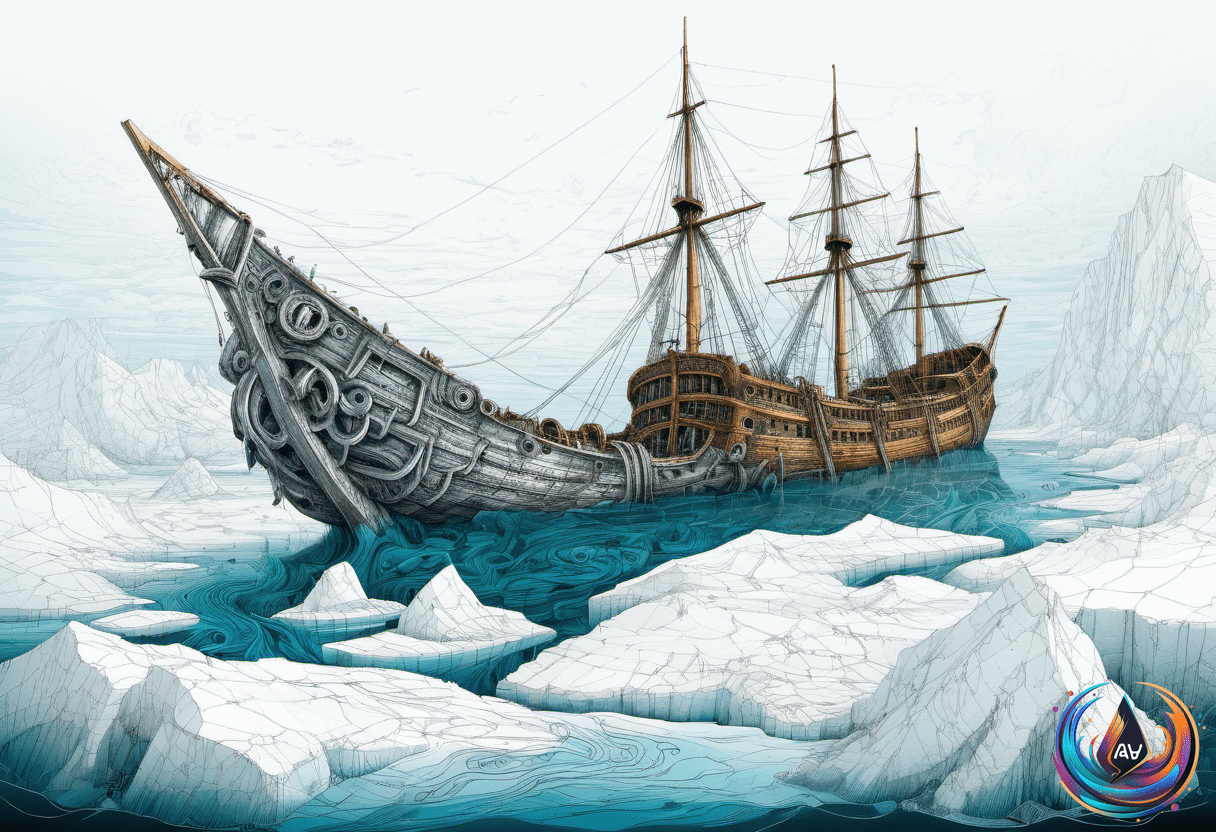
What Ancient Arctic Shipwrecks Reveal About Survival and Mystery
 5
5Scientists have made a fascinating breakthrough by identifying the remains of four sailors from Sir John Franklin’s 1845 Arctic expedition. Using DNA analysis, they confirmed the identities of crew members who perished during the ill-fated voyage that ended in starvation, exposure, and cannibalism. This discovery sheds new light on one of the most tragic stories in Arctic exploration history.
Uncovering the Fate of Franklin’s Crew
For decades, the exact identities of some sailors from Franklin’s expedition remained a mystery. Researchers from the University of Waterloo and other institutions used genetic testing on skeletal remains found in Erebus Bay, Nunavut. By comparing DNA from these bones to living relatives, they identified four men who died during the expedition: William Orren, David Young, John Bridgens, and Harry Peglar.
Most of these men served aboard HMS Erebus, the flagship, and their remains were found close to each other, indicating they likely died in the same area. Peglar, who served on HMS Terror, was found nearly 80 miles away and was the only crew member of the secondary vessel identified so far. Interestingly, Peglar’s remains included a handwritten note describing the hardships they faced, including the need for new boots due to the hard ground.
The Tragic End and What It Reveals
The DNA confirmation not only puts faces to these sailors but also helps reconstruct their final moments. The identifications show that these men survived the first three years of the expedition, enduring extreme conditions before succumbing. Researchers also found that none of the men died alone, emphasizing the brutal reality of their circumstances.
For example, Peglar’s note highlights the harsh environment—”very hard ground to heave”—and suggests their struggles with basic needs like footwear. The findings also confirm that Peglar was the only crew member to die alone, revealing aspects of the expedition’s final days. These insights help historians better understand the hardships faced by Franklin’s crew and the tragic toll of Arctic exploration.
New Insights from Arctic Seafloor Exploration
In addition to the shipwreck discoveries, scientists have been exploring the Arctic seafloor, capturing rare footage of its mysterious lifeforms. Researchers from Hokkaido University recorded videos and sounds of a turbulent Greenlandic fjord at depths of around 850 feet. They observed narwhals singing, copepods hopping suddenly, and a snailfish that moved backward in an unusual way.
This underwater footage reveals a vibrant and complex ecosystem beneath the icy waters. The backward-swimming snailfish, in particular, captured attention for its peculiar movement, drifting passively with the current for at least 16 seconds before vanishing. Such discoveries highlight how much remains unknown about Arctic life and its resilience amid extreme conditions.
These seabed studies not only deepen understanding of Arctic biodiversity but also demonstrate the region’s importance as a habitat for unique species. Despite the dangers posed by ice, cold, and storms, the Arctic continues to surprise scientists with its hidden ecosystems and extraordinary creatures.
All these explorations—whether uncovering the fates of lost sailors or observing Arctic life—show how science continues to unravel the mysteries of our planet’s most remote regions. Each discovery adds a new piece to the puzzle of history and nature, revealing stories that had been buried for centuries or hidden beneath the icy depths.














What do you think?
It is nice to know your opinion. Leave a comment.