









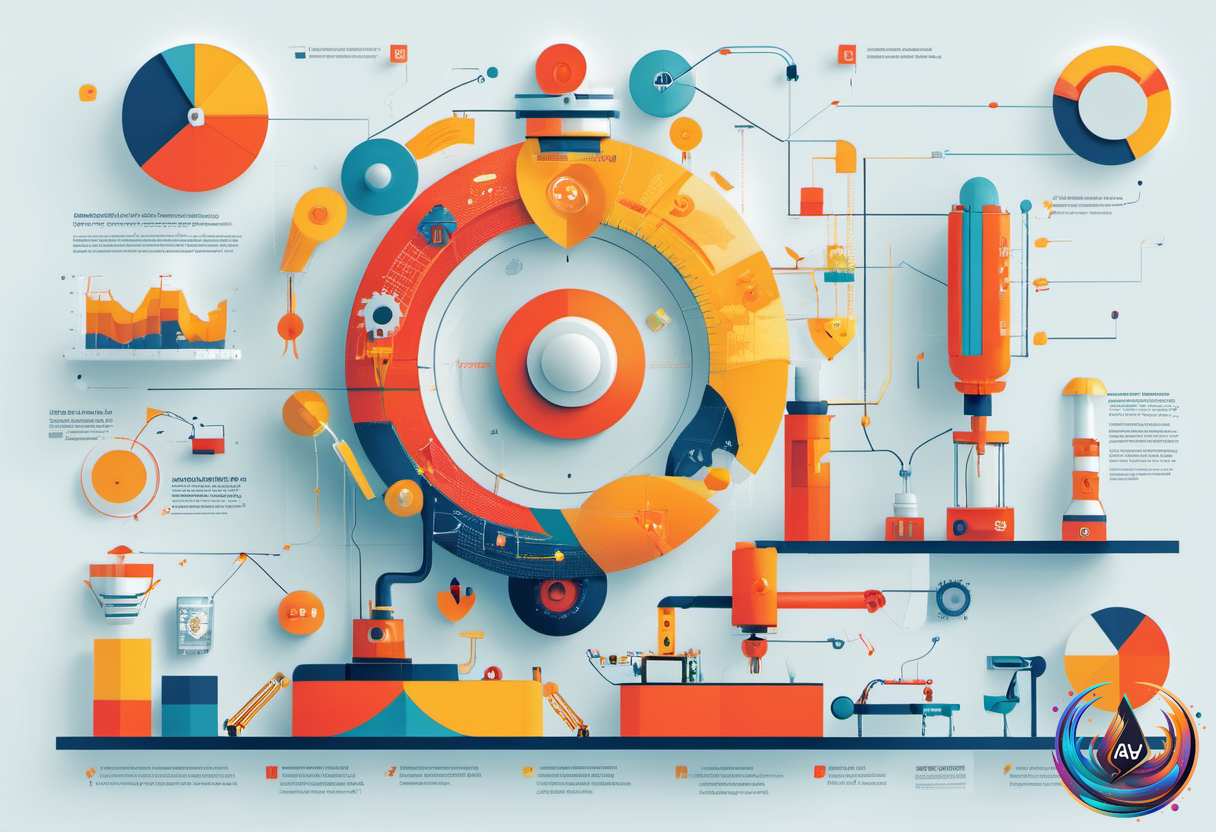
How AI is Transforming Industrial Robotics Today
 263
263Industrial robotics is getting a major upgrade thanks to new advances in artificial intelligence. A company called AgiBot has developed a system that helps robots learn and adapt directly on factory floors. This breakthrough could change how manufacturers approach automation, making it faster, more flexible, and more reliable.
Bridging the Gap Between Research and Real-World Manufacturing
AgiBot’s new system, called Real-World Reinforcement Learning (RW-RL), is designed to bring cutting-edge AI research into practical use. It has already been tested successfully on a pilot production line with Longcheer Technology. This marks a significant step forward in creating smarter, more adaptable industrial robots.
Traditional manufacturing lines rely on rigid automation setups that require complex fixtures and long tuning times. Even advanced vision and force-control systems often struggle with sensitivity to small changes, leading to costly reconfigurations and downtime. AgiBot’s RW-RL system tackles these issues head-on by allowing robots to learn and adapt on the spot, reducing the need for extensive manual adjustments.
Making Manufacturing More Flexible and Efficient
The key benefit of AgiBot’s AI system is its ability to enable rapid deployment. When a new product comes in or a line needs to be reconfigured, only minimal hardware changes are needed. The system can learn new tasks in minutes, not weeks. This drastically cuts down on downtime and costs, making manufacturing lines much more agile.
Another major advantage is the system’s robustness. It automatically compensates for common issues like part misalignment or tolerance variations. This means that robots can maintain high precision and a 100% task completion rate, even under less-than-ideal conditions. Such stability is crucial for high-volume, precision manufacturing.
Furthermore, the RW-RL system isn’t limited to specific setups. It works across different workspace layouts and production lines, making it highly versatile. This flexibility allows manufacturers to reuse the system in various scenarios, saving time and resources in the long run.
From Lab to Factory Floor
What sets AgiBot’s system apart is that it was tested in conditions close to actual production environments. Many AI demonstrations stay in labs or simulations, but AgiBot proved its technology in real-world settings. This full-cycle validation shows how close we are to seeing AI-driven robots in everyday factories.
This development is a major step toward unifying perception, decision-making, and motion control in industrial robots. As these systems become more integrated, factories will be able to respond faster to changing demands and new product lines. It opens the door to smarter, more adaptable manufacturing processes.
Overall, AgiBot’s breakthrough in real-world reinforcement learning marks a new era for industrial automation. It offers companies the chance to deploy intelligent robots quickly, adapt easily, and operate reliably. This could lead to more efficient factories and a new level of flexibility in manufacturing industries.














What do you think?
It is nice to know your opinion. Leave a comment.