









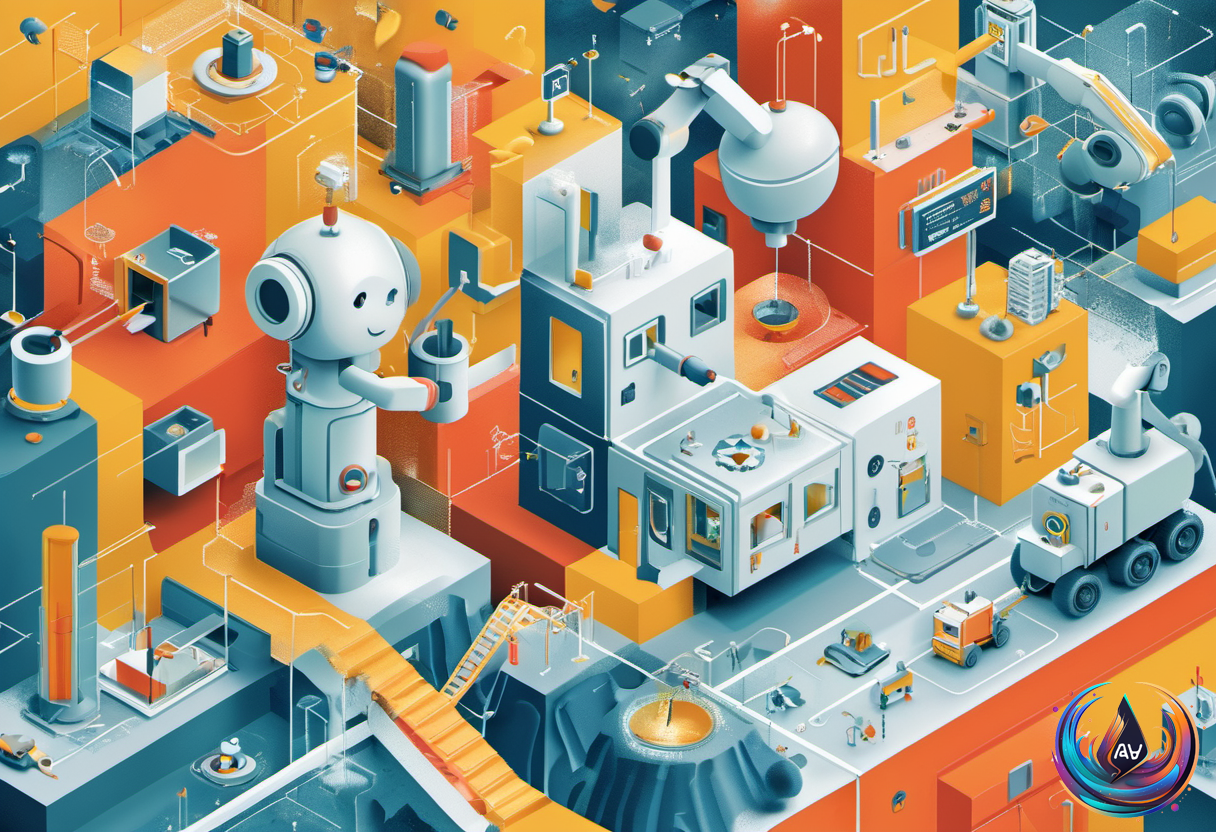
Google’s Big Move into Industrial Robotics AI
 173
173Google is making a bold step into the industrial robotics world by officially bringing its AI-focused company, Intrinsic, into its main operations. This move signals a serious commitment to developing smarter, easier-to-use robotics technology for manufacturers. Although the deal didn’t disclose a purchase price, it shows Google’s intent to lead in this growing market.
Intrinsic’s Journey and New Role
Intrinsic started as a part of Alphabet’s X division, known for moonshot projects like Waymo and Wing. It became its own company in 2021, specifically focused on making robotics programming simpler. Their flagship platform, Flowstate, lets users create robotic applications without needing to write tons of code. It works across different hardware and software, making it flexible for various industrial robots.
Now, Intrinsic will operate as a separate unit within Google, working closely with Google DeepMind and using Google Cloud services. CEO Wendy White mentioned that Google CEO Sundar Pichai compared Flowstate to Android, calling it “the Android of robotics.” This analogy highlights Google’s vision to create a universal platform for manufacturing robots that anyone can access and use.
Strategic Moves and Market Impact
The timing of this integration isn’t accidental. Google recently hired Boston Dynamics’ CTO, launched a robotics SDK, and absorbed Intrinsic, signaling a coordinated effort to build up its robotics capabilities. By combining DeepMind’s AI models, Intrinsic’s software, and Google Cloud’s infrastructure, Google is creating a comprehensive ecosystem for industrial robotics.
Recently, Google partnered with Boston Dynamics to incorporate Gemini AI models into Atlas humanoid robots designed for factories. Additionally, Google DeepMind hired Boston Dynamics’ former CTO, further strengthening its robotics expertise. These steps show Google’s plan to compete in a market projected to reach hundreds of billions of dollars by 2040.
What This Means for Businesses
For companies and decision-makers, the real story isn’t just the technology. It’s how accessible and practical these advancements will become. Google aims to make industrial robotics smarter and easier to deploy by integrating Intrinsic’s platform with its AI tools and cloud services.
This integration could allow manufacturers to use robots that better understand their environment, adapt to new tasks, and require less specialized programming. As a result, more businesses might adopt robotics, speeding up automation and reducing costs. Overall, Google’s push into industrial AI could reshape how factories operate in the years ahead.
In short, Google is betting big on making industrial robots smarter and more accessible, positioning itself as a major player in the future of manufacturing AI. This move could accelerate the adoption of automation across industries worldwide.
















What do you think?
It is nice to know your opinion. Leave a comment.