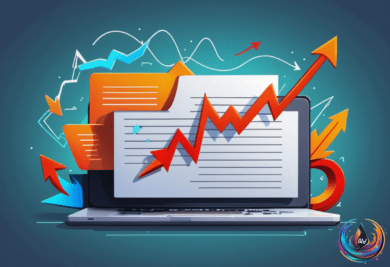
AI inference costs have collapsed. Early 2023 saw GPT-4-level models cost about $30 per million tokens. Today, some providers charge less than ten cents.
Prices have dropped between 9x and 900x in a year, with a median decline near 50x. Even top-tier models and open-source alternatives follow this steep cost plunge. The simple truth: the cost of AI is dropping rapidly.
AI is evolving beyond single-task assistants. Systems are turning into independent agents that handle complex workflows. Organizations now push AI into broader roles as its capabilities expand.
However, most enterprises stumble on legacy data systems. Fragmented ownership, inconsistent formats, and incomplete datasets block AI from scaling. Without AI-ready data, 60% of AI projects will fail by 2026.
Data is the backbone of AI architecture. Without clean, governed, and accessible data, models fail to deliver context or reliable services. As one CIO put it: “The data quality has to be good; otherwise, the user loses confidence.”
Effective context engineering is critical. It demands minimum context, accurate and current data, and machine-readable formats. Observability tools track AI usage and performance, catching issues before they cascade. Eighty-five percent of IT leaders plan to enable LLM observability for internal AI apps by 2026.
People remain the key to AI’s impact. Teams are expanding to meet generative AI demands, with nearly 70% of tech executives boosting staff in response. AI tools promise to speed work velocity, but only skilled humans can steer them well.
SkillWeaver: Smarter Agent Frameworks Slash Waste
Alibaba’s SkillWeaver is a fresh take on agentic AI. It decomposes tasks into execution graphs, picking the right tools for each node. This skill-aware decomposition (SAD) loops to fetch and vet tools, refining choices every step.
Naively exposing an AI to a huge tool library wastes tokens—up to 884,000 per query. SkillWeaver cuts that to about 1,160 tokens, a 99.9% reduction. Accuracy jumps from 51% to 67.7% with SAD, reaching 92% on larger models.
The framework uses a 7-billion parameter model and semantic search retriever. Its retrieve-and-route approach beats naive methods in both cost and accuracy. The source code isn’t public yet, but it can be built with common orchestration tools and off-the-shelf models.
Geopolitical Ripples from Chinese Open Models
China’s Zhipu (Knowledge Atlas Technology) launched GLM 5.2, its most advanced model yet. Their focus is on artificial general intelligence and open-source AI. This move rattles the U.S. AI establishment, posing a serious threat.
Coincidentally, U.S. regulators cracked down on Anthropic’s top models around the same time. Zhipu’s progress highlights the growing geopolitical stakes in AI leadership and open-source competition.
The AI world is no longer just a tech race. It’s a data war, a governance challenge, and a geopolitical chess game. The cost of AI might be dropping fast, but the stakes keep climbing.
Based on
- Intelligence is Free, Now What? <br> Data Systems for, of, and by Agents — bair.berkeley.edu
- The foundational elements of AI architecture that IT leaders need to scale | MIT Technology Review — technologyreview.com
- New Alibaba AI framework skips loading every tool, cutting agent token use 99% | VentureBeat — venturebeat.com
- A China shock is shaking Silicon Valley – The Japan Times — japantimes.co.jp