What if the biggest AI rivalry on Earth is not really a race? What if it’s a complex dance of competition and collaboration? The U.S. and China dominate AI headlines as fierce rivals. But behind the scenes, their AI worlds are tightly linked.
Talent flows back and forth. Researchers share ideas and code. Innovations leapfrog across borders. This is no simple battle of good versus evil or winner-take-all sprint. It’s a tangled web of shared goals and mutual inspiration.
The Myth of a Straightforward AI Race
Everyone talks about the “AI race” like it’s a 100-meter dash. But the truth is more like a marathon with pit stops and teamwork. The U.S. leads in frontier AI models and advanced chip design. China excels in scaling AI across industries and deploying robots faster than any other country.
America’s AI labs recruit top Chinese talent, often paying seven-figure salaries. These researchers keep close ties to their colleagues back home. They exchange breakthroughs over chat groups and celebrate new model releases together. When a Chinese lab launches a cutting-edge AI, U.S. researchers congratulate their peers instantly.
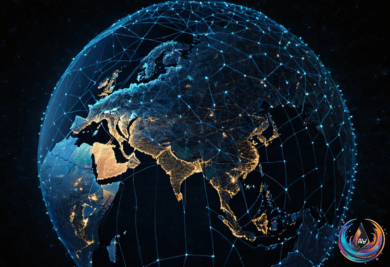
Chinese AI startups have created some of the best open-source models. Their work on energy-efficient AI algorithms even influences U.S. engineers. Meanwhile, American companies develop the powerful GPUs that fuel AI innovation worldwide. Nvidia’s chips power everything from ChatGPT to military systems, making it a linchpin in global AI development.
Two Different Tracks, One Shared Future
The U.S. and China are not racing to the same finish line. The U.S. focuses on achieving artificial general intelligence — machines that think like humans. China applies AI to transform its entire economy, from automated ports to smart healthcare systems. This means both countries lead in different aspects of AI.
- U.S. Strengths: Cutting-edge AI research, advanced semiconductor design, and global AI infrastructure.
- China’s Strengths: Mass deployment of AI technologies, manufacturing speed, and integration across government and industry.
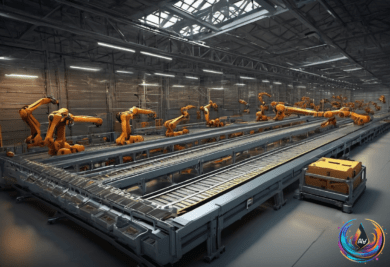
China leads the world in robot density and automated factories. It runs fully automated port terminals that crush supply chain delays. Meanwhile, American AI firms push the frontier of algorithms and models that power new products and services worldwide.
This split focus creates a dynamic tension. Both nations push the envelope but also learn from each other. Attempts to restrict chip exports or control AI know-how collide with the reality that AI development depends on international collaboration. Many researchers see politics as distant noise to their daily work.
What’s Next in the AI Power Play?
The future of AI leadership hinges on compute power and chip supply chains. The U.S. and its allies hold a near-monopoly on semiconductor manufacturing, controlling everything from chip design to the machines that etch circuits. This supply chain dominance gives America a critical edge.
But China is closing gaps by developing its own AI models and finding ways to access advanced chips despite export controls. The struggle over GPUs and AI hardware will shape who pushes AI boundaries further by 2028 and beyond.
The AI showdown is about more than technology. It’s about values, governance, and global norms. The U.S. envisions AI aligned with its democratic ideals, while China uses AI to strengthen social control and economic power. The world will watch which vision gains global traction.
Yet, beneath geopolitical battles, AI experts on both sides share a cultural identity. They devour podcasts on AI scaling laws. They debate agentic AI’s future impact. They ask each other the same question: “Do you write with AI now?”
The AI race is not a zero-sum game. Collaboration and competition coexist. The global AI future depends on how these two giants navigate their rivalry while staying connected. And that will shape the next industrial revolution for everyone.
Based on
- What AI race? China and U.S. AI worlds are tightly connected — restofworld.org
- The AI Cold War: How US-China Tech Rivalry Is Reshaping Global Power – Modern Diplomacy — moderndiplomacy.eu
- The Global AI Race Is Not About Better Models. It Never Was. | by Umair Ali Khan, Ph.D. | May, 2026 | Towards AI — pub.towardsai.net
- Deric’s MindBlog: The Tech Mirage: Why the U.S.-China AI Race Is Failing Us All — mindblog.dericbownds.net
- The AI Race — United States, China and us. | by Dr. Nimrita Koul | May, 2026 | Medium — medium.com
- The AI Race: Who Is Actually Winning — and What Changes Everything in the Next Year – The Official Blog of Richard Crenian — richardcrenian.com