The launch market is getting crowded and stranger. Cowboy Space has unveiled Big Iron, a medium-lift rocket designed to carry satellites into orbit and become an orbital data center afterward. ESA’s Themis demonstrator, meanwhile, is still waiting for a weather window that may not arrive before winter closes in.
Cowboy Space released the first details about Big Iron on Oct. 26, with plans to loft the rocket before the end of 2028. The company wants to build its first rocket by the end of 2027, according to chief operating officer Joseph Yaffe, while targeting the first flight in 2028. The schedule is ambitious, especially since the company did not have much hardware to show at its reveal.
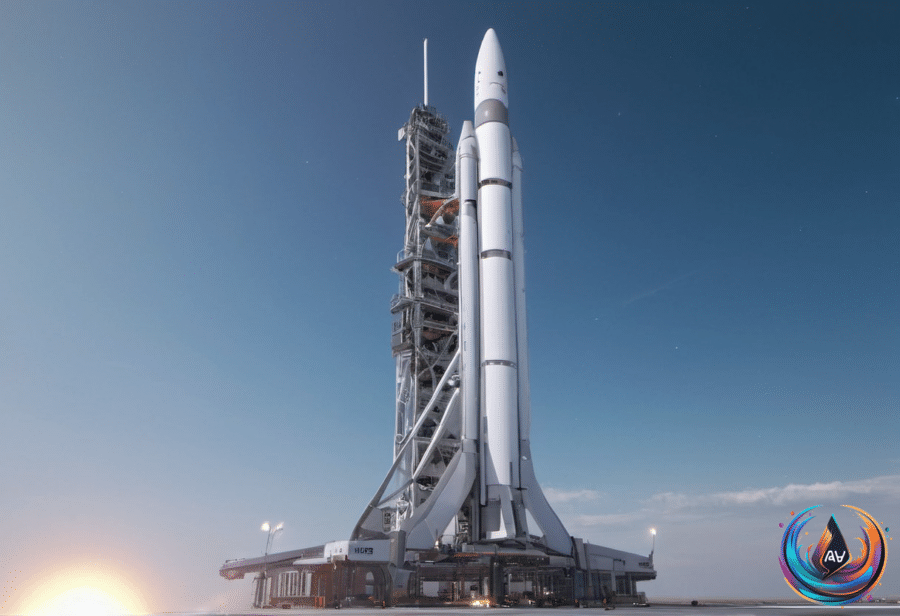
Big Iron will stand 282 feet (86 meters) tall and measure about 15 feet (4.7 meters) in diameter. Its payload capacity will reach 18 metric tons (39,700 pounds) to low-Earth orbit, putting the vehicle slightly above SpaceX’s Falcon 9 and United Launch Alliance’s Atlas V in height.
Nine methane-fueled Clydesdale engines will power the reusable first stage, with a single Clydesdale assigned to the second stage. Each engine will produce 30,000 pounds of thrust, according to the company. The name Big Iron references the classic country-western song by Marty Robbins, because apparently rockets now need a soundtrack before they need flight heritage.
A rocket with a data center attached
Big Iron’s upper stage will not simply deploy a satellite and disappear. After reaching orbit, it is designed to remain there as a “megawatt-class data center,” using deployable radiators and five compute racks of NVIDIA Vera Rubin GPUs.
The upper stage can also be switched for a payload that provides customers with a megawatt of power or one that dispenses satellites. Cowboy Space says the rocket will support its ambitions for the 20,000-satellite Stampede constellation, while Baiju Bhatt is chasing the market for space-based AI led by SpaceX.
“We set out to build data centers in space and found there weren’t enough rockets to get them there, so we’re building our own,” Bhatt said. He also said opening Big Iron to the rest of the industry would give the country another path to orbit.
Bhatt, the billionaire co-founder of Robinhood, started the company as Aetherflux in 2024 and rebranded it as Cowboy Space earlier this year. Yaffe said the company has begun discussions about pursuing the military’s National Security Space Launch business, adding, “That need is very clear, very obvious.”
Themis waits while Virgin Galactic moves
ESA’s reusable Themis rocket demonstrator faces a less confident calendar. Géraldine Naja, ESA’s Director of Space Transportation, said on October 22 that she was uncertain whether the agency could complete Themis’s first flight before the end of the year.
The single-stage rocket hopper has completed two countdown rehearsals at Esrange Space Center in Sweden, but the harsh Scandinavian winter may prevent its first flight in 2026. ESA Director General Josef Aschbacher said in January that the first hop test would happen in the first quarter of 2026; officials originally expected the low-altitude test in 2022.
Themis uses a reusable methane-fueled Prometheus engine, with ArianeGroup as its main contractor. The demonstrator is supposed to test technologies for a reusable replacement for the expendable Ariane 6. Four years after the original target, the rocket is still rehearsing the countdown.
Virgin Galactic has moved its own program forward. The first of its new Delta-class rocket planes left the company’s Arizona factory Wednesday for Spaceport America in neighboring New Mexico, where engineers and technicians will finish its avionics equipment and flight software.
The vehicle, named Apeiron, will undergo ground tests before returning to its carrier aircraft for captive carry tests. A drop test will follow, then a powered test flight above 80 km. Virgin Galactic expects Apeiron’s first commercial spaceflight in “early” in the second quarter of 2027, after halting commercial flights of VSS Unity in 2024.
With Blue Origin’s retreat from the suborbital spaceflight market and SpaceX’s planned retirement of the orbital-class Dragon spacecraft, Virgin Galactic is the only company with a realistic chance of flying paying commercial passengers to space anytime soon. That is less a victory lap than a reminder of how thin the market has become.
The wider shift is visible in SpaceX’s relationship with NASA and government customers. SpaceX has told NASA it will stop flying Crew Dragon by or before 2030, and Gwynne Shotwell said in September that NASA should rely on Boeing for astronaut transportation. SpaceX also stopped selling commercial Falcon 9 launches for missions after 2028 and told lunar companies it would not provide launch services for their Moon Base missions.
SpaceX is still fulfilling its existing contracts with NASA, the US Space Force, and other government entities, at a lower cost and higher reliability than nearly anyone else. But it also declined to bid on three new launch contracts in the late 2020s, while Kent Rominger said a US Deorbit Vehicle mission after 2030 “may require” a rocket other than Falcon 9.
That leaves the industry with a familiar problem: demand for launch capacity is not disappearing, but dependable alternatives remain scarce. Cowboy Space wants to fill one gap with a rocket that doubles as a data center, Virgin Galactic is rebuilding its passenger operation, and ESA is trying to get Themis off the ground before the weather makes the decision for it.
Based on
- Rocket Report: Winter is coming for Themis; Cowboy Space adds iron to the fire — arstechnica.com
- Cowboy Space debuts new ‘Big Iron’ rocket — axios.com
- Tag: space – Ars Technica — arstechnica.com
- SpaceX no longer needs NASA, and that’s a problem for America’s space agency – Ars Technica — arstechnica.com