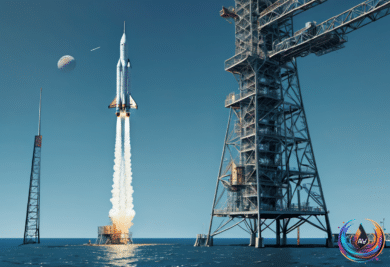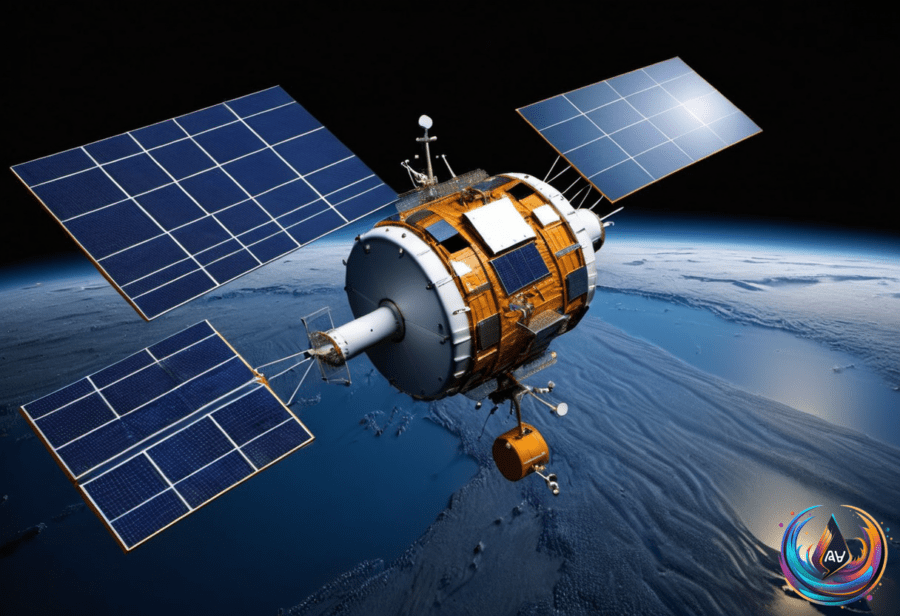
Satellite technology is shifting gears with bold new projects promising to rewrite the rules of navigation, illumination, and data processing in orbit. Low-Earth orbit is the new playground for companies aiming to outgun GPS and light up the night.
Xona Space Systems plans to launch 258 satellites into low-Earth orbit to challenge GPS. Their promise? Signals 100 times stronger than existing systems operating from higher altitudes. The boost in power means better indoor reception, a crucial advantage when GPS jamming disrupts commercial flights, maritime shipping, and smartphone apps.
Adrien Perkins from Xona put it plainly: “That added power means that we can get into that indoor environment that GPS can’t get to today.” This could reshape how navigation works in cluttered urban environments or remote locations where GPS struggles.
Meanwhile, Reflect Orbital is about to launch the first sunlight-reflecting space mirror named Eärendil-1. This 59-foot reflective satellite aims to redirect sunlight onto Earth’s surface at night, illuminating areas up to 3 miles wide. Reflect Orbital plans a full constellation of 50,000 satellites by 2035, offering “on demand” daylight across solar energy, agriculture, and emergency response sectors.
“Imagine the endless possibilities when sunlight is not limited by geography or time of day,” Reflect Orbital enthuses, though some experts worry about the impact on astronomy. Betty Kioko from the European Southern Observatory warns, “For optical astronomy, this is an existential threat.” Regulators will have to weigh the benefits against dark-sky preservation.
Satellite Internet and Orbital Data Centers Race Ahead
Amazon is stepping into the satellite internet arena in Africa. Their Amazon Leo service will launch in South Africa in 2027, partnering with local internet provider Herotel. This marks Amazon’s first satellite internet deal on the continent, arriving ahead of SpaceX’s Starlink, which already serves about two dozen African countries.
Amazon’s satellite internet constellation already has over 390 operational satellites after first launches last year. The company clearly aims to compete aggressively, targeting new markets with a strategy that mixes scale and local partnerships.
Meanwhile, SpaceX has bigger ambitions orbiting above. They plan to develop the AI1 satellite, the first orbital data center. This satellite will house solar panels covering around 600 square meters, generating up to 150 kW at peak and 120 kW on average to power onboard computing.
These satellites weigh between 3.5 and 7.5 metric tons, with solar panels alone tipping the scales at 1 to 2 metric tons. The onboard computers generate intense heat, demanding large radiators for cooling. SpaceX’s Starship rockets—V3 with 100 metric tons payload and V4 with 200 metric tons—will launch these heavyweights.
Launch costs are estimated at $20 million per mission, about $100 per kilogram to orbit. Optimistic forecasts expect 57 AI1 satellites per launch, potentially requiring 3,500 launches yearly to maintain a constellation of one million satellites. The cost? Between $1.45 trillion and $9.8 trillion depending on launch success and satellite longevity.
SpaceX has tackled radiation challenges by using components that tolerate space conditions and innovating power supply designs. Elon Musk’s take: “Basically, we don’t think this is a super hard problem.” Whether rivals share that confidence remains to be seen.
These projects reveal a future where satellites don’t just orbit silently. They will redefine navigation precision, bring sunlight to dark places, connect underserved regions, and host powerful AI in space. The next decade will test how far these ambitions can stretch—and how Earth’s skies and economies respond.
Based on
- Move over, GPS: Navigation satellites in low-Earth orbit are making a comeback — arstechnica.com
- The first sunlight reflecting space mirror has been cleared for launch | The Verge — theverge.com
- Amazon will launch its satellite internet in South Africa, seemingly beating Musk in his homeland — nbcnews.com
- How hard is it to build orbital data centers, actually? – Ars Technica — arstechnica.com
- Amazon to beat Starlink launching satellite internet in South Africa — ctvnews.ca