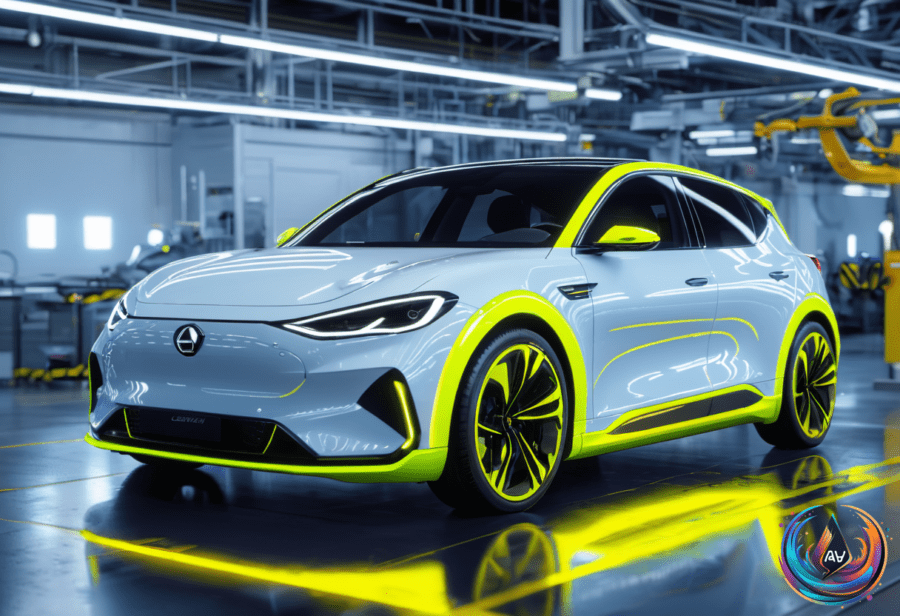
Renault is moving production of the Dacia Spring EV to Europe, creating a new version of the small electric vehicle that can qualify for local subsidies. The Spring will be assembled in Novo Mesto, Slovenia, instead of being imported from China.
The move gives Renault a European-built version of its €17,900 Dacia Spring EV. After EV credits, the cost can fall to €12,200 ($14,169), making the subsidy question central to the car’s appeal. Dacia is Renault’s value brand, and the Spring has already found a large audience since its launch.
A proven electric model gets a European build
Dacia has sold 210,000 Spring EVs across the world since 2021. That makes the Spring a relative success for Renault, especially as the company now prepares a larger version for Europe. The new model keeps the Spring name while changing where the vehicle is made.
Building the car in Novo Mesto, Slovenia, gives Renault a way to meet the conditions tied to local subsidies. The production change also marks a shift from the Spring’s earlier path into Europe, where the vehicle came from China. Dacia is now bringing a larger version made in Europe instead.
The basic idea is simple: the Spring remains a low-cost electric vehicle, but its European production may help buyers qualify for financial support. That can change the final price without changing the car’s listed €17,900 price.
Gilles Guillaume described the market with a short observation: “What we have seen since April, is there is a mix.” The Spring’s European production adds another part to that mix, pairing a value-focused electric car with a different manufacturing location.
More room without losing the Spring’s practical focus
The larger Spring grows by 5.9 inches in length and 7.1 inches in width. Those changes give the vehicle more space while keeping its role as a compact electric model. Its initial storage space measures 10.9 cubic feet, rising to 11.9 cubic feet after the rear bench folds.
Fold the rear bench down completely, and storage expands to 45.3 cubic feet. Those figures show where the larger version is aimed: drivers who want a small electric vehicle but need room for more cargo. The extra space also separates the new model from the smaller Spring that helped Dacia reach 210,000 sales.
The Spring uses a 27.5kWh battery and produces 80 horsepower with 129 pound feet of torque. Its range reaches 155 miles under the WLTP test, while the EPA range is about 133 miles. The two figures use different testing standards, but both describe a vehicle built around short and medium trips.
Charging and price remain central
Fast charging takes the battery from 15 to 80 percent in around 28 minutes. Charging from a standard 6.6kW outlet takes nine hours. That gives owners two clear ways to use the car: a shorter stop when fast charging is available, or an overnight charge from a standard outlet.
These numbers fit the Spring’s position as an affordable electric vehicle. The car does not lead with high power or a large battery. Instead, it combines an €17,900 price, 80 horsepower, a 27.5kWh battery, and enough space for everyday cargo in a larger body.
For Renault, European assembly connects those practical features to the subsidy rules that shape the final cost for buyers. The €12,200 figure after EV credits shows how much the support can matter. Access to that price depends on the local subsidy conditions, which is why the production location matters.
The Spring’s move from China to Slovenia does not erase its original identity. It remains Dacia’s value-focused EV, now with more room and a European build. With 210,000 units sold since 2021, Renault is expanding a model that has already proved it can attract buyers.
Based on