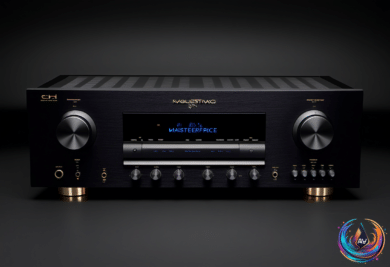
Razer has launched the Clio X, a lower-priced version of its Clio head cushion wireless speaker. The new model costs $110, putting it at less than half the price of the original Clio, which launched last year for $230.
That price gap is the main story behind the Clio X. Razer keeps the product in the same head cushion wireless speaker category, but the $110 price gives shoppers a lower-cost way to choose the Clio line. The original Clio remains the flagship model, while the Clio X takes the more affordable position.
A $110 Speaker With Spatial Audio
The Clio X uses two 38mm loudspeakers and two 55mm passive radiators. Together, these components form the speaker system inside the head cushion design. Razer also includes THX Spatial Audio, which gives the Clio X a software feature shared through its audio experience.
The speaker connects to a computer through Razer’s proprietary HyperSpeed 2.4 GHz wireless technology. That lets the Clio X link to a computer without a wired audio connection between the two devices. The product can also be connected to a soundbar, giving it another role within a larger audio setup.
Those connection options make the Clio X more than a single-purpose speaker. It can work with a computer through HyperSpeed 2.4 GHz wireless technology, or connect to a soundbar when that setup fits better. The available facts do not describe other connection methods, so the computer and soundbar links define the product’s stated compatibility.
Power Requirements Matter
Razer says the Clio X should be plugged into a PD2.0 power source for optimal performance. That instruction affects more than charging convenience, because the power source determines how much power the speaker can draw.
A non-PD power source will limit the Clio X’s power draw and result in a lower maximum volume. In other words, the speaker may still work with a non-PD source, but it will not reach the same maximum volume available with a suitable PD2.0 source.
This makes the power source an important part of the Clio X setup. Buyers looking for the speaker’s full performance should plan around PD2.0 rather than treating every power source as equal. The lower $110 price does not remove that requirement.
Razer recommends using a power bank with a capacity of at least 10,000mAh. That gives shoppers a clear capacity target if they want to power the Clio X with a power bank. The recommendation does not list a smaller capacity as suitable, so 10,000mAh is the figure Razer provides.
How the Clio X Fits the Lineup
The original Clio launched last year for $230, making the Clio X $120 cheaper. Since the new speaker costs less than half as much as the flagship Clio, the difference is easy to see before considering the audio hardware or power setup.
At $110, the Clio X gives Razer a more affordable option within the Clio range. Its two 38mm loudspeakers, two 55mm passive radiators, THX Spatial Audio, and HyperSpeed 2.4 GHz computer connection define the core feature set described for the model.
The power details are just as important as the feature list. A PD2.0 power source supports optimal performance, while a non-PD source limits power draw and lowers the maximum volume. Razer’s 10,000mAh power bank recommendation also gives users a specific starting point for choosing an external power source.
For shoppers comparing the two models, the Clio X stands out through its $110 price. The original Clio launched at $230, while the Clio X offers a lower-cost entry into the same product family with wireless computer connectivity, soundbar support, and THX Spatial Audio.