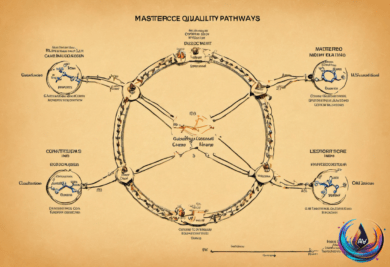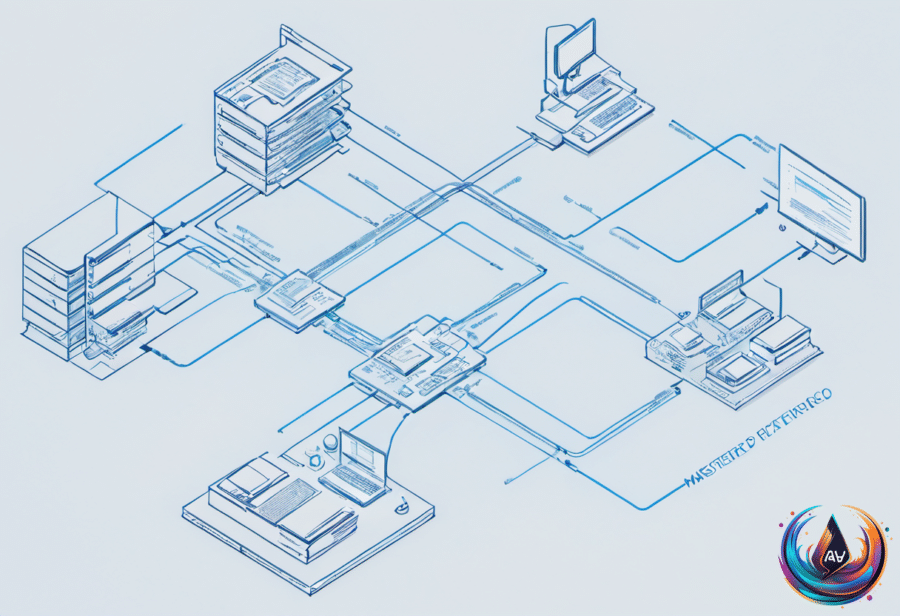
Most text clustering tools can tell you which documents share words, but that is not the same as understanding what they mean. A hands-on workflow built with Scikit-LLM, local text embeddings, and Groq’s LLM API takes a different path: first it groups documents by semantic similarity, then it asks a language model to explain what each group represents.
The result is a two-stage pipeline for document clustering and topic discovery. It can run entirely in a Google Colab notebook, uses free-tier pre-trained models, and avoids per-token costs. That makes the approach cost-free and easy to try, even when the working environment is only a notebook.
Clustering Meaning Instead of Matching Words
The workflow starts with the publicly available 20 Newsgroups dataset, loaded through scikit-learn’s fetch_20newsgroups() function without the associated labels. The example focuses on documents from three topics: space, automobiles, and computer graphics.
Before clustering, the notebook applies basic data hygiene. It removes empty strings, extremely short documents, and tiny remnants that do not carry clear topic meaning. After that cleanup, it takes a 300-document sample for the main experiment, producing a clean, unlabeled collection for clustering.
The first stage uses sentence-transformers and the lightweight local embedding model all-MiniLM-L6-v2. The model converts each document into an embedding vector, which represents the text in a form that captures meaning. Those vectors then go into KMeans with k=3, creating three groups based on semantic similarity.
That distinction matters. TF-IDF and other classical methods focus on overlapping terms, so two documents can look similar because they use the same words. Embeddings give the clustering step another way to compare documents, helping it group text by deeper meaning rather than simple keyword overlap.
Letting an LLM Name the Groups
Clustering produces groups, but the group numbers themselves do not explain anything. The second stage adds that missing layer by wrapping a pre-trained language model served by Groq in a GPTSummarizer object from Scikit-LLM. The model receives examples from each cluster and is asked to “name” the groups.
For efficiency and to avoid API token limits, the workflow randomly samples 10 documents from each cluster and truncates them before sending them for summarization. That gives the model a practical view of each group without passing the whole dataset through the API.
Scikit-LLM is configured to route requests through Groq’s API instead of the default OpenAI API. The notebook uses Groq’s free-tier pre-trained models, keeping the experiment away from per-token costs. To set it up, users visit the Groq website, register, and generate an API key.
That key requires care. It is shown only once, so it must be copied carefully and added to Google Colab as a new “Secret” under the key icon on the left side of Colab. The secret must use the name GROQ_API_KEY. The notebook installs the needed packages with:
!pip install scikit-llm sentence-transformers -q
This setup keeps the semantic work local while using the LLM for the part people find hardest to automate: turning clusters into rich, human-readable labels.
The Convenience Comes With a Privacy Question
The API key step also points to a larger concern. A separate Ars OpenForum discussion carries the title “A leaky AI supply chain is exposing secret user data at an alarming rate” and includes a warning that “Test using prompts with unique, trackable secrets proves that data doesn’t stay private.”
One quoted passage says each key was sent in exactly one request to one provider during a few short windows in late October, yet every request sent during those windows was stolen. Some stolen keys came from requests that the provider rejected before a model ran, which points to copying at the provider’s front door rather than deeper in the inference stack. The same passage says some stolen requests in the other two breaches were marked as ZDR.
That warning does not erase the value of the notebook workflow, but it changes how people should think about the data they send. Fred Duck put the concern bluntly: “Moore’s Law is not enough. The only way to ensure secrets don’t leak is to not give internet access to the model.” Robscura offered a more targeted idea: “Write a redaction gateway for your outgoing prompts. You’re welcome.”
The discussion also reflects how quickly AI has moved into daily work. Hypatia wrote, “I’ve lost count of the number of times I have been asked about Ai use at the enterprise level.” Aurich described a friend whose job is to use AI all day, comparing the work to hitting a wall at 200 miles per hour, picking up the pieces, and pressing the gas again. Aurich called that a human problem rather than a technology problem.
Other Ars OpenForum threads widen the conversation without changing the central tension. JournalBot started a thread titled “AI can do the calculations. Theoretical physicists are figuring out what comes next.” Another thread, “Google search alternative Kagi launches Gmail rival,” describes a pitch built from an unusual combination of privacy promises and AI features. The same forum also includes the grim joke from theotherjim: “Don’t worry, we plan on getting rid of those pesky humans as fast as possible.”
The clustering pipeline shows how accessible useful LLM workflows have become: local embeddings handle document meaning, KMeans creates the groups, and a free-tier model gives those groups understandable names. The privacy discussion shows the other side of that convenience. Before sending real documents or secrets to any model API, the data must be cleaned, controlled, and treated as information that may not stay private.
Based on
- Blending Unsupervised Clustering Tasks with Scikit-LLM — kdnuggets.com
- A leaky AI supply chain is exposing secret user data at an alarming rate | Ars OpenForum — arstechnica.com
- AI can do the calculations. Theoretical physicists are figuring out what comes next. | Ars OpenForum — arstechnica.com
- Google search alternative Kagi launches Gmail rival | Page 4 | Ars OpenForum — arstechnica.com
- A leaky AI supply chain is exposing secret user data at an alarming rate | Page 3 | Ars OpenForum — arstechnica.com