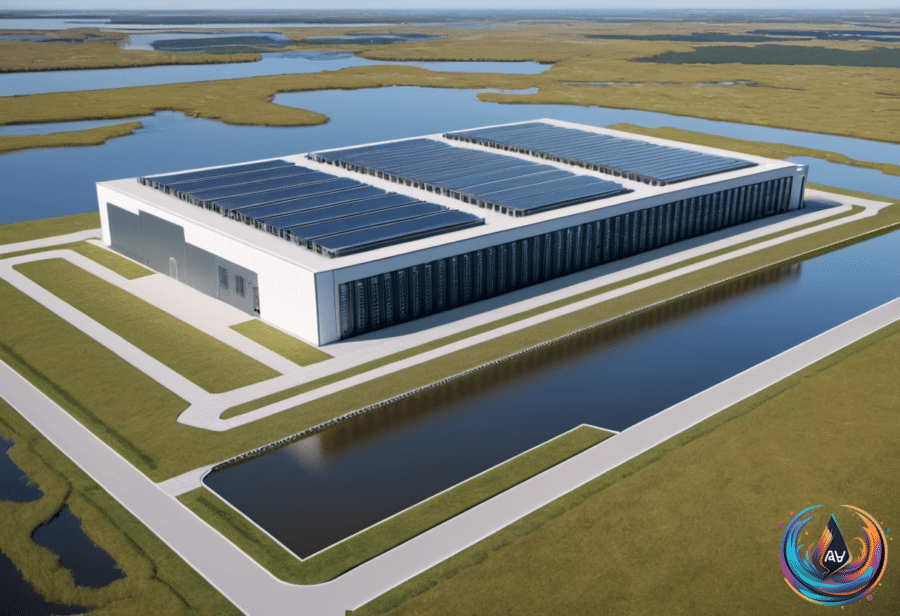
A proposed AI datacentre near Bristol has exposed a growing clash between the government’s push for rapid digital growth and the bodies responsible for protecting nature and public safety.
Natural England objected to the 40MW development at Avonmouth weeks before ministers threatened to abolish it and the Environment Agency. The two organisations are now being reviewed as part of a wider shake-up of quangos, or arm’s-length bodies, with Louise Haigh indicating that their responsibilities could be handed to ministers or devolved.
A datacentre beside protected habitats
Earlier this month, Natural England advised Bristol city council not to grant planning permission for the proposed site. The nature adviser warned that the project could cause “disturbance and displacement” to rare and vulnerable bird species within the Severn estuary special protection area, which lies 600 metres from the datacentre site.
Another protected location, Hallen Marsh, is only 270 metres away. Natural England said the developers had not accounted for Hallen Marsh when assessing noise pollution, adding to concerns about the impact on wildlife and habitats at one of the UK’s most important sites for migratory birds.
The Environment Agency objected too, pointing to the site’s position on a high-risk flood plain. It said people might not be able to reach safe refuge during a deluge, while the developers had provided no information about the level of water the datacentre would use or the risk of pollution from land contamination reaching controlled waters.
More than 4,000 people have objected to the construction. That local opposition sits alongside the concerns raised by the two public bodies, whose role is to examine whether major projects meet environmental and safety requirements before they go ahead.
Ministers want faster construction
The government sees AI datacentres as a key part of growing the UK economy and is pushing for their construction across the country. Hundreds are planned, while more than 300 AI datacentres are waiting to connect to the electricity grid. Together, those projects represent 73GW of demand, almost double the peak winter energy demand for the entire UK.
That scale brings difficult questions about energy, pollution and land. AI datacentres use large amounts of power and can encroach on protected habitats, while emissions from fossil fuel power stations may rise because many developers want to install them while they wait for grid connections.
Natural England has urged ministers to take caution and use a precautionary approach. In its response to the government’s draft datacentre national policy statement, it said AI datacentres were a relatively new type of development whose full environmental impacts were still being understood. The organisation also highlighted the possible effect on rare and vulnerable species when datacentres take water from waterways to meet their demands.
To avoid relying only on local planning decisions, the government is allowing datacentre developers to use the nationally significant infrastructure projects regime. Under that system, the secretary of state acts as the decision maker, giving ministers a greater role in deciding what gets built and where.
Louise Haigh said on Monday that Natural England and the Environment Agency were being reviewed. She blamed quangos, including Natural England, for blocking development and indicated that both bodies could be scrapped. Ministers are considering the move as a way to give politicians greater control over construction decisions.
Wider concerns over the datacentre boom
Craig Bennett, chief executive of the Wildlife Trusts, called the threatened abolition of Natural England a worrying sign of an attack on environmental regulation. He said, “Regulatory arm’s-length bodies like Natural England are set up to implement the law of parliament.”
Bennett also argued that independent bodies exist so decisions about nature are based on science rather than “the very last private corporate or vested interest that a minister has spoken to”. Natural England is the only public body described as having a legal duty to protect the jewels in the crown of English nature, while its ecologists must scrutinise political decisions and stop short-term growth from destroying rare and declining habitats.
Environmentalists say abolishing the independent body would make it easier for landowners and developers “to trash nature”. Scientists have also accused the government of scapegoating nature by proposing to scrap the only environmental regulator with a legal duty to protect the natural world.
The same argument is being heard in Slough, which already has around 40 data centres containing tens of thousands of computer servers. The rise of AI has changed the industry, creating demand for much larger hyperscale facilities, and campaigners want the government to slow the rollout.
Dr Ambily Banerjee, who runs Slough Against Data Centres, said the scale of the new facilities could not be missed and asked officials to examine the impact on communities before expanding the model across the country. The industry says it is committed to using renewable energy wherever possible.
James Tyler, managing director of Slough-based Equinix, said data centres create direct engineering and facilities jobs along with a wider supply chain supporting their design, construction and operation. Chris Hilson, professor of economic law at the University of Reading, warned that temporary fossil fuel power sources could burn fossil fuels and release carbon dioxide while projects wait for grid connections.
There are already more than 500 data centres across the country, with another 150 in the pipeline. Slough is well placed to profit from what some call a 21st Century gold rush, but the Avonmouth dispute shows the question is not only how quickly Britain can build. It is also whether environmental safeguards will remain independent when major projects face opposition.
The Department for Energy Security and Net Zero said emissions from data centres are included in its modelling. A spokesperson said, “We will set out Carbon Budget 7 by June 2026, in line with our statutory duties,” while the government remains legally committed to reaching net-zero emissions by 2050.
Based on
- Natural England objected to a datacentre. Weeks later ministers threatened to abolish the agency — theguardian.com
- Talk of scrapping Natural England smacks of a government not joining the dots | Natural England | The Guardian — theguardian.com
- ‘Scapegoating’: green groups condemn plan to axe Environment Agency and Natural England | Quangos | The Guardian — theguardian.com
- Outcry grows over Labour plan to exempt most brownfield sites from nature protection rules | Planning policy | The Guardian — theguardian.com
- Is Slough among areas seeing too many hyperscale AI data centres? — bbc.com