









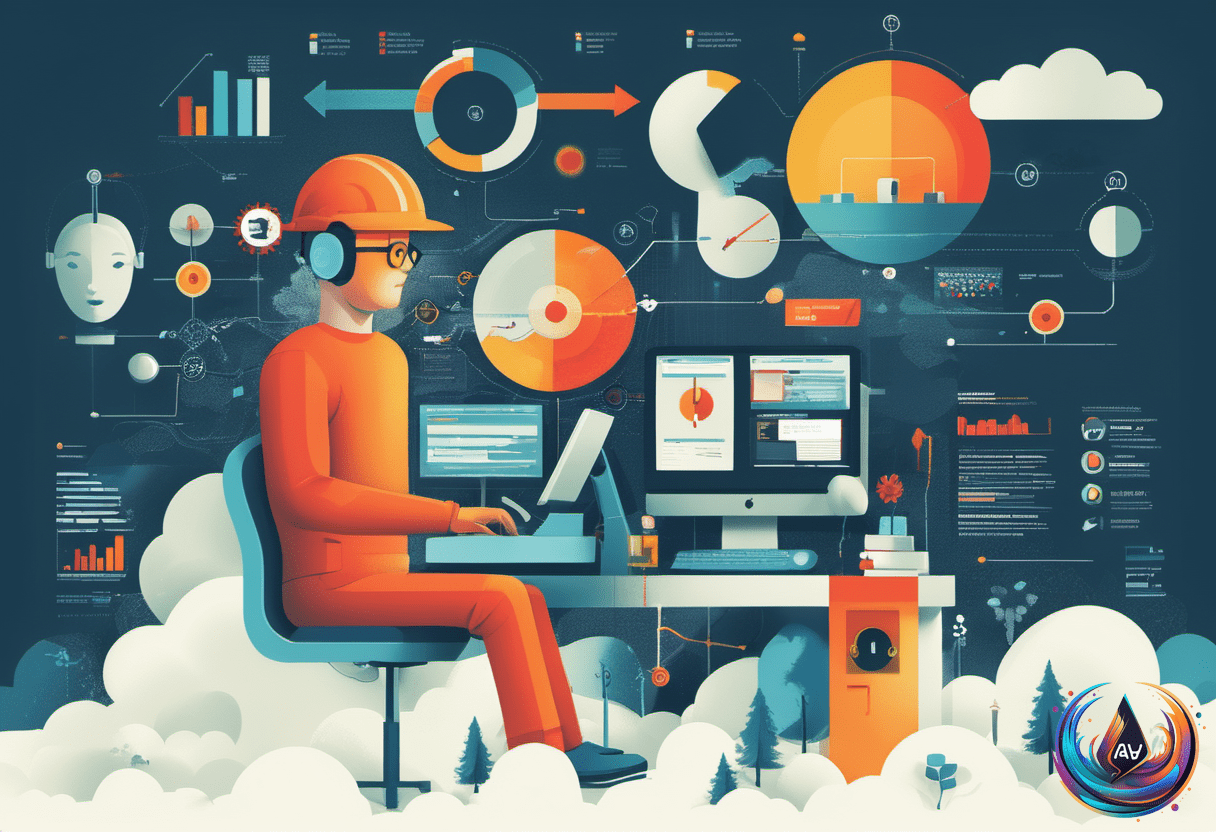
Behind the Scenes of AI Training: The Hidden Human Cost
 364
364Most people think of AI as this smart, independent force that can do things on its own. But the truth is quite different. Behind many of these big AI models, there are thousands of workers doing the hard, often unseen, labor. Google’s chatbot Gemini is a good example. The company relies heavily on contractors to train its AI, and these workers face tough conditions and disturbing content daily.
The Hidden Workforce Powering AI
Many of the people helping train AI models are what you might call “AI raters.” Their job is to review what the AI produces, correct mistakes, and make sure responses are appropriate. This work isn’t glamorous or easy. It’s often done by contractors with little training, and they’re asked to verify information in complex areas like medicine, physics, or architecture. One worker described being pressured to work faster while dealing with sensitive topics, such as cancer treatments, which she found upsetting and stressful.
Despite the crucial role they play, these raters are rarely acknowledged. They are the middle rung in a system that depends heavily on human effort. Adio Dinika from the Distributed AI Research Institute sums it up well: AI is “a pyramid scheme of human labor,” with raters being invisible, essential, but expendable. Their work helps make AI seem smarter and more reliable, but they often do so under difficult conditions.
The Reality of Working Conditions and Impact
Many raters report feeling shocked and disturbed by the content they’re asked to review. Rachel Sawyer, who worked as a generalist rater for Google, explained she was never warned about the kind of content she’d encounter, nor was she asked for consent. She was surprised to find herself working with distressing material, which she said was never part of her original job description. This highlights a major gap in transparency and worker protections.
Most raters are not experts. They’re asked to verify information in highly specialized fields, like medical advice or scientific research. One worker shared her experience of being pressured to work quickly on sensitive medical topics, such as chemotherapy for bladder cancer. She imagined the person searching online might be someone in a vulnerable state, which made her feel uneasy about her role. Many of these workers are paid between $16 and $21 an hour, which is better than some regions but still far below what AI researchers earn. Yet, the job can leave lasting emotional scars.
Companies like Google and its contractor GlobalLogic say that raters aren’t responsible for making AI “smarter” or more autonomous. Instead, they claim these workers provide feedback to measure how well the systems work. Still, many workers feel they are doing the heavy lifting without proper recognition or support. They’re often under tight deadlines and given constantly changing instructions, which adds to their stress and confusion.
The Broader Implications and Future Outlook
This behind-the-scenes look shows how much human effort is woven into AI technology—effort that isn’t visible to most users. Despite all the talk about AI revolutionizing industries and replacing human workers, the reality is that much of its “intelligence” depends on human labor. These raters are essential, yet their work is often undervalued and underpaid.
Even with the work of these human moderators, AI models like Google’s Gemini continue to make mistakes. They sometimes “hallucinate,” giving incorrect answers or producing nonsensical responses. This reminds us that AI still has a long way to go, and human oversight remains critical. As the industry moves forward, questions about fair pay, worker rights, and transparency will only grow more urgent. It’s clear that behind every shiny AI product, there are many unseen human stories—some of them quite troubling.
In the end, the story of AI is not just about technology. It’s about the people whose work makes these systems possible, often without proper recognition or support. As AI continues to evolve, it’s worth thinking about how we value the human effort that keeps it running.

















What do you think?
It is nice to know your opinion. Leave a comment.