









Kakao Mobility details Level 4 autonomous driving roadmap for physical AI
 17
17Kakao Mobility has set out plans to develop Level 4 autonomous driving technologies in-house as part of its physical AI strategy.
Kim Jin-kyu, vice president and head of Kakao Mobility’s Physical AI division, presented the roadmap at the 2026 World IT Show conference at COEX in Seoul. His session focused on autonomous driving services built around mobility platforms in the physical AI era.
The event was held under the title “Beyond Idea, Into Action: AI moves Reality,” with 460 companies and organisations from 17 countries taking part, according to Yonhap. South Korea’s Ministry of Science and ICT also described the event as linked to a wider physical AI transition, where AI is applied to physical industrial fields.
Kim said Kakao Mobility is working to combine autonomous driving technologies with physical infrastructure as part of its mobility strategy in Korea, and aims to establish an open autonomous driving ecosystem to support local competitiveness.
Level 4 autonomy refers to systems that can handle driving in limited service areas without requiring passengers to monitor the road or take control, according to the US National Highway Traffic Safety Administration. Such systems are typically deployed in defined service areas, like autonomous taxi zones or fixed districts.
Level 4 roadmap
Kakao Mobility’s Level 4 roadmap is built around three technology areas: machine learning models, vehicle redundancy, and validation systems.
The company is developing machine learning models designed to handle perception, decision-making, and control without human input. These functions cover how an autonomous vehicle reads its surroundings, makes driving decisions, and controls movement.
Kakao Mobility also plans to use vehicle architectures with redundant systems, allowing core functions to continue operating if an important component fails.
Its validation platform will combine virtual simulations with real-world driving data. The system is intended to support testing, performance improvement, and quality checks as the company develops autonomous driving services.
Safety and control systems
Kakao Mobility is also building an integrated safety management platform for autonomous vehicles. One component is the Autonomous Vehicle Visualizer, a 3D visualisation tool that shares a vehicle’s field of view in real time and allows passengers to monitor driving conditions.
The tool is designed to show what the vehicle is detecting during operation. It shows passengers the vehicle’s driving context during a ride.
The company plans to add a 24-hour control centre and an anomaly detection system using vision-language models. These systems are intended to support real-time context analysis, remote intervention, and emergency response.
The planned control centre would monitor autonomous driving services after deployment. Kakao Mobility said the anomaly detection system will use vision-language models, but it did not provide details on model architecture or performance.
Open ecosystem plan
Kakao Mobility also outlined plans to share selected technology assets with companies, startups and manufacturers working on autonomous driving.
The assets include large-scale autonomous driving datasets, high-definition (HD) maps, and platform APIs for ride-hailing and dispatch. HD maps support autonomous driving by providing detailed road information used for localisation and driving decisions.
The company said the asset-sharing plan would allow other industry participants to develop autonomous driving technologies without building all the underlying infrastructure independently.
Kakao Mobility also plans to share operational resources, including fleet management systems and on-site response abilities. These are part of the company’s plan to support an open domestic autonomous driving ecosystem.
Gangnam service data
The company pointed to its late-night autonomous vehicle service in Seoul’s Gangnam district as one example of its current work. The service is available through the Kakao T platform, where users can access autonomous driving services with existing mobility options.
The Gangnam late-night autonomous taxi service recorded 7,754 rides from its launch on September 26, 2024, to February 28, 2026, according to the Seoul Metropolitan Government. The city said no accidents were attributed to autonomous driving technology during that period, and the service averaged about 24 trips per operating day.
The service moved from a free pilot to paid operation in April 2026. Seoul also expanded the fleet from three vehicles to seven, excluding two reserve vehicles.
The service can be called through Kakao T using either the Seoul Autonomous Car icon or the regular taxi-hailing menu. Kakao T groups multiple mobility services in one app, including taxi, navigation and vehicle-related services.
The Gangnam service is accessed through Kakao Mobility’s existing mobility platform.
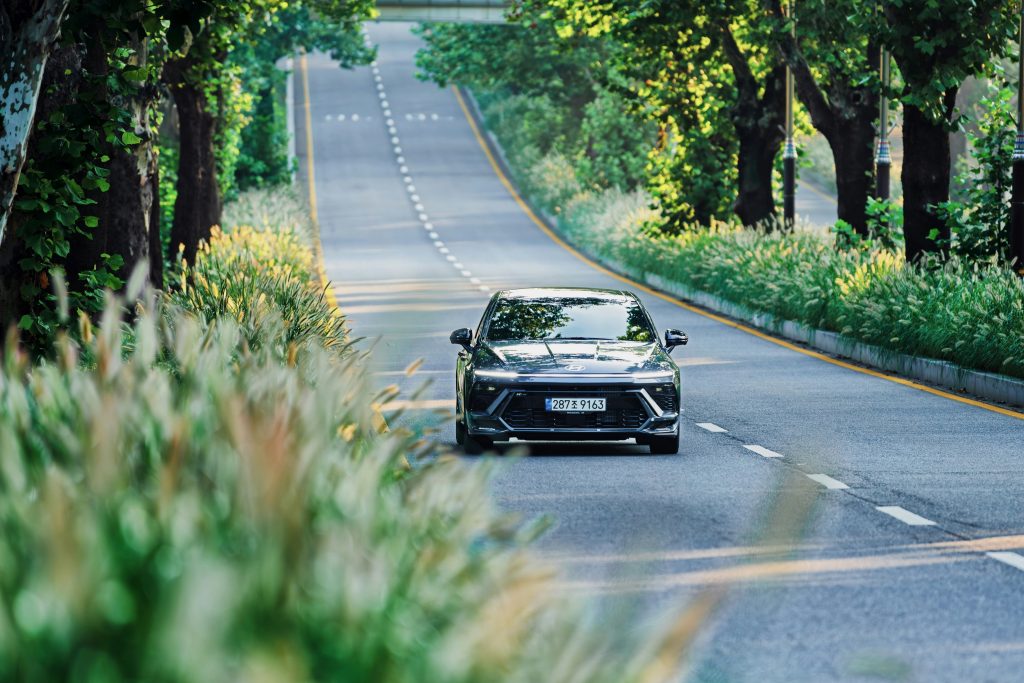
(Photo by Hyundai Motor Group)
See also: Hyundai expands into robotics and physical AI systems
Want to learn more about AI and big data from industry leaders? Check out AI & Big Data Expo taking place in Amsterdam, California, and London. This comprehensive event is part of TechEx and co-located with other leading technology events. Click here for more information.
AI News is powered by TechForge Media. Explore other upcoming enterprise technology events and webinars here.
The post Kakao Mobility details Level 4 autonomous driving roadmap for physical AI appeared first on AI News.
Origianl Creator: Muhammad Zulhusni
Original Link: https://www.artificialintelligence-news.com/news/kakao-mobility-level-4-autonomous-driving-roadmap/
Originally Posted: Tue, 28 Apr 2026 10:00:00 +0000














What do you think?
It is nice to know your opinion. Leave a comment.