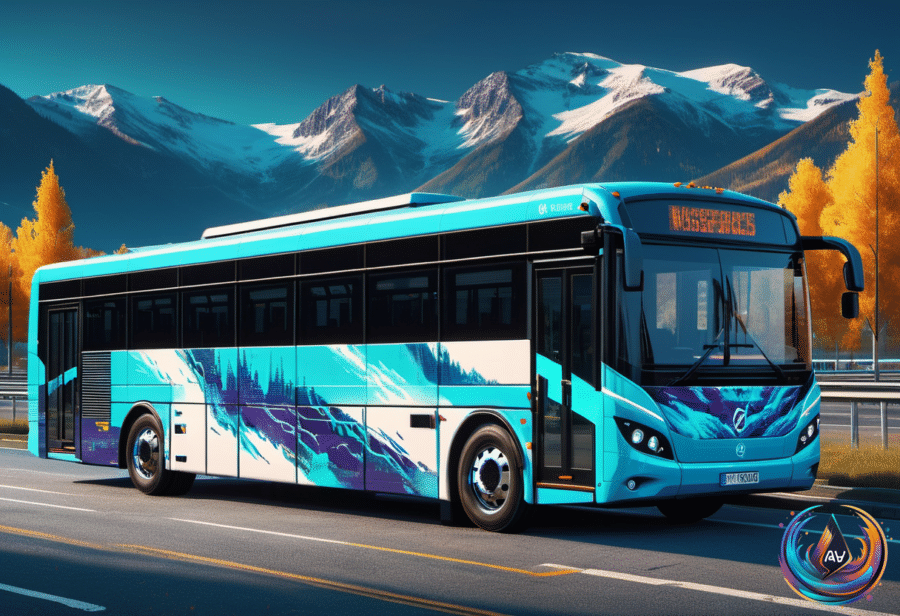
What happens when a city replaces diesel buses with electric ones? Cleaner air, a new way to finance public transport, and a direct challenge to one of the biggest sources of emissions on sub-Saharan African roads. BasiGo is building that challenge in Kenya and Rwanda, one bus, battery, and charging depot at a time.
The company has built more than 100 electric buses for lease, and more than 150 BasiGo buses are now on the road. Since BasiGo’s founding, those buses have carried 15 million passengers. That is not a small pilot project; it is a working public transport network designed to prove that electric buses can serve daily commuters.
A Clearer Vision for Cleaner Transport
The push for electric buses connects directly to a striking moment in Kenya’s recent history. When public transportation stopped in Kenya in 2020, the suspension lasted only three days. During that brief pause, the air became so clear that Mt. Kenya was visible from Nairobi, roughly 175 kilometers away, and some people could even spot Mt. Kilimanjaro in the distance.
That view offered a powerful reminder of what transport emissions can change. BasiGo aims to replace the tens of thousands of diesel-powered buses on sub-Saharan African roads with electric ones that generate far fewer emissions. In Kenya, replacing one diesel bus with an electric bus avoids 50 tons of carbon dioxide emissions every year.
The opportunity is enormous in Nairobi alone, where about 20,000 buses operate. BasiGo’s buses run on domestically generated renewable energy, and 90% of Kenya’s energy mix is renewable. Switching to electric vehicles also carries possible health benefits, including a decrease in childhood asthma cases.
That combination gives the buses a role beyond transportation. They can reduce carbon dioxide emissions, use Kenya’s renewable energy supply, and help lower pollution in the places where passengers live and work.
The Pay-As-You-Drive Model
Electric buses face a major obstacle before they ever reach a route: the initial price is very high compared with combustion-engine models. BasiGo tackles that barrier by offering leasing, maintenance, insurance, and access to a charging network as part of a full service model.
The operator pays a small deposit that is 40% less than the down payment on a diesel bus. The operator then pays a daily pay-as-you-drive lease fee, turning the vehicle into a cost linked to its daily operation rather than a large purchase made all at once.
That model has helped make electric vehicles more attainable and is changing the way public transport operates. Customers are primarily individual operators or bus cooperatives, and Kenya has more than 300 bus cooperatives. BasiGo’s reservation list includes 1,200 customers waiting to lease vehicles.
The long-term economics also matter. Electric vehicle expenses are lower over time because operators save on fuel. Jit Bhattacharya, co-founder and CEO of BasiGo, estimates that an operator earns a 5–10 times higher return on investment over the life of a BasiGo bus compared with a diesel bus.
The buses come from China and are assembled in Kenya. BasiGo buys many parts from Chinese firms including King Long and BYD, while Kenyan rules require the buses to be locally assembled. This structure connects international manufacturing with local assembly and service work.
Batteries, Charging, and the Next Expansion
BasiGo is the first authorized service provider in sub-Saharan Africa for CATL, the world’s largest EV battery company. Its buses use CATL batteries, and BasiGo employees are trained to repair batteries on other vehicles. That battery expertise gives the company a service role that reaches beyond its own fleet.
Charging infrastructure remains one of the hardest parts of the plan. The company faces high up-front costs for infrastructure upgrades, and land for charging depots is expensive and complicated to secure. As Bhattacharya says, securing land for charging depots is “expensive and complicated” because charging requires land located directly on bus routes and next to power lines.
Those requirements make every depot a major infrastructure decision. BasiGo must connect buses, routes, land, and power, while continuing to offer the service package that makes electric buses accessible to operators.
The company is now expanding beyond commuter buses into inter-city coach services and plans to target trucks. That move could take the model into longer-distance travel and freight, extending the reach of electric transport across more vehicle categories.
BasiGo’s fleet shows how an electric vehicle company can combine batteries, financing, local assembly, charging, maintenance, and insurance into one public transport system. With more than 150 buses on the road and 1,200 customers on its reservation list, the next stage will test how far that system can scale across Kenya and Rwanda.