Meta puts a smaller model on local computers
Meta has released Muse Glimmer, a slimmed-down open-source AI model for local computers.
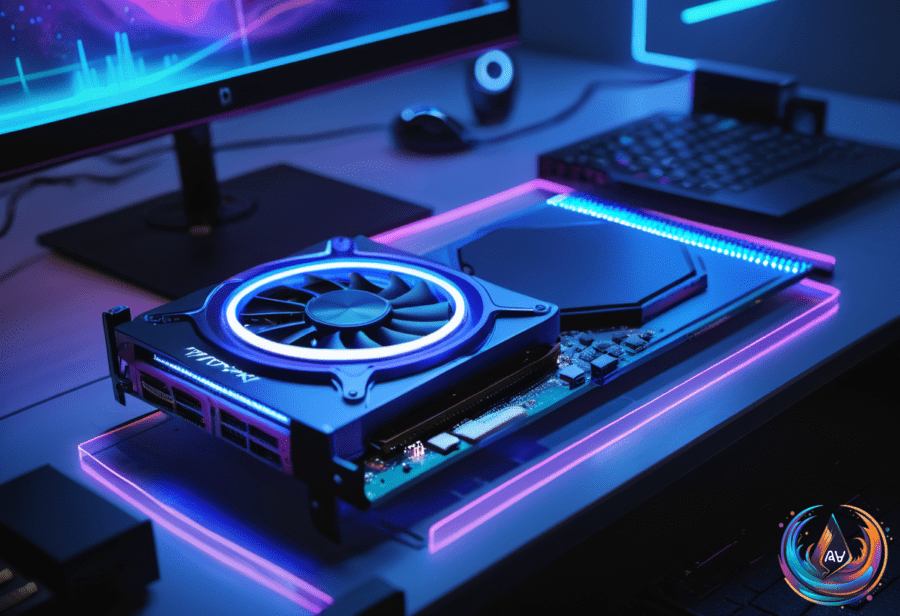
The model is based on Meta’s closed Spark 1.2 model. It needs only one GPU for agent-oriented tasks.
Those tasks include scheduling and file management. Users can download Muse Glimmer for free.
They can also run it on their own PCs. Optimized integrations will arrive on llama.cpp and other sites.
Meta said Muse Glimmer balances capability with local hardware limits. The company described that balance in its release materials.
Muse Glimmer supports reliable tool use and multi-step reasoning. It can also recover from failures during tasks.
The model accepts multimodal input and supports scaffold compatibility. That support includes work with OpenClaw and other agent orchestrators.
Meta trained Glimmer on data from over 100 languages. The company says it performs strongly for its size.
Its benchmarks include DeepSearch QA, MCP-Atlas, and SWE-Bench. Meta described the results as “strong success rates.”
That performance gives the model a clear focus. It brings complex reasoning and agentic tasks to consumer devices with one graphics card.
An open-weight release during a wider AI debate
Meta is releasing the model as debate grows around open-weight AI. Nearly every major AI lab signed a public letter supporting open-weight models.
Meta has long championed open-sourcing models. Its earlier Muse Spark model, however, was developed as a closed model.
Meta plans to release an open-weight version of Muse Spark soon. Glimmer itself came from Muse Spark through a process called distillation.
Meta is making the “weights” available to everyone on Hugging Face. It is also providing developer documentation with the release.
The weights help AI systems choose responses. Public access lets users run and study the model outside Meta’s own systems.
Meta’s Muse Spark AI is seen as weaker than models from OpenAI and Anthropic. Glimmer offers a smaller path into Meta’s model family.
Mark Zuckerberg addressed the release in a 6,500-word essay. He wrote, “Rather than centralizing superintelligence, we should distribute it widely and give every person the ability to direct it.”
The release reflects that goal through local hardware requirements. A single GPU can handle the model’s stated agent tasks.
It also gives developers several ways to use Glimmer. They can access free downloads, local PCs, Hugging Face weights, and integrations.
AI financing expands beyond the model launch
The announcements also include a major financing plan for AI infrastructure. The partnership with lenders will use vehicles totaling more than $500 billion.
The consortium includes Apollo, BlackRock, Blackstone, Brookfield, Goldman Sachs, and KKR. Nvidia’s financing platforms will help customers access scarce compute at scale.
The plan also supports the construction of DSX AI factories. Financing facilities will serve companies from frontier labs to hyperscalers.
Nvidia has backed customers seeking its products. The company has lent its balance sheet to OpenAI and other customers.
The financing partnership connects AI companies with infrastructure funding. It also addresses the limited supply of compute needed for advanced systems.
Nvidia’s shares dipped after news of the financing partnership. The plan still covers a wide range of customers and infrastructure projects.
NetApp adds VMware recovery technology
NetApp announced that it acquired JetStream Software. The deal adds VMware disaster recovery and migration technology to NetApp’s portfolio.
JetStream Software is headquartered in San Jose, California. It also has a subsidiary in Bangalore, India.
JetStream helps customers protect VMware environments on virtually any storage platform. Customers can recover those environments on NetApp first-party storage offerings.
One example is Azure NetApp Files. JetStream also helps customers begin with disaster recovery.
Customers can then evolve those systems toward production in the cloud. The technology complements NetApp’s existing SnapMirror platform.
The combined portfolio covers more than existing NetApp deployments. It also protects the broader VMware installed base on third-party storage.
NetApp CEO George Kurian announced the acquisition. JetStream CEO Tom Critser leads the acquired software company.
NetApp’s stock symbol is NASDAQ: NTAP. Senior Vice President Pravjit Tiwana is also part of the company’s leadership team.
Together, these announcements show three parts of the current AI and technology market. Smaller models are moving toward local devices.
At the same time, large infrastructure projects need huge pools of capital. Enterprise storage companies are also expanding their tools for cloud recovery.
Muse Glimmer targets developers and users who want local agent tools. Nvidia’s plan targets the compute behind major AI systems.
NetApp’s acquisition targets the storage and recovery needs of enterprise customers. Each announcement addresses a different layer of the technology stack.
Based on
- Nvidia launches a smaller, faster Nemotron model and a router to put it to work — thenewstack.io
- Meta’s ‘Open Source’ Muse Glimmer Model Can Run On A Single Computer — engadget.com
- Meta launches Muse Glimmer, an open-weight model that can run on a laptop | Business Insider Africa — africa.businessinsider.com
- Nvidia partners with lenders to finance AI infrastructure | Semafor — semafor.com
- NetApp Acquires JetStream Software to Advance Cyber Resilience and Data Protection for the AI Era | AFP.com — www-pp.afp.com