AI systems are learning to stop wasting their best models.
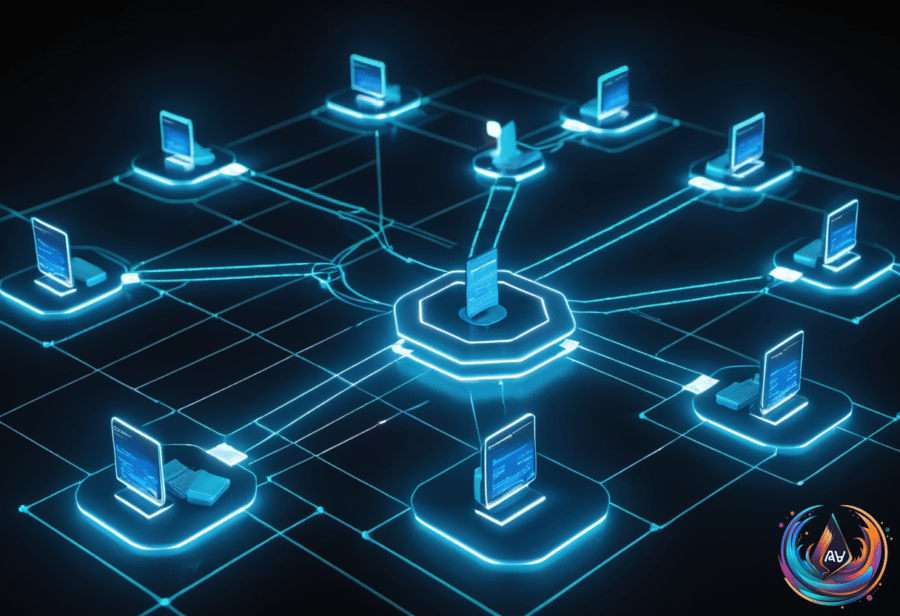
NVIDIA NeMo Switchyard routes agent workloads across specialized and frontier models. It balances performance, cost, and efficiency for each request.
The system evaluates a request and its context at runtime. It then sends the work to the model that fits the task.
That decision can use model capabilities, cost, and infrastructure signals. The goal is simple—reserve expensive frontier models for work that needs them.
A system of models can improve accuracy and reduce spending. Using the most capable model for every request remains the easiest way to burn money.
Routing Turns Model Choice Into Infrastructure
NeMo Switchyard offers a provider-agnostic software development kit. Its routing algorithms can work without tuning or support custom tuning.
The design separates routing logic from model providers. That gives developers more freedom to change models without rebuilding the routing layer.
Benchmarking and real-world testing show lower costs with high accuracy. NVIDIA published the NeMo Switchyard article on Aug 11, 2026.
Tanay Varshney, Chris Alexiuk, Ayush Agarwal, Annie Surla, and Moon Chung authored the article. Their work frames routing as a practical layer for agent systems.
Most routing competitors count 80 active routing firms. That number suggests a crowded market before routing becomes a standard part of AI infrastructure.
Atlas Cloud is taking a related approach from the inference side. Its platform provides access to hundreds of models through one OpenAI-compatible API.
The platform supports text, image, audio, and video generation. It also supports models including Seedance 2.5 and Seedance 2.0.
Atlas Cloud wants to reduce engineering overhead through unified integrations. It also enables model replacement without forcing teams to rebuild their applications.
The company recommends provider-independent abstraction layers and standardized authentication. It also recommends architectures built for multimodal AI.
Agents Also Need To Talk
Model selection solves one problem. Agent coordination solves another.
AgentRadio adds an asynchronous message-passing layer for AI agents. Agents can communicate during a task without interrupting their primary work.
Its core primitives include create_thread, send_message, and wait_for_mention. These tools give agents passive awareness of relevant activity.
AgentRadio uses a message server and harness-side integration. It requires no modifications to the underlying models.
Four agents coordinating in real time nearly doubled task accuracy on enterprise coding tasks. Task resolution rose from 32.3% to 62.1% on SWE-Atlas QnA benchmark tasks.
A Claude Code instance running on Opus 4.6 resolved 32.3% of those tasks. The AgentRadio setup resolved 62.1%.
DeepSeek V4 Pro results also improved with AgentRadio. Results increased from 29.0% to 50.8%.
Coral AI Labs researchers Xinxing Ren, Caelum Forder, and Peter Carroll described the work. Their paper identifies timing as the key advantage.
“The useful distinction is timing.”
Real-time coordination lets agents share discoveries during execution. That exchange improves outcomes without stopping each agent’s main work.
The reported Claude Code versions include Opus 4.6 and Opus 4.8. The benchmark figures identify Opus 4.6.
Lower Costs Could Expand Agent Deployment
Sapiom is attacking the cost problem with its own infrastructure. The company operates in San Jose and serves open weight models to customers.
Sapiom reduced Polsia’s token consumption tenfold. Monthly spending fell from $1.2 million to about $100,000.
Polsia’s projected annual revenue increased from $100,000 to $10 million. Its earlier token bill reached $1.2 million each month.
“It’s just unsustainable,” said Ilan Zerbib.
Zerbib also said, “In 95% of cases, it doesn’t make sense to go to a very expensive frontier model.”
Sapiom charges customers for compute. It does not add a premium over the models it provides.
The company is raising a $35 million Series A. Dragonfly’s Haseeb Qureshi leads the round.
Sapiom previously raised $15 million in a seed round led by Accel. Its cost argument is also an adoption argument.
Sapiom believes lower costs could help AI agents spread through the economy. It projects a possible future with trillions of agents within three years.
These developments point toward one architecture. Route each task to the right model, let agents share discoveries, and charge for useful compute.
The grand AI future may depend less on one giant model. It may depend on better traffic control.
Based on
- Route AI Agent Workloads Across Models with NVIDIA NeMo Switchyard — developer.nvidia.com
- Why every company wants an AI model router right now | Fortune — fortune.com
- Four AI agents coordinating in real time outperformed Claude Opus 4.8 on enterprise coding tasks | VentureBeat — venturebeat.com
- Startup Sapiom routes clients’ AI to lowest-cost tokens | Semafor — semafor.com
- Atlas Cloud Introduces Unified AI Inference Platform to Simplify Multi-Model Development for Engineering Teams | Currency News | Financial and Business News | Markets Insider — markets.businessinsider.com