The countdown is on. NASA’s X-59 is about to break the sound barrier for the very first time. This isn’t just any test flight — it’s a leap toward revolutionizing supersonic travel. Imagine flying faster than sound without the ear-splitting boom. That future is nearly here.
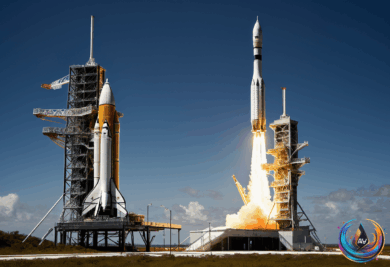
Meanwhile, the space race is hitting some turbulence. SpaceX’s Starship just experienced a rough patch after its latest test flight. The Federal Aviation Administration (FAA) grounded the giant rocket for a thorough investigation. Over in Florida, Blue Origin’s New Glenn rocket exploded on the launchpad, grounding their heavy-lift ambitions indefinitely. The skies are busy, the stakes are high, and every milestone counts.
NASA’s Quiet Supersonic X-59: Breaking Barriers Silently
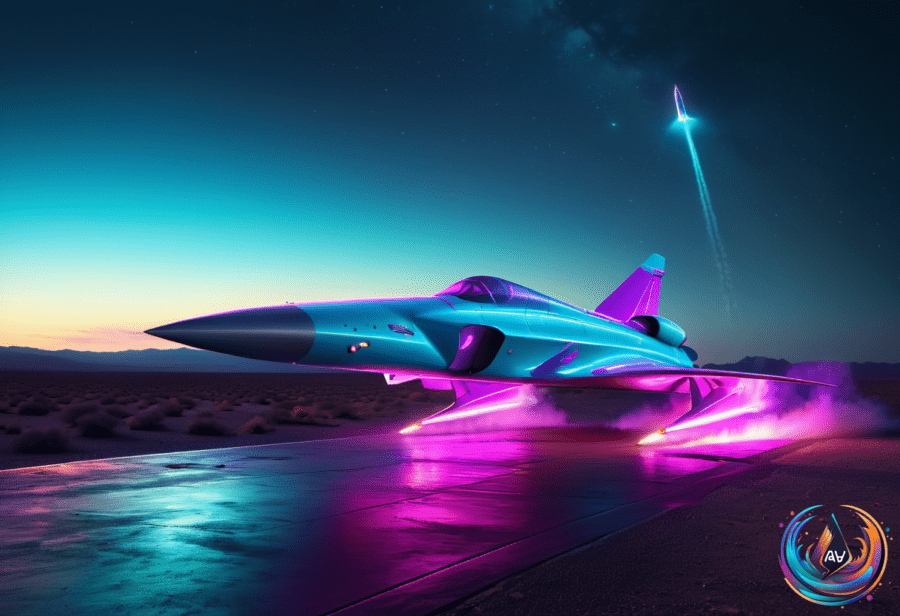
NASA’s X-59 Quiet Supersonic Technology aircraft has been flying steadily since its debut last fall. But it’s about to reach a major milestone — flying faster than sound. The X-59 aims to reach speeds over 630 mph at 43,000 feet altitude for its first supersonic flight in early June. Then it will push even further. A “mission conditions” flight will raise speed to Mach 1.4 (925 mph) at 55,000 feet. Finally, it will hit its max speed of Mach 1.6 (1,218 mph) at 60,000 feet.
This plane isn’t just about speed. It’s designed to change the way we think about supersonic travel. Instead of a deafening sonic boom, the X-59 creates a gentle “thump.” That noise reduction could open the door for commercial supersonic flights over populated areas — a game changer for air travel.
Right now, NASA isn’t focused on showcasing the quiet sonic thump. During these early supersonic flights, the X-59 will fly with a traditional supersonic chase plane. This chase plane’s loud sonic booms will drown out the X-59’s softer sounds. But these tests will gather critical data on how the aircraft handles high speeds and altitudes.
So far, the X-59 has completed 15 flights with milestones like gear retractions, near supersonic speeds, and altitude tests up to 43,000 feet. Engineers have collected detailed data on the plane’s systems, structure, and aerodynamics. Each flight pushes the envelope and builds confidence.
Starship’s Setback and Blue Origin’s Blast Shake the Launchpads
Last week, SpaceX’s Starship V3 took to the skies for its 12th test flight. The mission hit many goals but ended with trouble. After separation from its Super Heavy booster, the booster struggled to ignite all its engines for a controlled return. The partial boostback burn ended early, and the booster crashed hard in the Gulf of Mexico.
The FAA called this a “mishap” and grounded Starship flights pending a full investigation. SpaceX must lead the investigation under FAA oversight and submit a report with corrective actions. No injuries or public damage occurred, but public safety is the priority before flights resume.
Blue Origin is facing even bigger challenges. Their New Glenn rocket exploded on the launchpad during a hotfire test at Cape Canaveral. This blast destroyed the only orbital-class pad at the site and damaged nearby infrastructure. The setback grounds New Glenn indefinitely and clouds Blue Origin’s plans to compete with SpaceX and others in heavy-lift launches.
These incidents show how competitive and unforgiving the commercial space sector remains. Even established players face hurdles as they push technology boundaries.
Global Space Momentum: China and International Innovations
While NASA and U.S. companies face ups and downs, other space players keep advancing. China’s LandSpace company successfully launched its Zhuque-2E rocket with a 2.8-ton experimental payload. This came after a previous failure, showing resilience and rapid progress. China also sent the Tianzhou 10 cargo spacecraft to its Tiangong space station, delivering supplies and experiments.
Israel is making waves too. Israeli company SpacePharma launched a mini-lab to the International Space Station to conduct cancer research and tissue growth experiments in microgravity. Their work could change medical research and treatments. Israel is also expanding international space education and cooperation, helping countries like South Sudan develop space science programs.
What’s Next for Space and Supersonic Flight?
NASA’s X-59 supersonic test flights this summer will reveal how well its quiet boom technology holds up at speed. Success could rewrite aviation rules and bring supersonic travel back to the mainstream, but quieter and cleaner.
SpaceX’s Starship will return to flight after FAA approval. Blue Origin will need to rebuild and rethink after its launchpad disaster. Meanwhile, global players will keep pushing the boundaries of rocketry and space science.
The next few months will be pivotal. We’re watching a new era dawn in both the skies above and beyond. Quieter, faster planes and massive rockets reaching higher — this is the future arriving, and it’s thrilling to witness.
Based on
- NASA readies the X-59 for its first supersonic flight, SpaceX’s Starship grounded and more science stories — engadget.com
- Dinosaur Mysteries and Space Race Challenges: A Science News Digest | Science-Environment — devdiscourse.com
- NASA’s X-59 Prepares for First Supersonic Flight – ScienceX Innovations — news.sciencex.in
- Israeli Space Experiments, Starship’s Return, and China’s Rocket Launch: This Week in Space News (2026) — super8chatham.com
- NASA’s X-59 prepares for first supersonic flight
– Life Technology™ — lifetechnology.com
- Blue Origin setback and China debris surge dominate space… — headlinesbriefing.com