Meta’s Llama Stack has a new identity, and it arrives with a clear mission: make AI application development more open, flexible, and compatible with the tools developers already use. Llama Stack is now OGX, an open-source agentic API server built for any model and any infrastructure.
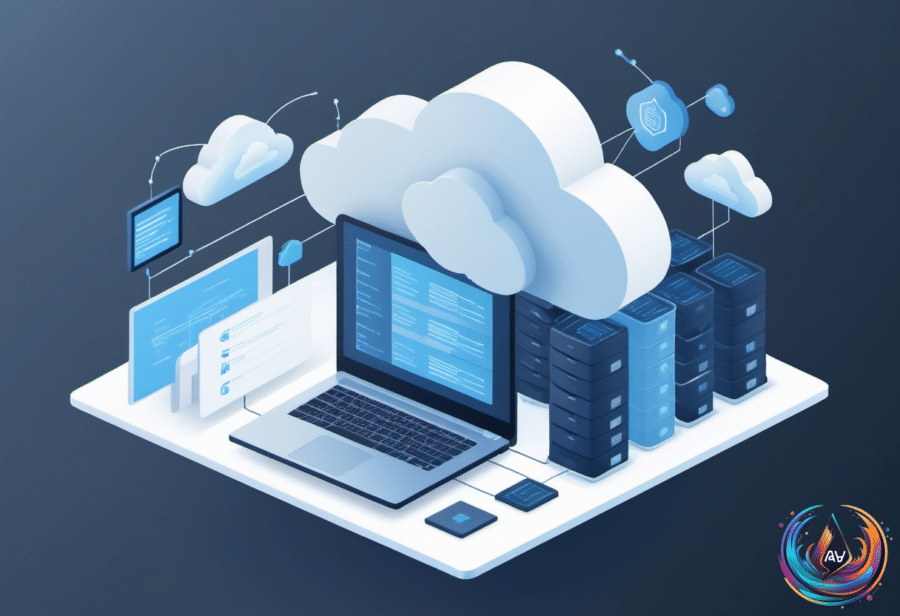
OGX targets a practical challenge in AI development. Teams want to build against familiar OpenAI APIs, but they also want control over where their models and applications run. OGX brings those goals together as a self-hosted, OpenAI-compatible server that can run on a laptop, in a datacenter, or in the cloud.
From Llama Stack to OGX
OGX is the rebrand of Meta’s Llama Stack, carrying the original project into a new phase under an open-source model. The project is released under the MIT license, giving its community a clear foundation for building, adapting, and deploying AI applications.
The project already shows strong community activity. As of October 15, 2026, OGX has over 8,400 GitHub stars and 1,400 forks, alongside regular community calls and active development. Those numbers point to a project that is not sitting still; OGX is building an active base around its agentic API approach.
Its core promise is direct: OGX works as a drop-in replacement for the OpenAI API that users run themselves. That means an application can connect to an OGX server while the underlying model infrastructure changes from local development to production deployment.
One API Across Local and Cloud Models
OGX uses a pluggable provider architecture to connect the same application flow to different model backends. Development can happen locally against Ollama, production can run against vLLM, and an application can also connect to a managed cloud service.
The tutorial uses Ollama, but the same code works against vLLM or a cloud provider. That setup gives developers a path from a local model backend to other infrastructure without forcing a new API design for each environment.
OGX also supports the OpenAI, Anthropic, and Google GenAI SDKs natively against the same server. That combination gives developers multiple SDK choices while keeping the server endpoint consistent, a useful feature for applications that need to work across model ecosystems.
Getting started requires uv, Python’s fast package manager, and a local model backend. Once those pieces are available, the OGX server can be started at localhost:8321. The server listens on HTTPS by default and is secure out of the box.
A healthy server response lists registered models under /v1/models. The model string uses a provider and model-name format, such as ollama/llama3.2:3b, so the application can identify both the backend and the model in one value.
Agentic Workflows Built Into the Responses API
OGX goes beyond basic chat calls through its Responses API. The API handles server-side agentic orchestration, tool calling, MCP server integration, and built-in file search for retrieval-augmented generation, or RAG.
That means applications can use the same server for a basic conversation and for workflows that need tools, external MCP servers, or information drawn from uploaded documents. The orchestration happens on the server, giving OGX a central role in how the application manages those operations.
- Server-side agentic orchestration
- Tool calling
- MCP server integration
- Built-in file search for RAG
- OpenAI, Anthropic, and Google GenAI SDK support
The Responses API can also make basic chat calls, creating a direct starting point for testing an application. Local development uses an API key value of api_key=’fake’, and that value is not a placeholder: OGX does not check it for a local server.
Local HTTPS development includes one special detail. Using http_client=httpx.Client(verify=False) skips certificate verification for local development, allowing the client to connect to the local server setup.
From Documents to Retrieval-Augmented Generation
OGX supports uploading documents and creating a vector store for retrieval. That capability connects the server’s file search feature to RAG workflows, allowing applications to use document content as part of their responses.
The flow brings several pieces into one development path: start a local backend, launch the secure OGX server, confirm the registered models, make a Responses API call, and then add documents and a vector store when the application needs retrieval.
That progression matters because developers can begin with a basic chat request instead of building the entire agentic system at once. They can then add tool calling, MCP integration, file search, and document retrieval through the same API server.
OGX’s direction is clear. It combines OpenAI-compatible access, a pluggable provider architecture, multiple SDK options, local and cloud deployment paths, and built-in agentic features under an MIT-licensed open-source project. With active development, regular community calls, over 8,400 GitHub stars, and 1,400 forks, OGX is turning the rebrand from Llama Stack into a launch point for the next stage of AI application building.