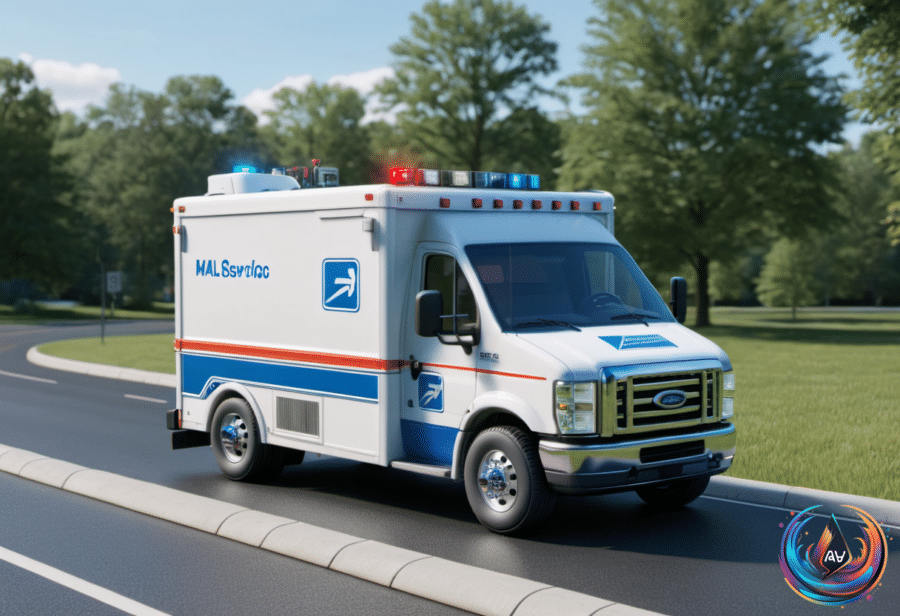
The cameras are coming to postal trucks. The United States Postal Service is running a pilot program with Next Base to install forward-facing cameras inside 100 mail carrier vehicles in the Washington, DC area.
The cameras will scan roads and signs, analyze roadway conditions, and map roadways and sidewalks as the vehicles travel. The pilot aims to improve community safety, though the language leaves plenty of room for interpretation—especially when a public fleet travels through nearly every neighborhood it serves.
A letter posted by NALC Branch 238 said, “The purpose of this pilot is to leverage the Postal Service’s unique ability to collect this valuable data due to the scale and frequency with which our fleet of postal vehicles travel the streets of every community across the country.”
Next Base cameras can record in up to 4K and capture license plates with precision, but the pilot cameras will not run automatic license plate reader software. They will begin recording when a vehicle is in drive and away from the postal facility, and they will not record audio.
“Next Base cameras will scan and analyze roads, signage, maps roadways and sidewalks,” the NALC Branch 238 letter said. It also stated, “The cameras will not hinder the vehicle operator’s field of vision, nor does it record audio.”
The pilot was slated to start on September 21, 2026, and is expected to last several months. USPS said the program is limited, includes privacy safeguards, requires no additional action from employees, and will help inform future decisions.
“The Postal Service is conducting a limited pilot to assess whether vehicle-mounted cameras can help identify roadway conditions and support community safety. The pilot includes privacy safeguards and requires no additional action from employees. Findings will inform any future decisions,” a USPS spokesperson said.
Existing cameras and new data concerns
USPS trucks already have 360 degree cameras that capture the outside of the vehicle for a period of time. The new pilot adds a different kind of collection: forward-facing cameras that can record detailed views of roads, signs, sidewalks, and license plates during postal routes.
That distinction matters even without ALPR software. A camera does not need a specialized label to create a detailed record of the places vehicles travel. The more ordinary the route, the more routine the surveillance can become.
The USPS pilot arrives alongside a federal push to regulate AI-powered surveillance cameras. Sen. Josh Hawley, a Missouri Republican, introduced the Stop Flock Abuse Act after launching an investigation into surveillance companies in August 2026.
The bill would restrict local governments from selling or sharing vehicle data collected by cameras. Agencies would have to delete driver data within 10 days unless a criminal investigation remained ongoing, and surveillance networks would be barred from using facial recognition technology.
The legislation would also require camera data to be encrypted and kept in the United States. Those rules target the basic lifecycle of surveillance data—who collects it, who can access it, how long it remains available, and whether it can be turned into another tracking system later.
Flock Safety case raises the stakes
Hawley’s bill focuses on AI-powered surveillance networks, including ALPR systems. Flock Safety maintains a network of 120,000 cameras across 49 states, giving the debate a scale beyond any single police department or postal pilot.
“AI-powered cameras produced by Flock and its competitors are tracking and creating digital footprints of everyday Americans — a nightmare for individual liberties unless Congress enacts meaningful rules and accountability,” Hawley said.
Flock Safety said, “Effective frameworks should preserve law enforcement’s ability to use an important public safety tool while requiring accountability, oversight and responsible data practices.” That is the familiar policy collision: public safety on one side, limits on data collection and reuse on the other.
Lindsey Isaacs, a Florida woman, was wrongfully accused of fleeing a fatal accident after her vehicle was misidentified on a Flock camera. “I was terrified I was facing the possibility of spending the rest of my life in prison for a crash that I knew I had not been involved in,” Isaacs said.
The case helps explain why deletion deadlines, encryption requirements, and restrictions on data sharing sit at the center of the proposed legislation. A mistaken identification can move from camera footage to an investigation before anyone has confirmed the camera got it right.
Last week, a Senate Judiciary subcommittee hearing examined the issue. Hawley said, “That’s why I’m introducing the STOP Flock Abuse Act to establish basic safeguards for AI-powered cameras and protect Americans’ fundamental constitutional rights.”
The USPS pilot and Hawley’s bill involve separate actions, but they point toward the same question: how much visual data should cameras collect during everyday travel, and what controls should apply after collection? The answer will determine whether these systems remain limited tools or become permanent infrastructure for tracking movement.
Based on