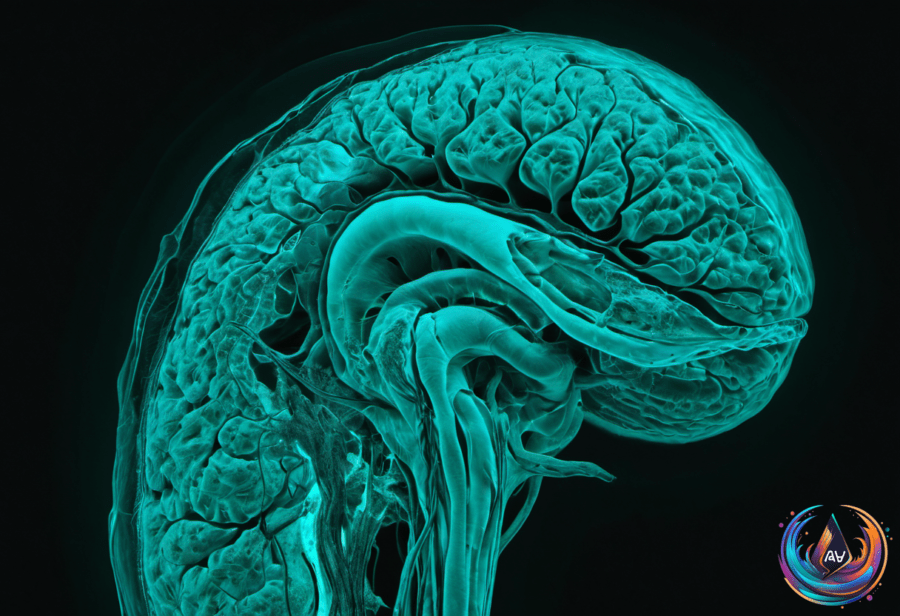
Imagine slicing through a 3D CT scan and instantly seeing the spleen highlighted with pinpoint accuracy. No manual effort, no guesswork. This is not science fiction — it’s happening now with cutting-edge AI tools that transform raw medical volumes into clear, actionable insights.
Medical imaging is massive and complex. Volumetric CT scans hold thousands of data points in three dimensions. Navigating this maze has been a challenge for doctors and researchers alike. But AI is tearing down those walls. The latest advances let us build end-to-end pipelines that automate organ segmentation like never before.
Building AI Pipelines to Decode 3D Medical Scans
At the heart of this revolution is MONAI, an open-source framework built specifically for medical AI. It’s a toolkit designed to handle the unique quirks of medical images — like voxel spacing, orientation, and intensity. Using MONAI, developers can design workflows that take raw CT volumes and train models to segment organs in 3D.
For example, take the spleen segmentation task. The challenge: identify the spleen inside a noisy 3D CT scan where surrounding tissues clutter the view. The solution? A powerful 3D UNet model trained on the Medical Segmentation Decathlon dataset.
- Preprocessing aligns the CT volumes to a common orientation and normalizes voxel spacing.
- Intensity windowing sharpens the contrast, making the spleen stand out.
- Foreground cropping focuses the model’s attention on relevant regions.
- Patch-based sampling divides the large scans into manageable chunks for training.
Training uses a smart loss function combining Dice similarity and cross-entropy to maximize overlap between predictions and ground-truth masks. Mixed precision accelerates computation without sacrificing accuracy. Validation employs sliding-window inference and Dice metrics to track model progress.
Why Spleen Segmentation Matters and What AI Brings to the Table
The spleen plays a critical role in filtering blood and immune response. Accurate spleen volume measurement can reveal disease progression or treatment effects. Traditionally, experts manually label scans, a slow and error-prone process. AI changes the game.
By automating segmentation, AI unlocks:
- Speed: Segment entire 3D volumes in seconds instead of hours.
- Consistency: Reduce variability between human annotators.
- Scalability: Process large datasets for research or clinical use.
But AI’s power goes beyond speed. It reveals subtle anatomical details invisible to the naked eye. It learns from vast datasets, capturing patterns too complex for manual analysis. This leads to more precise diagnostics and personalized care.
Overcoming Challenges in Medical AI Without Perfect Ground Truth
One big hurdle remains: the scarcity of perfect ground-truth labels. Medical annotations take expert time and are costly. How do we trust AI models without flawless references? Researchers found a clever answer — measuring agreement across multiple AI models instead of relying on single ground truths.
They standardized outputs from six popular segmentation tools, harmonizing labels and formats. This created a common language to compare results voxel by voxel. They discovered lung segmentation was highly consistent across models, a sign of maturity.
Other organs like the heart and bones posed bigger challenges with discrepancies in boundaries and labeling. This insight is vital. It shows AI models can fail predictably and that combining multiple tools helps identify reliable regions. This approach enhances confidence in AI-generated annotations, even when expert labels are scarce.
Peeking Inside 3D Medical Volumes: The Magic of Slicing and Orientation
Understanding 3D medical images means mastering how to slice through volumes. It’s not just about pixels but voxels — 3D pixels. Each voxel holds intensity data representing tissue properties. Navigating this space requires knowing the anatomical planes:
- Axial: horizontal slices from top to bottom.
- Sagittal: vertical slices from left to right.
- Coronal: vertical slices from front to back.
These views let clinicians explore the body’s internal landscape layer by layer. Python tools like Nibabel and Matplotlib enable developers to build interactive slicers that visualize these planes dynamically. Such tools are critical building blocks for AI workflows, helping verify segmentation outputs and fine-tune models.
Behind the scenes, affine matrices handle voxel spacing and spatial orientation. They map the raw 3D arrays into real-world coordinates, ensuring models train on anatomically accurate data. This technical precision is what turns AI predictions into trustworthy clinical tools.
The Road Ahead: From Research to Real-World Impact
AI-driven 3D segmentation is no longer a distant dream. Frameworks like MONAI empower developers and researchers to build complete pipelines that go from raw CT scans to validated organ masks. The ability to automate complex tasks like spleen segmentation opens doors to faster diagnoses, large-scale studies, and improved patient care.
But the journey continues. We need better datasets, smarter models, and standardized evaluation frameworks that don’t rely solely on perfect ground truths. Combining multiple AI tools and harmonizing outputs will help us navigate this complex terrain.
As AI integrates deeper into medical imaging, it brings us closer to precision medicine — tailored treatments powered by detailed, accurate insights. The spleen is just the start. Soon, whole-body 3D segmentation will become routine, revolutionizing how we see, understand, and heal the human body.
Based on
- A Coding Implementation on MONAI for End-to-End 3D Spleen Segmentation Using UNet on Medical CT Volumes — marktechpost.com
- AI Anatomy Segmentation: Tackling Ground Truth Gaps (2026) — bostonphilatelicsociety.org
- MONAI: Medical Open Network for AI — zenodo.org
- Building a 3D Brain Slicer from Scratch in Python | by Tarun Vaibhav.V | Jun, 2026 | Medium — medium.com