Factories are moving toward a model where people describe the result they want, and industrial AI works out the steps. Siemens is putting that idea at the center of an expanded automation portfolio announced on November 24, 2026, at SPS 2026 in Nuremberg.
The portfolio includes AI agents for planning and engineering, along with a goods-unpacking robot under development at the Electronics Factory Erlangen. Siemens expects its Autonomous Production Planner to cut manual planning effort by 70% and lower costs by up to 20%.
“The next productivity leap will come from automating tasks that were impossible to automate before,” said Rainer Brehm, president of automation at Siemens. That goal explains why the company is focusing on work that fixed programs have struggled to handle.
A robot that changes its approach for every delivery
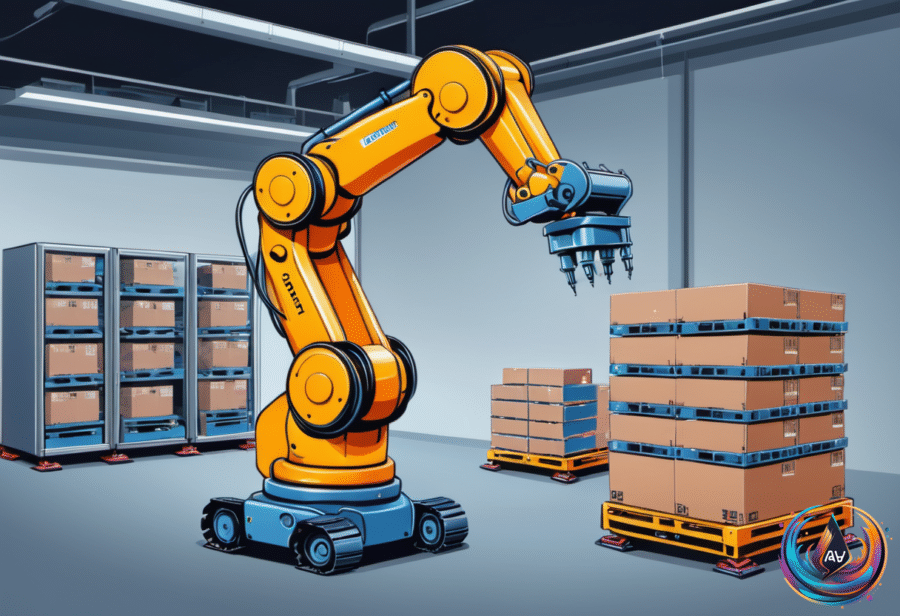
At Siemens’ Electronics Factory Erlangen, the company is developing an AI-based robot application to unpack incoming goods. The deliveries contain component reels, but the packaging can differ in type and size from one shipment to the next. A fixed robot program cannot manage that variety, so people still handle much of the work.
The application is designed to open cartons and remove the component reels for further processing. Cameras capture the workspace in real time, while AI-based robot foundation models interpret what they see and determine the actions required.
That gives the robot a job that goes beyond repeating one sequence. It must adapt its steps to each delivery, using the scene in front of it to decide how to proceed. Siemens supplies the automation and control systems, industrial PCs, software orchestration, and manufacturing expertise drawn from its own facilities.
The project shows what Siemens means by goal-based automation. A manufacturer sets the desired outcome, and industrial AI determines how to reach it or carries out the work through AI agents. The approach is aimed at production tasks where every item, package, or situation may present a different challenge.
AI agents move into planning and engineering
Siemens is introducing the Autonomous Production Planner within Intelligence Center X, its industrial AI orchestration software. Several AI agents work together to create production schedules and optimize them against defined key performance indicators.
Before a schedule reaches production, a physics-based digital twin checks it. That places a simulation test between an agent-generated plan and factory execution, giving manufacturers a way to examine how the plan behaves before using it on the shop floor.
Siemens expects the planner to reduce manual planning effort by 70% and cut costs by up to 20%. Those figures point to a practical use for industrial AI: reducing the time needed to organize production while keeping the final decision tied to measurable factory goals.
The Eigen Engineering Agent brings the same idea into automation development. Connected to the TIA Portal engineering software, it can adapt automation code and verify the changes through simulation. Creating safety configurations remains a future capability.
For process industries, the agent is available with SIMATIC PCS 7, Siemens’ distributed control system. It can analyze existing control logic, check or create Continuous Function Charts, and create control modules from engineering data. Siemens says these functions can speed up engineering and help companies apply expertise across projects.
During production, the Industrial AI Suite connects AI models running on Industrial Edge to SIMATIC S7 controllers. That links AI models with the control systems used to run industrial equipment, extending the portfolio from planning and engineering into factory operations.
Security becomes part of the automation conversation
As AI reaches control systems, Siemens is preparing industrial products for the requirements of the EU Cyber Resilience Act. The law is changing the responsibilities of manufacturers of connected products. Reporting duties for actively exploited security weaknesses and serious security incidents have applied since September 2026, while broader requirements take effect in December 2027.
Exein introduced its Ray AI Agent on November 24, 2026, to help manufacturers identify and prioritize security risks hidden in connected-device firmware. Ray is integrated into Exein Analyzer, the company’s firmware security platform, and uses scan results, CVE reachability data, and compliance findings to highlight the risks that need attention first.
Ray can summarize the security status of one product or an entire fleet through natural-language conversations. It can also show where the same weakness appears across multiple products, helping engineering teams decide which problems to address first and how they relate to EU Cyber Resilience Act requirements.
Giovanni Alberto Falcione, co-founder and CTO of Exein, said: “Europe is connecting more areas of the physical world with software, but too many products were never designed for today’s threat environment. The recent attacks on cooling systems show that a vulnerability hidden in firmware can have consequences far beyond IT.”
That concern reaches across industrial facilities, healthcare, energy, transportation, and other systems controlled by software. Exein says its technology is used on more than two billion connected devices, while its Photon offering provides proactive runtime security for connected devices, physical AI, autonomous AI agents, and cloud and edge infrastructure.
Germany’s industrial AI opportunity
The announcements arrive during a wider push to build on Germany’s industrial strengths. Germany has strong engineering expertise but lost ground to leading providers from the United States during the first wave of generative AI, centered on language models.
Companies including Nvidia, Deutsche Telekom, and Siemens are now betting that Germany can use decades of production and machine data to compete in industrial AI. The country is also investing in AI infrastructure to give businesses access to computing power and modern AI applications.
SPS 2026 reflects that broader shift. Schneider Electric, described as a global energy technology leader, is showing how its EcoStruxure Automation Expert release connects data and AI to control across machines, processes, and plants. The company says the software helps customers engineer faster, modernize step by step, scale automation, and protect existing investments.
The opportunity is clear, but the outcome is not settled. Germany must still turn its industrial data and infrastructure spending into a lasting advantage while reducing dependence on foreign technology providers. Siemens’ projects show one path: use AI where factories face changing physical conditions, complex planning, and engineering work that fixed software cannot handle alone.
Based on
- Siemens Expands Industrial AI Across Planning and Robot Unpacking — unite.ai
- Schneider Electric turns Industrial Intelligence into action at SPS 2026 | Markets Insider — markets.businessinsider.com
- Exein bringt den „Ray AI Agent“ auf den Markt, um Herstellern dabei zu helfen, den wachsenden Bestand an vernetzten Geräten in Europa zu sichern | AFP.com — afp.com
- Kann Deutschland mit industrieller KI wieder aufholen? — dw.com