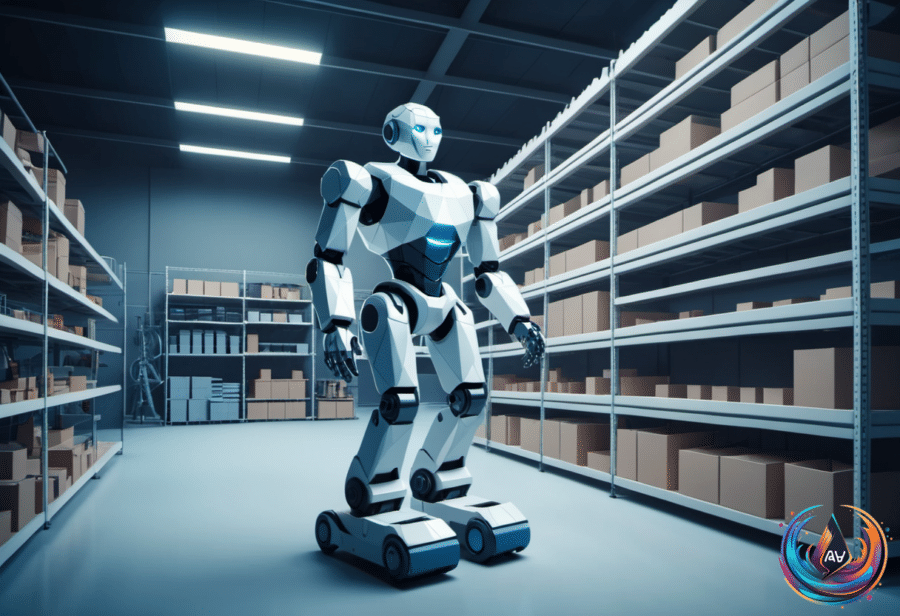
Physical AI is leaving the screen and entering factories, stores, and homes—but the path from a dazzling demonstration to dependable work remains full of surprises. Elisa Seghetti, Co-Founder and CEO of Saturn Dynamics, is focused on the challenge that matters most: helping robots operate safely and reliably alongside people.
Her interview series, published November 25, 2026, explores how physics-based world models could give robotics teams a stronger foundation for training, testing, and deployment. Seghetti brings experience across biotech, computational chemistry, and enterprise AI, along with the lessons of founding AiGot in 2021 and growing its engineering team from three to more than 35 people while working with Fortune 500 companies on their AI strategies.
Arc Gives Robots a Physics-Aware Training Ground
Saturn Dynamics develops physics-based world models for robotics and embodied AI. Its Arc model creates interactive simulated environments where teams can generate training data, explore variations in physical tasks, and evaluate control policies before testing them on real hardware.
The key idea is to make the model reuse the rules of the physical world instead of learning every pattern from scratch. “Arc embeds physics symmetries so the model reuses physical rules instead of relearning them from data,” the company explains. That approach connects faster simulation with a clearer path toward robot behavior that teams can test before workers and machines share a production floor.
Arc generated one second of simulation data in 0.6 seconds on an NVIDIA Jetson Thor. That timing points toward a practical role for edge hardware, where robots need models that can support physical tasks without depending on a distant system for every decision.
Saturn Dynamics defines success in direct terms: “robots working full production shifts with few human interventions.” That standard reaches beyond a polished demonstration. A robot must handle repeated work, changing conditions, and the exceptions that appear when real environments refuse to behave like controlled tests.
The Jagged Frontier Has a Physical Body
The gap between what AI can do and what people expect it to do becomes clearer when machines gain bodies. In August, at Beijing’s World Humanoid Robot Games, Tiangong Ultra ran 100 meters in 8.64 seconds, almost a second faster than Usain Bolt’s world record. Yet the robot could not stop, crashing into the padded barrier beyond the finish line along with several rivals.
That contrast captures the “jagged technological frontier.” In a 2023 field experiment involving 758 BCG consultants, people using GPT-4 finished tasks within the system’s reach 25% faster and produced work rated more than 40% higher in quality. On a task just beyond GPT-4’s reach, they were 19 percentage points less likely to reach the right answer.
AI capabilities are uneven, and people often discover the edge only after crossing it. Robotics has carried this problem for decades. Welding a car body to a fraction of a millimeter is a solved problem, while clearing a cluttered kitchen table remains a research challenge. Hans Moravec observed that what is hard for humans is often easy for machines, and the reverse can also be true.
Physical AI brings that uneven frontier into blue-collar work. Cleaning and inspection are at scale, manipulation on assembly lines should follow within three years, restocking shelves and serving customers within five, and general-purpose help at home within 10 to 15.
Robots Are Entering Production, Stores, and Homes
The industrial numbers show why this shift is moving beyond laboratories. China installed 354,000 industrial robots in 2025, representing 59% of the world total. The United States rose 12% to 38,400 units and overtook Japan as the second-largest market, while installations in the European Union fell 11%.
Companies are testing robots under demanding conditions. Amazon deployed its one millionth robot in July 2025. At BMW’s Spartanburg plant in South Carolina, Figure’s humanoids spent 11 months loading sheet-metal parts on a live production line during 10-hour shifts.
Other deployments show both progress and the need for careful measurement. In China, AgiBot reported a 99.99% success rate over 64,828 tasks during a six-day livestream at Longcheer’s tablet factory in Nanchang. At Novares’ automotive plant in Spain, a Unitree G1-D equipped with French intelligence from Innov8 Robotics and Bleu Robotics manipulated 207 parts with a reported 99.5% success rate.
Retail adds another layer of complexity. Denner, part of the Migros group, began rolling out 200 cleaning robots from Shenzhen-based Pudu Robotics, which says it has shipped more than 130,000 robots worldwide. Robobee, a local distributor, trained store staff and handles maintenance, while employees prepare spaces and manage exceptions the robots cannot.
In November, AgiBot ran six humanoids for 24 hours in a Shanghai convenience store, where they restocked shelves and made coffee; four passed the final assessment. In Hong Kong, Galbot opened three stores, each managed by a humanoid without a remote operator.
Trust, Design, and Rules Will Shape the Next Wave
Robots are entering homes through familiar machines. Robotic vacuums and lawn mowers are already there, and companion robots could familiarize families with machines before general-purpose assistants become reliable. Humanoids may gain an advantage because homes are designed around human bodies, with the impact reaching ageing societies that cannot recruit enough care workers.
Adoption will depend as much on trust as technology. A strategic question has come up again and again in China: will physical AI be built like Apple or like Android? Figure has chosen integration, and its CEO, Brett Adcock, argued that the company could not outsource its intelligence any more than its hardware. Nvidia is betting on layers, offering open foundation models and the chips to run them, while Chinese firms such as D-Robotics supply chips and development tools to robot makers.
No winner has emerged, and the geopolitical stakes are high. Europe’s new Machinery Regulation applies from January 2027, but its AI-specific requirements were pushed to a delegated act due by August 2028. China published its first national standard framework for humanoid robots in February, while United States employers rely on industrial-robot standards that assume a robot will not fall over. ISO 25785-1, the first international standard for robots that must actively balance, remains in draft.
That is the frontier Saturn Dynamics is targeting: not a robot that performs one spectacular trick, but a system that understands physical rules, survives variation, and earns a place beside people. The next breakthrough may not be the fastest robot on a track. It may be the machine that completes an entire shift and knows when to ask for help.
Based on
- Elisa Seghetti, Co-Founder & CEO of Saturn Dynamics – Interview Series — unite.ai
- The jagged frontier gets a body | Fortune — fortune.com
- Fortune — fortune.com
- Innovation News, Emerging Technologies & Disruptive Trends | Fortune | Section | Page 46 of 62 — fortune.com
- Celonis Co-CEO: AI Agents Could Create New Security Risks for Businesses | Fortune AI Weekly — fortune.com