SpaceX is preparing for the most ambitious Starship mission to date, with the company targeting September 28, 2026, for the vehicle’s first orbital flight test. The launch window opens at 8:15AM Eastern Time, pending regulatory approval.
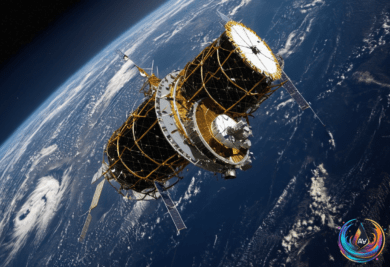
The planned mission would send Starship around the planet six times during a 10-hour flight, reaching an altitude of 171 miles above Earth. It would also carry 26 Starlink V3 satellites into low-Earth orbit, marking the first time these next-generation satellites are deployed for operational use.
A major test after a full launch rehearsal
SpaceX completed its launch rehearsal ahead of Starship Flight 14. The company announced on September 24 that the rehearsal was complete, after conducting the work on September 25 at 7:55 am EST. SpaceX described the event in a short statement: “Launch rehearsal complete ahead of Starship Flight 14.”
The rehearsal included a full launch simulation, loading the vehicle with liquid propellants, final checks, and the complete countdown sequence. Teams also practiced the procedures for scrubbing a launch and drained the fuel after the exercise. That gives SpaceX a chance to run through the key steps before committing to the real flight.
SpaceX announced September 28 as its target launch date on September 17. The company had originally planned to launch on September 22, and a later announcement on September 19 again pointed to September 28 for the first orbital flight. SpaceX said it was “Now targeting to launch Starship Flight 14 as early as Monday, September 28, pending regulatory approval.”
Elon Musk also described the mission in a post about the schedule: “In seven days, the first Starship launch to orbit will be carrying Starlink V3 satellites intended for operational use.”
What Starship will carry and where it will end
The 26 Starlink V3 satellites will support 1 Tbps of downlink capacity and 160 Gbps of uplink capacity. Those figures represent a major step for the next generation of SpaceX’s satellite network, which already has more than 11,000 Starlink satellites in orbit.
The most recent Starship launch, held in July 2026, carried 20 test Starlink V3 satellites. Those satellites extended their solar arrays and antennas before burning up in the atmosphere. The July mission also marked the first time the Starship upper stage returned from a suborbital trajectory without exploding, and the vehicle splashed down in the Indian Ocean.
The upcoming mission will follow a different path. Its goal is to send Starship’s second stage into orbit for a 10-hour flight while deploying satellites for operational use. After the mission, the Super Heavy booster will splash down in the Gulf of Mexico, while the upper stage will crash into the Pacific Ocean near Chile.
The Gulf of Mexico was renamed the Gulf of America by President Donald Trump in 2025. The planned booster splashdown remains part of the mission profile described for Starship’s first orbital test.
The largest rocket SpaceX has flown
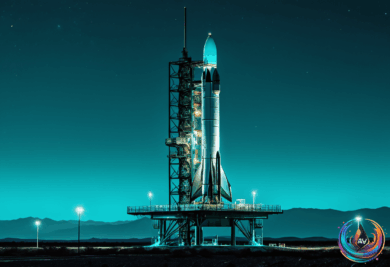
Starship combines a first-stage booster known as Super Heavy with a second stage also called Starship. Super Heavy has 33 engines, while the upper stage has six engines. When fully stacked, the combined rocket is the largest and most powerful ever flown.
Previous Starship flight tests were suborbital, so this mission represents a major change in both distance and purpose. Instead of ending after a short suborbital test, the second stage will attempt to complete an orbital flight, circle the planet six times, deploy satellites, and continue through a planned ocean impact near Chile.
SpaceX has continued preparing the vehicle since Starship V3 was seen on a launchpad in Texas on May 21, 2026. Starship was inspected after a test flight on August 27, adding to the work leading toward Flight 14.
The test also matters beyond SpaceX’s own plans. NASA’s Artemis program may be affected by the outcome, since NASA’s Orion spacecraft is intended to dock with Starship during Artemis III. A successful orbital test would give SpaceX more flight experience before that planned connection, while the mission’s failures or delays could add pressure to the schedule.
For now, the next milestone is September 28. If the launch receives regulatory approval and lifts off during the 8:15AM Eastern Time window, Starship will attempt its first trip around the planet, carry 26 operational Starlink V3 satellites, and put SpaceX’s largest rocket through its most demanding test yet.
Based on