AstroForge wants spacecraft to make decisions without waiting for Earth.
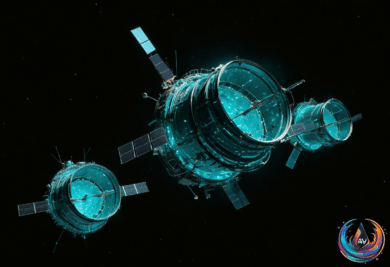
The space startup is developing an autonomous control system called Solo, a transformer-based model built in-house. AstroForge plans to fly its first AI-controlled spacecraft in 2027 on the first rocket launched by Stoke Space, with NASA backing the mission and scientific data about the sun on the agenda.
That plan lands in an industry still reluctant to let neural networks touch the controls. Most spacecraft autonomy depends on traditional control algorithms because engineers remain concerned about the unreliability of neural networks. The first use of a neural network to control a satellite’s positioning in orbit took place just last year, so this is not exactly a field with decades of reassuring flight history.
From spacecraft failures to constrained autonomy
AstroForge was founded in 2022 and has launched two prototype spacecraft. Both suffered anomalies that prevented them from achieving most of their mission objectives, giving the company a practical reason to question whether spacecraft should wait for instructions when something goes wrong.
In 2025, AstroForge launched its Odin spacecraft into deep space but had difficulty communicating with it. The company could not gain control of Odin, and nothing onboard tried to recover the spacecraft without instructions from Earth.
“Would that have been recoverable with all the data on the spacecraft? I don’t know, but I can tell you nothing onboard tried it, and I would love something onboard to try if the spacecraft is unrecoverable at launch,” said Matthew Gialich, AstroForge’s co-founder and CEO.
That experience helps explain the company’s approach. AstroForge is not presenting Solo as a universal intelligence that can handle every possible spaceflight problem; it is building a constrained system for a defined spacecraft and a limited set of inputs. As Gialich put it, “I’m not saying I’m going to make general spacecraft autonomy or general autonomy for the world, I’m making a constrained autonomy at a very low sensor input, following the basic training of a transformer model.”
Solo gets a supervised flight before taking command
AstroForge’s control stack combines several layers instead of asking one neural network to run everything. It includes traditional control algorithms, models trained on test data for specific subsystems, and an overall intelligence layer trained on about 2,500 sensors in the spacecraft.
The company’s third vehicle, DeepSpace-2, is currently set to launch alongside Intuitive Machines’ third moon mission, expected to head for space by the end of 2026. Solo will be onboard DeepSpace-2 in “shadow mode,” allowing the system to operate alongside existing controls before AstroForge commits a spacecraft to full AI command.
That staged deployment matters because the first autonomous mission is planned for 2027, when AstroForge intends to fly an AI-controlled spacecraft on Stoke Space’s first rocket. The mission is expected to collect scientific data about the sun, backed by NASA — a serious test for a company whose earlier vehicles failed to complete most of their objectives.
Armand Awad, AstroForge’s head of flight software, is working on a system designed to respond to spacecraft conditions rather than simply repeat a fixed sequence. The company’s goal is not to remove traditional software, but to place an intelligence layer above it and give the spacecraft more options when reality ignores the flight plan.
Gialich has also said, “I don’t plan on flying radios that can receive from Earth on Autonomy-1.” That makes Solo’s job more demanding: the spacecraft may need to detect trouble, interpret its sensor data, and choose a response without relying on a fresh command from operators.
The concept remains a bet, not a proven standard. “Fly to an asteroid, land on it, make no mistakes: If only it were that easy,” wrote Tim Fernholz, Senior Reporter at TechCrunch. AstroForge’s next vehicles will show whether onboard AI can turn that familiar spaceflight fantasy into something less fragile.