Two optimization algorithms can work from the same estimated gradients and still follow different paths. Stochastic gradient descent, known as SGD, and Adam both update model parameters, but they use different rules for momentum and per-parameter step sizes.
That difference gives the comparison real weight. The question is not only what gradient an algorithm receives, but how each optimizer transforms that input into a parameter update and an outcome that can be evaluated against a stated objective. The full picture connects algorithms, data, interfaces, hardware, permissions, and people.
Two Algorithms, Two Update Rules
SGD and Adam are optimization algorithms that update model parameters from estimated gradients. An estimated gradient provides the input to the update process, but it does not determine the entire process by itself. Each algorithm applies its own rules after receiving that information.
Momentum forms one point of difference. SGD and Adam use different rules for momentum, so the history carried into a new update follows a different pattern for each optimizer. That distinction belongs to the core mechanism rather than to a surface-level software label.
Per-parameter step sizes create another point of difference. SGD and Adam use different rules for these step sizes, meaning the parameter update depends on the optimizer selected and the rule that governs how each parameter moves.
These mechanisms should be read together. Momentum concerns the estimates carried through the update process, while per-parameter step sizes shape the movement applied to individual parameters. Together, those rules help describe how SGD and Adam turn estimated gradients into parameter changes.
The Five Operations Behind the Causal Map
SGD and Adam transform an input into an outcome through five observable operations. The sequence provides a compact way to follow what happens from an estimated gradient to an optimizer result.
- Sample a mini-batch and compute: The process begins by sampling a mini-batch and computing from it.
- Backpropagate gradients: Gradients move through backpropagation, creating the estimated gradient information used by the optimizer.
- Accumulate momentum or moment estimates: The process accumulates momentum or moment estimates, using the rules associated with SGD or Adam.
- Apply the optimizer’s parameter update: The chosen optimizer applies its parameter update to the model parameters.
- Adjust the learning-rate schedule: The learning-rate schedule is adjusted as part of the overall transformation from input to outcome.
This five-part view connects the two algorithms without treating them as identical. Both pass through the same observable operations, yet their momentum rules and per-parameter step-size rules distinguish how the update takes shape.
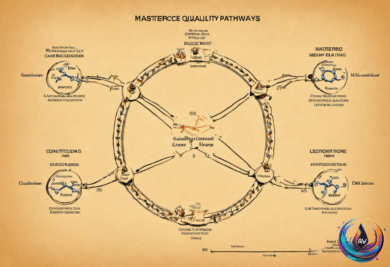
The diagram for this process is a compact causal map for SGD and Adam. It is not a claim that every implementation uses five software components. The five operations describe observable parts of the transformation, not a required design for every implementation.
Why Evaluation Depends on More Than the Model
A model can remain unchanged while the performance of SGD and Adam changes. Surrounding data, interfaces, hardware, permissions, and people can determine performance even when the underlying model stays the same.
That point changes how the algorithms should be evaluated. Looking only at the optimizer or the model leaves out the conditions that shape the outcome. The input may pass through the same five observable operations, yet the surrounding elements still influence how performance is determined.
Data belongs at the center of this evaluation because the process samples a mini-batch and computes from it. Interfaces also matter because they form part of the surrounding setting in which the algorithm operates. Hardware, permissions, and people complete that setting, giving performance a broader context than the parameter update alone.
The result must be evaluated against a stated objective. This requirement turns the optimizer from an isolated mechanism into part of a measurable process: an identifiable input enters, a transformation or decision characteristic defines what SGD or Adam does, and an outcome can be judged against the objective.
Those three practical commitments clarify the comparison:
- Identifiable input: The process begins with an input that can be identified.
- Transformation or decision characteristic: The optimizer contributes a characteristic transformation or decision, including its rules for momentum and per-parameter step sizes.
- Evaluable outcome: The resulting outcome can be evaluated against a stated objective.
SGD versus Adam is therefore not a choice that can be understood through names alone. The meaningful comparison follows the input, tracks the five operations, examines the optimizer’s update rules, and evaluates the outcome within its surrounding conditions.
As of October 3, 2026, this causal view offers a clear way to discuss both algorithms without reducing either one to a single software component. The next step is not to separate the optimizer from its environment, but to examine the full chain that turns estimated gradients into evaluated outcomes.