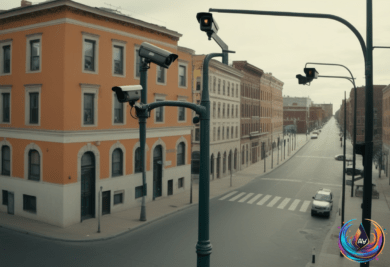
Across Texas, lawmakers are debating whether automated license plate readers have gone too far. The discussion centers on Flock Safety cameras, which police say help find stolen vehicles, locate missing people, and solve violent crimes, while critics warn that the same system can map the movements of people who are not suspected of any crime.
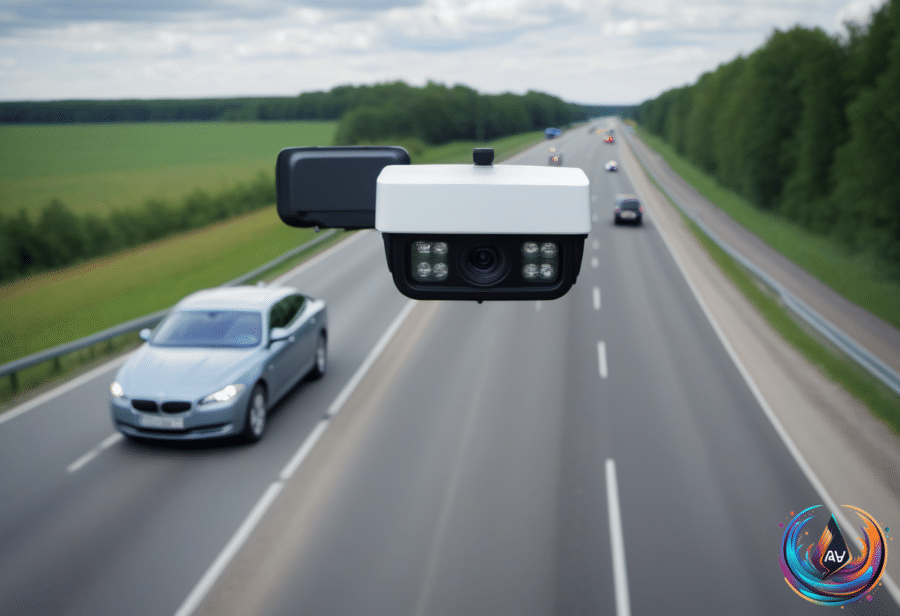
These cameras do not follow a vehicle continuously like a GPS device. Instead, each camera records a still image when a vehicle passes, then turns details from that image into searchable data. That can include the license plate, vehicle type, time, location, and features such as a bumper sticker, roof rack, or missing hubcap.
How Flock cameras build a searchable trail
Flock says its cameras track vehicles, not people. The distinction matters, but a string of vehicle sightings can still show where a person has traveled. Each individual image may reveal little, yet several time-stamped records placed on a map can create a route across a city or region.
One test in North Texas showed how much information the system can hold. A vehicle’s license plate was provided to Dallas police, who found that Flock cameras had captured 87 images of it during a single month. The cameras were not following the vehicle every second, but each passing camera added another point to the record.
Flock says it has roughly 120,000 cameras across the country. The information collected by those cameras is stored in a database that authorized users can search, which means the system’s reach depends not only on where cameras are installed but also on which agencies can access the network.
The cameras can help investigators connect separate sightings. In the investigation into the killing of 20-year-old Aniya Edwards, detectives knew she had been at a Dallas music studio before she was killed. They found a Flock image showing her Hyundai and a black Dodge, then located another camera that captured the same cars miles away and seconds apart.
More cameras recorded the vehicles traveling in the same direction. Investigators found four snapshots spanning more than 20 miles, with the trail reaching the area where police said an attempted robbery occurred and Edwards was shot. The cameras did not record everything between those points, and they did not solve the case alone, but the images became a lead that, combined with other evidence, helped police identify a suspect arrested on a capital murder charge.
Why Texas lawmakers want new limits
Dallas police say Flock cameras helped detectives solve more than a dozen murder cases this year only, or roughly 18% of all homicide cases. That record has kept the technology attractive to law enforcement, even as concerns grow about privacy, data sharing, and searches unrelated to criminal investigations.
State Rep. John Bucy III, an Austin Democrat, filed House Bill 331, which would ban Texas government agencies from using automatic license plate readers. State Rep. Brian Harrison, a Midlothian Republican, proposed HB 847, which would let police keep using the cameras but require a warrant and limit their use to violent crime investigations.
Harrison said support for the technology contributed to Republican losses in the November election. “This was a contributing factor to Republicans being defeated because the Republican leadership of the state of Texas had been supporting Flock cameras and forcing Texas taxpayers to fund their own warrantless surveillance for many years,” he said.
Bucy said the issue reaches beyond party politics. “I think this is an issue that goes beyond Republicans and Democrats,” he said. “I think it was all over the campaign trail from both sides of the aisle.” Both lawmakers said they were confident this session would be different and optimistic that state lawmakers would pass legislation limiting camera use.
The proposals came months after Gov. Greg Abbott ordered state agencies to stop using state money to purchase or operate the cameras. In Dallas, that order affected nearly half of the police department’s network of more than 600 Flock cameras.
Search logs show the oversight problem
Police departments across Texas produced millions of automated license plate reader search-log entries. Many listed clear investigative reasons, including murder, aggravated robbery, or a suspect vehicle. Others offered little detail.
Dallas records from 2023 through 2025 included search reasons such as “info,” “LOC,” and “none.” The single letter “I” appeared nearly 30,000 times. Assistant Chief William Griffith said, “My guess is they are legitimate reasons,” but added, “They just didn’t give a better explanation in there.” Dallas police said supervisors review search activity weekly, and Griffith said that review found no officers who had misused the system.
A separate case showed why critics want stronger safeguards. Former Lufkin police officer Zachary Klein pleaded guilty to 100 felony counts of misuse of official information and received five years in prison. A Texas Rangers investigation found that Klein conducted more than 25,000 improper Flock searches, including about 18,000 searches involving license plates associated with three people, including his former girlfriend and members of her family.
Flock responded by adding standardized search categories, a shorter recommended data-retention period, and software designed to identify unusual searches. In December 2025, the company added a drop-down menu modeled after the FBI’s crime data reporting system, aiming to create more complete audit records.
Why some cities are stepping back
Wylie, a city 20 miles northeast of Dallas, approved six Flock cameras in 2024. Those cameras connected to a broader network that let approved outside agencies search information collected in the city.
Audit records showed thousands of searches by outside agencies across the country that could have included data from Wylie’s cameras. Search reasons included curfew or loitering, illegal dumping, and traffic analysis. The records did not show whether every search returned an image from Wylie, and they did not always give city officials enough information to decide whether a search was justified or whether Wylie data had been accessed.
That uncertainty led Wylie not to renew its contract this fall. Mayor Matthew Porter said, “We can’t control another department on how they access data on our citizens, and so that’s a concern for us.” He said the council decided to pause a program it was not completely comfortable with.
Flock CEO Garrett Langley addressed the misuse cases in an August 2026 interview. “I don’t think that Flock created police abuse,” he said. When asked to consider the experiences of women whose information had been searched for personal reasons, he added, “It’s horrible, and I apologize.”
People trying to identify camera locations can turn to DeFlock, a project that uses volunteers to identify Flock cameras visually and relies on OpenStreetMap data. But the larger question is not only where the cameras stand. It is who can search the records, what reason they provide, how long information remains available, and whether a vehicle’s movements can be examined without a warrant.
Based on
- What exactly are Flock cameras and how can you spot one? — engadget.com
- Is Your Car Tracking Your Location? Here’s How To Check And Opt Out — engadget.com
- How To Get The Most Protection From Your Ring Camera Security System — engadget.com
- Texas lawmakers push to restrict or ban Flock cameras amid growing privacy concerns – CBS Texas — cbsnews.com
- Flock Launches Solved Story Hub, Highlighting Thousands of Cases Where Technology Helped Solve Crimes and Find Missing People | Markets Insider — markets.businessinsider.com