Imagine a world where humans spoke ten times more languages than they do today. That world existed just 2,000 years ago. Linguistic diversity exploded between 3,000 and 1,000 years ago, creating a golden age of human languages. Tens of thousands of tongues flourished, then vanished as empires grew and colonial forces spread.
A Golden Age of Languages Lost to Time
Scientists reconstructed the history of human language diversity stretching back to the dawn of agriculture 12,000 years ago. Before farming, humans spoke between 4,500 and 6,000 languages. That fits with hunter-gatherer groups likely matching today’s size, estimated around 4 to 7 million people worldwide.
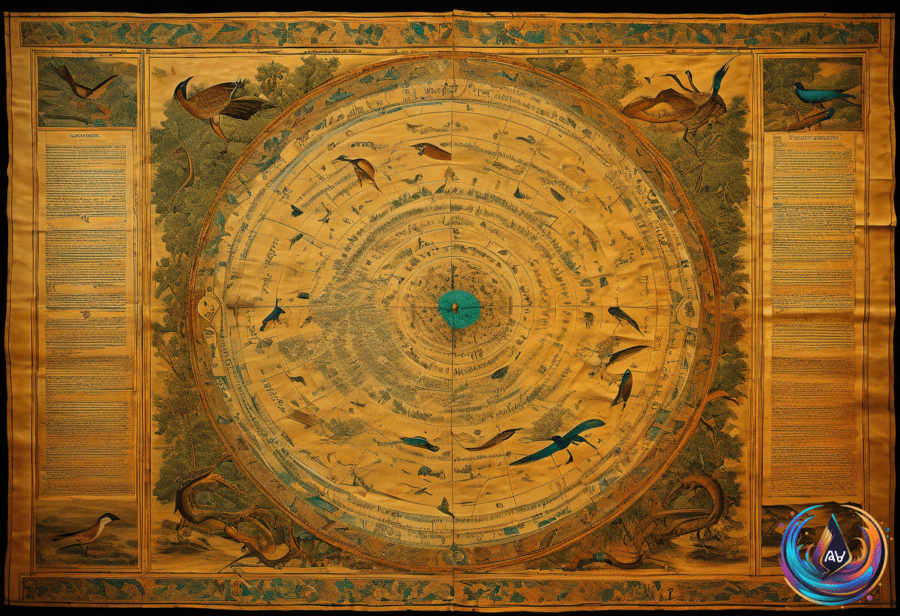
But 3,000 years ago, something incredible happened. Language diversity surged. At its peak, around 2,000 years ago, humans may have spoken as many as 75,000 different languages. That’s more than ten times the 7,500 languages alive today.
Damián Blasi, who led this research, said, “We uncovered a linguistic ‘golden age’ with tens of thousands of languages 3,000 to 1,000 years ago.”
This peak didn’t last. Starting at least 1,000 years ago, smaller multinational empires began uniting cultures and languages. Colonial expansion over the last 500 years accelerated this trend. Languages have been vanishing every few weeks ever since, leaving today’s linguistic diversity a mere shadow of its former glory.
Most ancient languages left no direct record, so scientists used indirect models to piece together this history. This approach reveals a complex, rich tapestry of human communication wiped out by history’s shifting powers.
Birdsongs Unlock the Secrets of Sound and Diversity
While human languages soared then fell, birdsong tells a different story about diversity in nature’s soundscape. A massive study analyzed 116,000 songs from 3,160 bird species worldwide. The findings were surprising.
- Most birdsong is built on just eight basic acoustic building-block sounds.
- Each bird species typically uses about five distinct motifs in its song repertoire.
- Birds adapt their songs to their habitats—flat whistles prevail in tropical rainforests, while ultrafast trills dominate temperate regions.
This simplicity contrasts sharply with the explosion of human tongues. Birds keep their songbooks tight. Meanwhile, humans once thrived in spoken diversity that dwarfs today’s count by tenfold.
How Long Can Humans Live? New Limits Discovered
What about us humans? How long can we live? New research delivers a fascinating answer. Russian scientists built a mathematical model simulating how organs fail as DNA mutations accumulate over time. They found that even if we cured all major aging causes, DNA damage in key organs like the brain and heart would still limit us.
The model predicts a median human lifespan between 146 and 194 years under ideal conditions. This suggests a natural ceiling near 200 years, beyond which biology pushes back hard.
This research was published on July 23, 2026. It upends the idea that curing aging could grant immortality. Instead, it frames longevity as a battle against genetic decay that can only be slowed, not stopped.
What This Means for Our Future
We now glimpse a world where human voices once painted the planet with tens of thousands of languages. That diversity shaped culture, identity, and knowledge. Today, we face a steep decline in languages, losing precious heritage at a breakneck pace.
At the same time, we peek into the limits of human life itself. Longevity may extend far beyond today’s norms, but not without hard biological boundaries.
Both stories remind us how fragile and precious life’s complexity is—whether in the words we speak or the years we live. Can we preserve our linguistic diversity? Can science push human life closer to its theoretical limits? The answers lie just ahead, and the race is on.
Based on
- Scientists Uncover Lost ‘Golden Age’ of Languages That Ended 1,000 Years Ago — 404media.co
- Humans may have spoken 10 times as many languages 2,000 years ago | Scientific American — scientificamerican.com
- How almost all birdsongs come from just eight basic acoustic sounds | The Independent — independent.co.uk
- Scientists find humans could live decades longer if we cure ageing | The Independent — independent.co.uk