Evolution sometimes doubles the entire genome.
That move can inject genetic novelty into an organism in a single generation, creating opportunities for rapid evolution while also raising the risk of extinction. A whole-genome duplication is the most radical mutation an organism can experience at once—and evolution does not get many chances to make a change that large.
The freshwater snail Potamopyrgus antipodarum offers a recent example. Instead of two sets of chromosomes, it has three or four, and Maurine Neiman’s team dated the snail’s genome duplication to less than a million years ago.
A Risky Shortcut to Novelty
Genome duplication can give evolution a dramatic supply of genetic material to work with. The event does not guarantee success, but it can fuel evolutionary innovation by creating genetic novelty on a scale smaller mutations cannot match in a single generation.
That trade-off makes genome duplication a high-risk, high-reward event. It can lead to rapid evolution or extinction, turning the process into an evolutionary gamble with unusually large consequences.
“We actually don’t know, for our snails or any other species, why this happens so reliably, again and again and again,” said Neiman, an evolutionary biologist studying the snail. The question is not whether genome duplication can matter; the question is why it occurs so often across species despite its risks.
Douglas Soltis, a plant evolutionary geneticist at the Florida Museum of Natural History, compared the process to a hitter with an unforgiving record: “We like to think of it as a baseball hitter that strikes out a lot, but when they do hit, it’s a home run.” The metaphor fits the basic pattern—many failures, followed by an evolutionary result that can reshape an entire lineage.
An Ancient Pattern Across Life
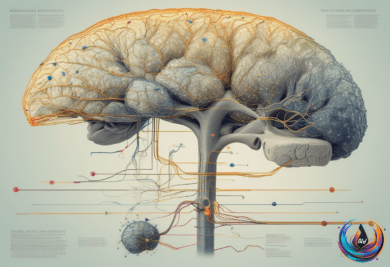
The consequences of genome duplication reach far beyond one snail. Genome duplication events have contributed to the development of spiders’ silk-spinning organs, vertebrates’ large and complex brains, species radiations of legumes, grasses, and brassicas, and the tomato plant’s fleshy fruit.
Every seed plant living today has experienced at least one ancient whole-genome duplication, and many have undergone more. That makes genome duplication a recurring feature of plant evolution rather than a rare biological oddity—although biology has a talent for hiding its biggest plot twists in plain sight.
Biologists are also debating whether significant evolutionary changes leading to jawed vertebrates connect to ancient gene duplications that occurred hundreds of millions of years ago. The debate links genome duplication to some of the largest changes in animal evolution, even though the events themselves are ancient.
Will Ratcliff, an evolutionary biologist at the Georgia Institute of Technology, and Jonathan Wendel, an evolutionary biologist at Iowa State University, are among the researchers connected to the broader study of this process. Wendel described how new methods have changed the field: “All these different interrogative tools have opened up this world to us that we could not see and hence did not know existed.”
Those tools make it possible to examine genome duplication across organisms and time, from the recent duplication in Potamopyrgus antipodarum to ancient events associated with seed plants and vertebrates. Bart Zijlstra is also identified in connection with the work, though no specific role is given.
Soltis called polyploidy “the most important process on the planet that hardly anybody knows anything about.” The phrase captures the central problem: genome duplication has helped shape silk-spinning organs, complex brains, plant diversity, and fleshy fruit, yet the reasons it happens so reliably remain unknown.
The snail’s three or four chromosome sets provide a comparatively recent case for studying that mystery. Its duplication occurred less than a million years ago, giving biologists a way to examine a genome-wide evolutionary gamble without relying only on events buried hundreds of millions of years in the past.
Genome duplication is not evolution taking the safe route. It is a rare-scale biological wager that can produce innovation, reshape species, or end in extinction—and the rules behind the wager are still being worked out.