The future is arriving with a warning label. Most kids are anxious about the state of the world, and six-year-old Pim Sullivan-Tailyour saw why before she had the vocabulary for it: sitting in the back of a car in Thailand, she noticed a mountain that humans had quarried away.
That moment captures the emotional terrain behind new online support networks such as Force of Nature and the Good Grief Network, both of which have gained thousands of participants. Their existence reflects a plain fact rather than a passing mood—children are trying to process a world shaped by environmental damage, political conflict, technological disruption and fear about what comes next.
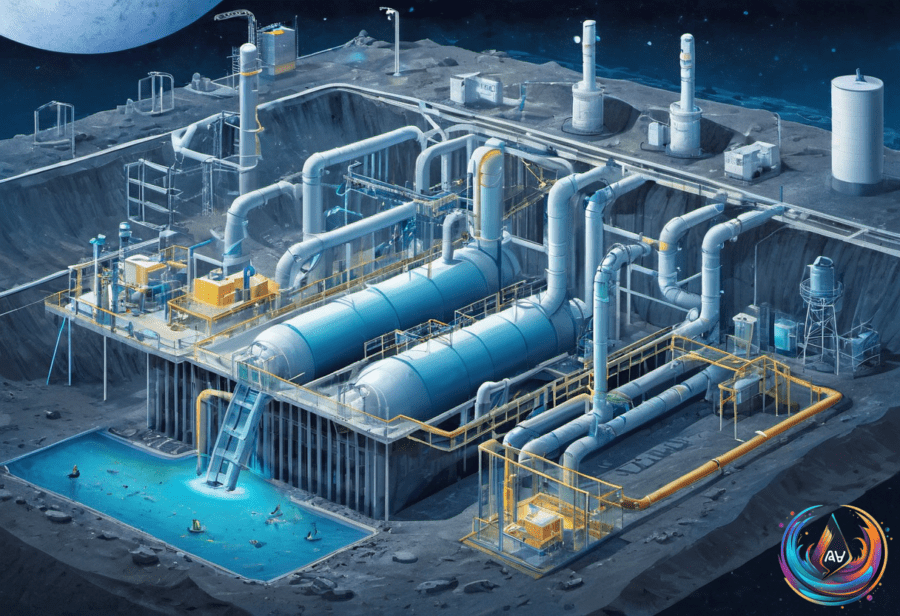
There is also a hunt for new sources of hydrogen, with the gas potentially hiding beneath our feet. Underground hydrogen could become the next 21st-century gold rush, turning geology into an energy prospecting race and giving climate discussions another resource to chase.
Infrastructure Is Becoming an Election Issue
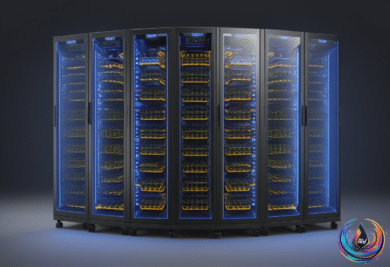
Data centers are moving from technical infrastructure to political liability. Republicans fear anger over data centers will cost them in elections, while voters are trying to recall officials because of data center controversies; if outages get blamed on these facilities, politicians across the country will pay attention.
“If he loses and data centers get the blame, politicians across the country will take notice—and they will not go near the next one. This has become a sleeper issue for the entire election cycle,” said a memo from the National Republican Senatorial Committee. The memo’s warning is simple: power, land and local approval can now affect national election cycles.
Medicine is producing a more hopeful headline, though the policy picture is less tidy. A personalised vaccine stopped skin cancer returning in a historic trial, and shares of Merck and Moderna soared on reports of the mRNA trial, even as US agencies are abandoning mRNA vaccines.
That collision—clinical promise beside institutional retreat—shows how quickly a technology can move from breakthrough to political battleground. The science may be advancing, but public decisions still determine which advances reach people.
Rockets, Robots and Systems Under Attack
LandSpace’s Zhuque-3 rocket reached orbit and recovered its first stage, a milestone that moves the Chinese startup closer to challenging SpaceX’s launch costs. Reusability remains the prize, because reaching orbit is only half the problem when every launch demands another expensive machine.
Trust is taking damage elsewhere. A former Meta executive says Zuckerberg put growth ahead of child safety and ignored warnings about harms to kids, while water systems have faced suspected Iran-linked attacks and attackers are using AI-generated exploitation scripts.
The pattern is hard to miss: critical systems are exposed, and the tools used against them are getting cheaper to produce. Water facilities once needed protection from familiar digital threats; AI-generated scripts now add another layer to the problem, because attackers can create exploitation material without building every component from scratch.
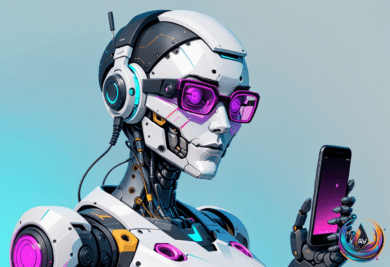
Workplaces are becoming training grounds for machines. Indian workers are training AI robots to take over their jobs, robotics companies are collecting videos of humans at work, and gig workers are training humanoid robots at home.
The bargain is brutally clear: people provide the movements, environments and examples that robots need, then those robots may compete for the same work. The machine does not need a résumé when the worker has already supplied the training data.
AI systems are also facing a credibility fight. Coders have published overrides online to find ways around Claude’s AI watermarks, while Microsoft has other ideas for proving what is real.
A new AI tool aims to spot commercially promising science earlier, but it has flaws. That limitation matters because a system that ranks research can shape which ideas receive attention, funding and development—especially when the tool’s judgment arrives before the science has finished proving itself.
Scientists researching aging clocks are looking for biological signals that can track the passage of time inside the body. Elsewhere, dinosaur stomach stones may explain how birds took flight by shifting their centre of gravity, while Earth microbes could live on parts of the Moon for up to a week.
Those findings sit at opposite ends of the technology spectrum: one concerns future medicine, another reconstructs the mechanics of flight, and the third tests how life might endure beyond Earth. None offers a clean escape from the present, but each expands the map of what science can investigate.
From anxious children to underground hydrogen, the same question keeps resurfacing: what happens when systems built to serve people start reshaping the conditions around them? By August 20, 2026, that question is no longer confined to laboratories or launchpads. It is showing up in elections, workplaces, water systems and family conversations—the usual places where technology finally meets reality.