China was expected to fade from the technology race. Instead, it built an AI revolution that now challenges the United States across computing power, model development, industrial strategy, and international influence.
The contest has moved far beyond a race to produce the most impressive chatbot. China and the US are building the hardware, software, alliances, and rules that could shape AI’s future. The latest developments show China pushing from domestic capability toward global reach, while US technology leaders press policymakers to avoid regulations they believe could slow innovation.
China Puts Its AI Ambition on Display
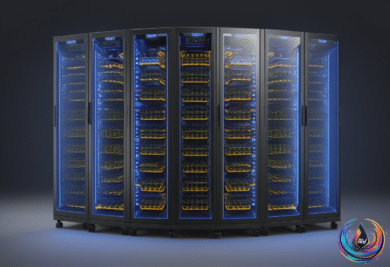
China’s clearest signal arrived on 20 July 2026, when Sugon showcased the Sugon 8000 at the World Artificial Intelligence Conference in Shanghai. The system is China’s first fully domestically produced 100,000-card AI supercluster, giving the country a powerful symbol of its ability to build large-scale AI infrastructure at home.
The Sugon 8000 matters because advanced AI depends on more than clever models. It also requires the computing systems capable of training and running those models, and China is showing that it intends to build those systems rather than rely entirely on foreign technology. The supercluster places domestic production at the center of China’s AI strategy.
That strategy has three connected goals: staying close to the technological frontier, diffusing Chinese models throughout the global economy, and setting standards across international markets. Together, these aims point to a campaign that reaches beyond research laboratories and into the way companies, governments, and markets use AI.
Moonshot added another jolt to the competition with its Kimi K3 model. The Chinese startup launched Kimi K3 as a model able to match US models like OpenAI’s ChatGPT at no cost, and demand surged so high that subscriptions were suspended two days after launch.
That response turned Kimi K3 into a sharp demonstration of market interest. China is not only building large AI systems; its startups are also placing models directly in front of users and testing whether they can compete with leading US offerings.
Hardware, Minerals, and Alliances Raise the Stakes
The AI race will depend on control of key inputs. Rare earth minerals and cutting-edge semiconductor chips could prove decisive as the US and China compete to lead AI development. These resources support the infrastructure behind advanced models, making supply chains part of the contest itself.
That pressure is pushing both countries to seek allies and form blocs that support their AI ambitions. Pax Silica and WAICO stand as examples of this effort, turning the race into a struggle over partnerships and shared direction as well as technology.
China’s approach connects domestic production, model distribution, and international standards. The US faces a different challenge: how can it protect technological leadership without creating rules that block the systems driving that leadership?
US executives are lobbying against potential bans on open-weight AI models, framing open technology as vital to maintaining global technological leadership. Their argument places access to models at the heart of the debate, with the future of AI tied not only to who builds the strongest systems but also to who can develop and use them.
US Leaders Push Back Against Fear-Driven Rules
Jensen Huang, Nvidia’s CEO, urged policymakers to target actual and pragmatic harm rather than hypothetical harm. He warned that excessive regulation and fear could prevent countries from capturing the economic benefits of rapidly advancing AI.
Huang delivered that message at a G20 meeting alongside US Commerce Secretary Howard Lutnick in Chapel Hill, North Carolina, on Wednesday, 3 September 2026. His warning captured the pressure facing policymakers as they weigh AI risks against the need to keep development moving.
“The worst outcome is that you don’t take advantage of it, that you are left behind,” Huang stated.
Elon Musk, Tesla’s CEO, delivered a related message at a G20 session on Tuesday, 2 September 2026. Musk said countries should create an environment “relatively free of regulation” in which new technologies were “default legal as opposed to default illegal”.
Huang and Musk are pointing toward a regulatory model that focuses on concrete damage instead of restricting technologies because of what they might do. Their position also reflects the wider fight over open-weight models, where US executives argue that open technology helps preserve global technological leadership.
The contrast with China is striking. Beijing is pursuing a clear plan to advance AI, spread its models through the global economy, and set standards across international markets. US leaders are warning that fear and excessive rules could leave their country behind, even as the US works to build alliances and protect its position.
The next phase of the race will test every part of that competition: the power of superclusters such as Sugon 8000, the appeal of models such as Kimi K3, access to rare earth minerals and semiconductor chips, and the ability to build blocs such as Pax Silica and WAICO.
China’s AI revolution is no longer a prediction about the future. It is a visible challenge, backed by domestic hardware, ambitious startups, and a strategy designed to reach beyond its borders. The US-China race now turns on who can combine technology, resources, alliances, and workable rules before the other side does.
Based on
- China’s demise was gleefully predicted by the west – meanwhile, it built an AI revolution | Larry Elliott — theguardian.com
- Will the US or China emerge as the AI superpower? | Business and Economy | Al Jazeera — aljazeera.com
- Tech race flashpoint: Huang, Musk push back on AI guard rails amid heated US-China rivalry | South China Morning Post — scmp.com