Hydrogen is hiding underground. Researchers and companies are now searching for natural hydrogen across several continents, hoping Earth can supply a cleaner energy source without the industrial machinery used to produce other forms of hydrogen. The promise is enormous, but the evidence remains a collection of discoveries, test wells, and geological puzzles.
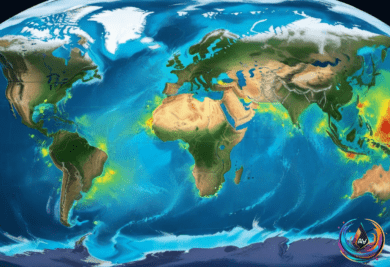
Researchers found natural hydrogen gas at a hot spring in Indonesia in 2023, with Mohamad Hamzah referenced in connection with the discovery. In the United States, the US Geological Survey publishes a map of hydrogen prospectivity, while HyTerra searches across Nebraska and Kansas after finding samples with a 96% hydrogen concentration.
Koloma has raised more than $400 million and is prospecting in the US Midwest. Vema Hydrogen, a Texas-based company, is testing its process in wells in Quebec and hopes to start full-scale production in 2028. The map, the money, and the drilling all point to the same question: can natural hydrogen move from geological curiosity to useful supply?
The underground supply is real
Researchers at the US Geological Survey estimate that trillions of tons of H2 are produced within Earth’s crust. That figure describes production inside the planet, not the amount companies can extract, but it explains why prospectors are treating rocks as more than passive scenery.
At Kidd Creek mine in northern Ontario, geochemist Sherwood Lollar of the University of Toronto and collaborator Oliver Warr examined a few dozen boreholes. Each released an average of eight kilograms of hydrogen per year, and the mine contains more than 14,000 boreholes.
Lollar’s team extrapolated that around 140 metric tons of hydrogen flow out of Kidd Creek’s vents each year. The Bulqizë mine in Albania releases 200 metric tons annually, offering another example of hydrogen moving through existing underground sites rather than waiting for a purpose-built production facility.
“If we can set some smart minds into figuring out how to hook it up and use it, then we’ve got a win for this nascent economy,” Lollar said. That is the attractive version of the story: the gas already exists, and the infrastructure may help reveal where it is moving.
Drilling is producing signals, not certainty
A team in Oman drilled a one-kilometer borehole and injected 50,000 cubic meters of water into the rock. The resulting gas was 90% hydrogen, a striking result that shows how engineered underground experiments can produce hydrogen-rich gas.
In Saskatchewan, Max Power drilled three wells at the Lawson Complex in southern Saskatchewan. The company recorded natural hydrogen gas flowing to the surface after drilling its first well in December, then took more than 800 meters of continuous natural hydrogen readings from its second well in July.
Max Power began drilling its third well at the Lawson Complex in July 2024 and believes the site covers 28 square kilometers. The company has not publicly estimated how much hydrogen is available there, so the readings show underground activity without establishing a commercial resource. Geology, as ever, declines to provide a spreadsheet on request.
Chad Levesque, president and director of Max Power, said hydrogen is “a critical molecule for making ammonia, refining petroleum in gasoline and diesel and migrating toward more decarbonized energy sources.” He added, “And that’s where natural occurring hydrogen really comes into play.”
Other researchers describe signs that invite investigation rather than certainty. Jo Shannon, a geoscientist at the University of Southampton, said, “It’s bubbling with gas.” Laurent Truche, a geochemist at the University of Grenoble Alpes, is among the researchers examining the field, while Denis Brière serves as vice-president of Chapman Hydrogen and Petroleum Engineering.
Arnout Everts, a geoscientist and consultant based in Spain, said Mali’s deposit produces about five out of the 100 million tonnes of hydrogen sold globally each year. He also offered the less marketable conclusion: “It’s way too early to tell whether or not this is going to be something really attractive.”
Everts said there is no indication that enough productive white hydrogen wells will come online globally to have a meaningful impact on decarbonization. For now, his position is simple: “We just let the research continue and see where it leads us.” Natural hydrogen has cleared the first hurdle—showing up. The harder test is proving that it can show up in useful amounts, at useful sites, for long enough to matter.
Based on