Water monitoring is getting an AI upgrade. WaterSense announced on November 26, 2026, that it raised €5.75 million in pre-seed investment and grants to expand AI-supported water-quality monitoring across Europe. Its plan includes continuous monitoring of the Oder River, from its sources to its mouth.
The pre-seed round was co-led by b2venture and Movens Capital, with participation from vastpoint. Separately, Poland’s National Centre for Research and Development provided €3.5 million for further sensor development and satellite-data integration.
That grant will support measurements for ammonium ions, nitrates, orthophosphates, fluorides, lead and E. coli. Those are not cosmetic additions to a dashboard; they are the substances that make delayed information a particularly poor operating model for water utilities and authorities.
Today, field teams collect water at individual sites and send samples to laboratories. The results can be accurate, but they may arrive days later and describe conditions that have already passed.
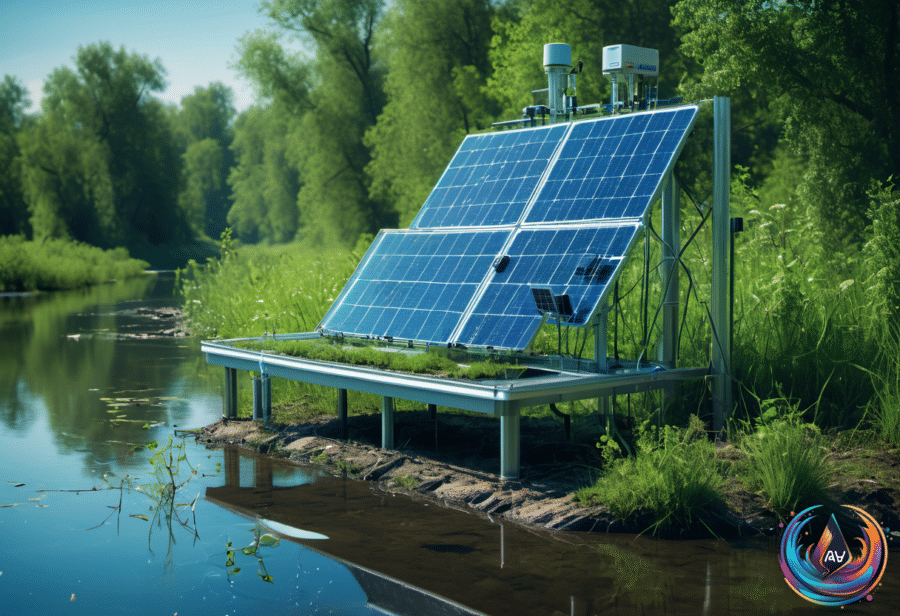
WaterSense replaces those isolated readings with autonomous stations connected to a cloud analytics platform. Its hardware uses hundreds of inexpensive miniature printed sensors, which the station replaces automatically instead of relying on one expensive sensor to remain stable through long exposure.
WaterSense says the design limits the impact of biofouling, the buildup of aquatic organisms on equipment, and reduces servicing needs. The sensor concept originated in founder Filip Budny’s doctoral research at Warsaw University of Technology.
From river readings to forecasts
WaterSense’s product description lists more than 25 water-quality parameters measured every ten minutes. The stations use hybrid solar power and optional hydro power, allowing continuous operation without cables or external power infrastructure.
Each field reading adds to a growing reference database connected to satellite observations and deep-learning models. WaterSense says those models can forecast water-quality changes up to 72 hours ahead, while AI agents turn the combined data into alerts, operational conclusions and decision support.
The goal is straightforward: warn operators earlier about threats to water intakes and help them make better-informed treatment decisions. The ASIR research project supports the same direction, developing an autonomous Internet of Things system for water-quality monitoring and threat identification from September 1, 2024, through August 30, 2027.
WaterSense is entering a market where AI and water infrastructure are becoming harder to separate. SenseNet, a Canadian startup building a wildfire detection network, announced on November 24, 2026, that it secured $43 million USD in Series B financing to expand across the United States and international markets.
Idealist Capital led SenseNet’s round, with participation from Fusion Fund, Stormbreaker Ventures, Thin Line Capital, NBC and The Sitka Foundation. The financing includes primary, secondary sales and debt financing.
Over the last year, SenseNet more than tripled its global wildfire monitoring footprint, from 130 million acres to more than 450 million acres. CEO Hamed Noori told Axios Pro first, because apparently even wildfire intelligence now needs a carefully managed reveal.
Water infrastructure becomes AI infrastructure
Gradiant is taking the broader infrastructure argument further. The MIT-founded company, headquartered in Boston, is redirecting its operating core toward water solutions for AI infrastructure and has founded a new unit called Entropy.
More than 90 percent of Gradiant’s operating core now comes from the AI economy. The company expects around 150 million US dollars in EBITDA for 2027, with an EBITDA margin above 20 percent; its order backlog already covers most results expected for 2027 and around 35 percent of results forecast for 2028.
From 2024 to 2026, Gradiant tripled its EBITDA, and it expects a further increase of more than 100 percent for 2027. The company’s description covers 3,000 wastewater treatment plants in 92 countries, giving the strategy a larger base than a single new product line.
Entropy will bundle Gradiant’s future technologies, with each receiving its own team and the time and financial room needed to develop. The portfolio includes alKaLi, which recovers lithium and other critical raw materials from brines and wastewater; ForeverGone, which destroys PFAS instead of relocating the “forever chemicals”; and Turing, spun off by Gradiant in 2023 to use artificial intelligence in water-treatment plant operations.
“KI braucht Chips, und Chips brauchen Wasser,” said Prakash Govindan, Gradiant’s co-founder and CEO. His longer explanation is less slogan and more business plan: “Unser operatives Geschäft ist zur Wasserinfrastruktur der KI-Wirtschaft geworden. Darauf wollen wir uns voll und ganz konzentrieren. alkaLi, ForeverGone und Turing richten sich jeweils an einen eigenen, riesigen Markt. Mit Entropy schaffen wir die Voraussetzungen, damit sich jede dieser Technologien mit einem eigenen Team auf ihrem Markt als führende Lösung etablieren kann.”
Anurag Bajpayee, CEO of Entropy, said: “Lithiumgewinnung, PFAS-Zerstörung und KI für die Wasserwirtschaft stellen jeweils ganz unterschiedliche Anforderungen an die Entwicklung.” He added: “Mit eigenen Teams für jede dieser Technologien können wir in allen Geschäftsbereichen von Gradiant schneller vorankommen.”
For customers, nothing changes. Behind the scenes, though, the water sector is being reorganized around continuous sensing, predictive models, autonomous operations and the resource demands of AI infrastructure—because the machines may be digital, but they still need water.
Based on
- WaterSense Raises €5.75M in Pre-Seed and Grants for AI Water Monitoring — unite.ai
- SenseNet Secures $43M to Expand Its Wildfire Detection and Intelligence Ecosystem Across the US | Markets Insider — markets.businessinsider.com
- Gradiant verstärkt sein Engagement für die Wasserversorgung der KI-Branche und gründet Entropy International für seine neuen Technologien | AFP.com — afp.com
- SenseNet raises $43M as wildfire risks intensify — axios.com