DLSS 5 is not a free visual upgrade. Everstone Studio integrated NVIDIA’s neural rendering technology into Where Winds Meet to improve lighting and material details without losing the game’s original art direction.
In a Q&A published on Nov 24, 2026, art director Muzi Li and engine tech lead Cory Zhou explained how the studio approached the upgrade. Their challenge was not simply to make the wuxia world look more realistic, but to preserve its recognizable characters, composed atmosphere, and intended visual identity across very different scenes.
Where Winds Meet moves between distant mountain landscapes, bustling streets, and quiet moments with its characters. Everstone’s artists and engineers evaluated DLSS 5 against that range, asking whether the technology improved visual quality without disrupting the mood or making familiar materials and characters look wrong.
Jiangnan Shows the Difference
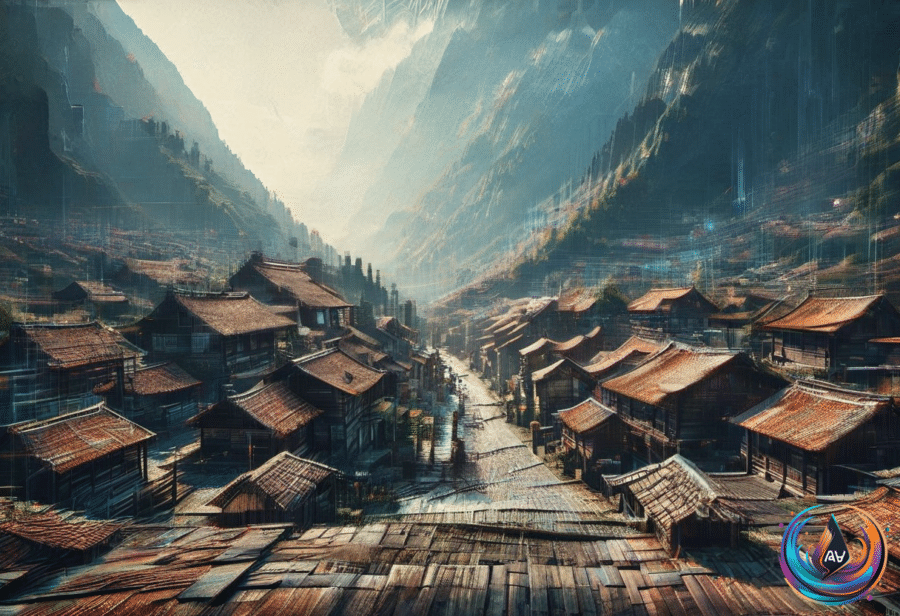
Jiangnan showcases the most significant improvements. DLSS 5 softens harsh highlights, adds depth to shadows, and fills in lifelike details across wood and roof tiles. The result comes from processing the image already produced by the game engine rather than replacing the scene’s visual foundation.
DLSS 5 identifies overly bright highlights and tones them down, while also bringing out more detail in those highlight areas. It fills in ambient-light details and subtle highlights within shadows, then recognizes material properties to refine how surfaces appear.
That distinction matters in a game built around visual atmosphere. Everstone checks whether fabric, leather, and metal remain visually distinct, whether characters stay recognizable in each scene, and whether changes to lighting and shadows disrupt the original mood. Better rendering is useful only if the world still looks like itself.
An Upgrade With a Performance Bill
Everstone had a practical advantage during integration: its rendering pipeline already had strong support for DLSS. The studio had consistently integrated the latest DLSS technologies and kept its NVIDIA Streamline integration up to date, giving DLSS 5 a solid technical foundation and making the upgrade a natural extension of its existing technology roadmap.
That existing work helped the studio adopt DLSS 5 smoothly, but it did not remove the cost of running it. Internal testing indicates that enabling DLSS 5 introduces additional performance overhead, so Everstone evaluated the technology across three areas: visual quality, performance overhead, and alignment with the game’s artistic direction.
Internal playtesting delivered a distinct visual experience, with DLSS 5 enhancing the overall presentation of environments and their sense of immersion. The visual gains still had to be balanced against the extra performance demand—a familiar bargain in modern rendering, where every improvement eventually sends an invoice.
NVIDIA provides developers with model-selection options and controls over elements such as structural and tonal strength. Everstone plans to use that flexibility rather than force one visual treatment on every player or scene.
The studio plans to let players enable or disable DLSS 5 and select the model that best matches the intended aesthetic. That approach leaves the final choice between added lighting and material detail, the original presentation, and the performance overhead revealed in testing.
Everstone’s visual tuning will remain guided by the art team’s creative vision. For Where Winds Meet, DLSS 5 is being treated as a tool for extending the game’s lighting and materials—not as permission to redraw its identity.
Based on
- Q&A: How Everstone Brings Where Winds Meet to Life with NVIDIA DLSS 5 — developer.nvidia.com
- Fans praise GTA’s hyper-real graphics, like hair and faces — bbc.com
- Epic Games Turns to AI Coding for the Unreal Engine – IEEE Spectrum — spectrum.ieee.org
- Watch GTA VI Is Likely the Final Masterpiece of the Pre-Generative AI Era. Enjoy It | WIRED — wired.com
- EDGS: Enhanced Density-adaptive Gaussian Splatting for high-fidelity rendering | Scientific Reports — nature.com